t is ten to nine in the T4 arrivals hall and a man with a lanyard round his neck keeps saying “taxi, taxi” under his breath by the exit. A couple with two big suitcases follows him towards the car park. You walk past, go down to the official rank and get into a white taxi with a red stripe on the door. Before pulling away, the driver tells you the fare. It is not your first time in an airport. It is your first time in Madrid, and last night you read just enough.
What follows is that whole first day, hour by hour: the common mistakes of a first trip to Madrid, one after another, in the order they turn up. At every stop you get the one you almost made, why so many people make it and what you did instead. None of them ruins a trip on its own. Together, they eat up a morning, a meal and a fair amount of money.
The day before — The day of the week comes before the plan
The whole day depends on a question almost nobody asks when booking the flight: which day of the week you arrive. In Madrid a Monday is not the same as a Sunday, and the most common first-trip mistake is drawing up a list of sights without looking at the calendar.
On Mondays many taverns and traditional restaurants are closed. The Reina Sofía museum closes on Tuesdays. The Royal Palace closes at 16:00 on Sundays. And in August, half the neighbourhood bars pull down the shutters for the holidays while the monuments stay packed.
You arrive on a Thursday. You do two things before going to sleep. First, you buy a timed ticket for the Prado Museum, for 16:30, on the museum’s official website: 15 €, the same as at the ticket office. Second, you look up two places to eat and check which day they close. Ten minutes in all.
8:50 — Terminal 4: the taxi that isn’t a taxi
The first mistake of the trip is made five minutes after landing. In the arrivals halls at Barajas there are people offering rides into the centre to travellers who look freshly landed. They are not licensed taxis, they have no regulated fare and the price is decided in the car park, with your bags already in the boot.
A Madrid taxi is white with a diagonal red stripe on the front doors, and you only take one at the signposted rank at each terminal. It also has an advantage many people don’t know about: between the airport and anywhere inside the M-30 ring road the fare is fixed, 33 €, with no surcharge for luggage, night-time or public holidays. Almost everything you are going to visit lies inside that ring.
If you would rather take public transport, there are three other options and they all work. Here are the four:
| How to get to the centre | Approximate price | What’s worth knowing |
|---|---|---|
| Official taxi | 33 € fixed | To anywhere inside the M-30, no surcharges |
| Airport Express bus | Around 5 € | Runs 24 hours; by day it ends at Atocha and at night at Cibeles |
| Metro, line 8 | Ticket plus a 3 € airport supplement | Reaches Nuevos Ministerios, where you have to change |
| Cercanías commuter train, line C1 | Cercanías ticket | Leaves T4 for Chamartín and Atocha; usually included if you connect with a long-distance train |
10:15 — Puerta del Sol: backpack on your front
You drop your suitcase at the hotel, which won’t give you the room until three, and walk to the Puerta del Sol. You look for the kilometre zero plaque on the ground, in front of the Real Casa de Correos, and take the photo like everybody else.
Here comes the second mistake, and it is not unique to Madrid: backpack on your back and phone in your back pocket. Madrid is one of the safest capitals in Europe, but pickpockets work where there are people looking up: Sol, the Gran Vía, the metro at rush hour and the Rastro flea market on Sundays.
A girl comes up to you with a clipboard and asks you to sign for a cause. While you sign, someone else presses in on the other side. You know because you read about it last night, and you keep walking without signing. There is no need to distrust everyone: just wear your backpack on your front in crowded places and don’t leave your phone on a terrace table.
11:00 — The metro escalators have two lanes
You go down into the metro to head for the Royal Palace and discover you no longer need to buy anything. Since June 2026 you can pay for a single ticket with a bank card or your phone right at the turnstile, without going to the machine. If you are going to travel a lot, the rechargeable transport card (the Tarjeta Multi, 2.50 €) is still the way to load a ten-journey pass.
On the escalator you make the smallest mistake of the day, and the most noticeable one: you stand on the left. Someone behind you clears their throat. In Madrid you stand still on the right of the escalator, and the left is for people walking up. The same goes for getting off a train: let people out first, then get on.
In fact, the metro was unnecessary for this trip. From Sol to the Royal Palace is a fifteen-minute walk along Calle Mayor, and almost the whole historic centre can be covered on foot. It is another frequent first-trip mistake: looking at Madrid on the metro map instead of the street map. The stations in the centre are so close together that going down and back up often takes longer than walking.
12:30 — Plaza Mayor: the terrace with the photos
You reach the Plaza Mayor hungry. The terraces are full, the menus have photos of paella in six languages and a waiter offers you a table in the sun. It is the most repeated food mistake in Madrid: eating in the Plaza Mayor, or anywhere with photos of the food at the door.
The square is lovely for a stroll and expensive for a meal. Five minutes away, down through the Arco de Cuchilleros, Cava Baja and La Latina begin, where the neighbourhood eats. And if what you want is the square’s classic, the bocadillo de calamares, a fried squid sandwich, is eaten standing up at the bars on the surrounding streets, for a few euros.
Besides, it is half past twelve. Nobody in Madrid has lunch at this hour. Lunch is between 14:00 and 16:00, and what people do now is something else: the aperitivo. A small beer or a vermouth with a tapa at a bar, and on you go.
 Private
 Private
 Private
14:15 — The menú del día, and tap water
You sit down in a traditional eatery in La Latina. There is a chalkboard at the door with the menú del día: starter, main course, bread, a drink and dessert or coffee. In the centre, on weekdays, it usually costs around 14-18 €. It is how working Madrid eats, and the best value for money in the city. Many places only offer it Monday to Friday.
They hand you the drinks list and you ask for tap water. It is not odd: in Spain, since 2022, bars and restaurants have been required to offer free tap water, and Madrid’s is among the best in the country. Asking for it is not stingy.
When paying, another first-trip doubt: tipping. In Spain it is neither compulsory nor included in the bill. Rounding up or leaving a few coins if the service was good is the norm; nobody expects 15 or 20%.
16:30 — The Prado, with a list and a time slot
You arrive at the Prado with your 16:30 ticket and go in through the Jerónimos entrance, skipping the ticket desks. It is the hour when the heat bites out on the street, especially from June to September, and an air-conditioned museum is the best place to be.
The mistake here is twofold. The first is trying to see everything: the Prado has thousands of works, and anyone who tries to cover it all comes out exhausted and unable to remember a single one. You carry a list of ten paintings —Las Meninas, The Garden of Earthly Delights, The Third of May 1808, the Black Paintings— and two hours.
The second is saving on the ticket with the free time slot without doing the maths. The Prado is free for the last two hours, from 18:00 to 20:00 Monday to Saturday and from 17:00 to 19:00 on Sundays. But the queue starts forming long before, entry is in batches and once inside you have little more than an hour in a crowded museum. If budget is what matters, there are better options in free things to do in Madrid.
19:30 — The hour when nobody has dinner
You leave the museum hungry again, and here is the mistake repeated in every forum: trying to have dinner at half past seven. The good restaurants keep their kitchens closed until 20:30 or 21:00. The ones that will serve you at this hour are, almost always, the ones aimed at tourists.
So you do what Madrid does: you go for cañas. You walk up through the Barrio de las Letras towards the Plaza de Santa Ana, step into a bar, order a caña and get it small and cold. That is on purpose: in Madrid beer is ordered in cañas, small glasses, and then you order another, not a pint that warms up in your hand.
You remember a detail from the night before: Madrid sits at around 650 metres above sea level. In spring and autumn, when the sun goes down, the temperature drops suddenly. The jacket you left at the hotel this morning would come in handy now.
21:30 — Dinner, and what not to order
At half past nine La Latina is full, and now it really is your time. You have dinner from raciones, portions to share, at a bar on Cava Baja: huevos rotos, a few croquetas, something from the griddle.
At the next table, a group orders paella and a jug of sangria. It is not a crime, but they are the two orders that give away the newcomer. Paella is a Valencian lunchtime dish, and in Madrid the good ones are eaten at lunch and ordered in advance. Sangria is drunk mostly by tourists; at Madrid bars, in summer, people order tinto de verano, red wine with lemon soda. And if you want to try the local dish, cocido madrileño is a lunchtime stew too, never a dinner.
23:45 — The city that hasn’t closed
You walk out thinking it is late. It isn’t. The terraces are still full, there are families with children out for a stroll and nobody is in a hurry. The last mistake of the first day is heading back to the hotel at eleven, thinking the city has already closed.
What does close is the metro: it runs until 1:30, and after that there are the night buses, the búhos, which almost all leave from the Plaza de Cibeles, and taxis. You walk back. From La Latina to Sol is ten minutes.
That day’s mistakes, one by one
| The mistake | Why people make it | What you did instead |
|---|---|---|
| Planning without checking the day of the week | The list of sights gets picked before the calendar | Checking Monday, Tuesday and Sunday closures the night before |
| Accepting a ride in the arrivals hall | It is offered to people coming out tired and with luggage | Official taxi at the rank: 33 € fixed to the M-30 |
| Backpack on your back in Sol and on the metro | That is where most people are looking up | Backpack on your front and phone off the table |
| Standing on the left of the escalator | Many countries don’t have the habit | Stand still on the right, the left is for walking |
| Taking the metro around the centre | The metro map is misleading about distances | Walking: almost the whole centre is 15-20 minutes away |
| Eating in the Plaza Mayor | It is the first place with tables a traveller sees | Aperitivo standing up and lunch in La Latina |
| Lunch at 12:30 and dinner at 19:30 | It is the timetable back home | Lunch at 14:00, cañas at 19:30, dinner at 21:00 |
| Trying to see the whole Prado | It feels a shame to skip rooms | Ten works and two hours, with a timed ticket |
| Ordering paella and sangria for dinner | It is what people associate with Spain | Portions to share, and paella at lunchtime |
What can throw your trip off
Some mistakes don’t show up on the first day, but they do on the second or third.
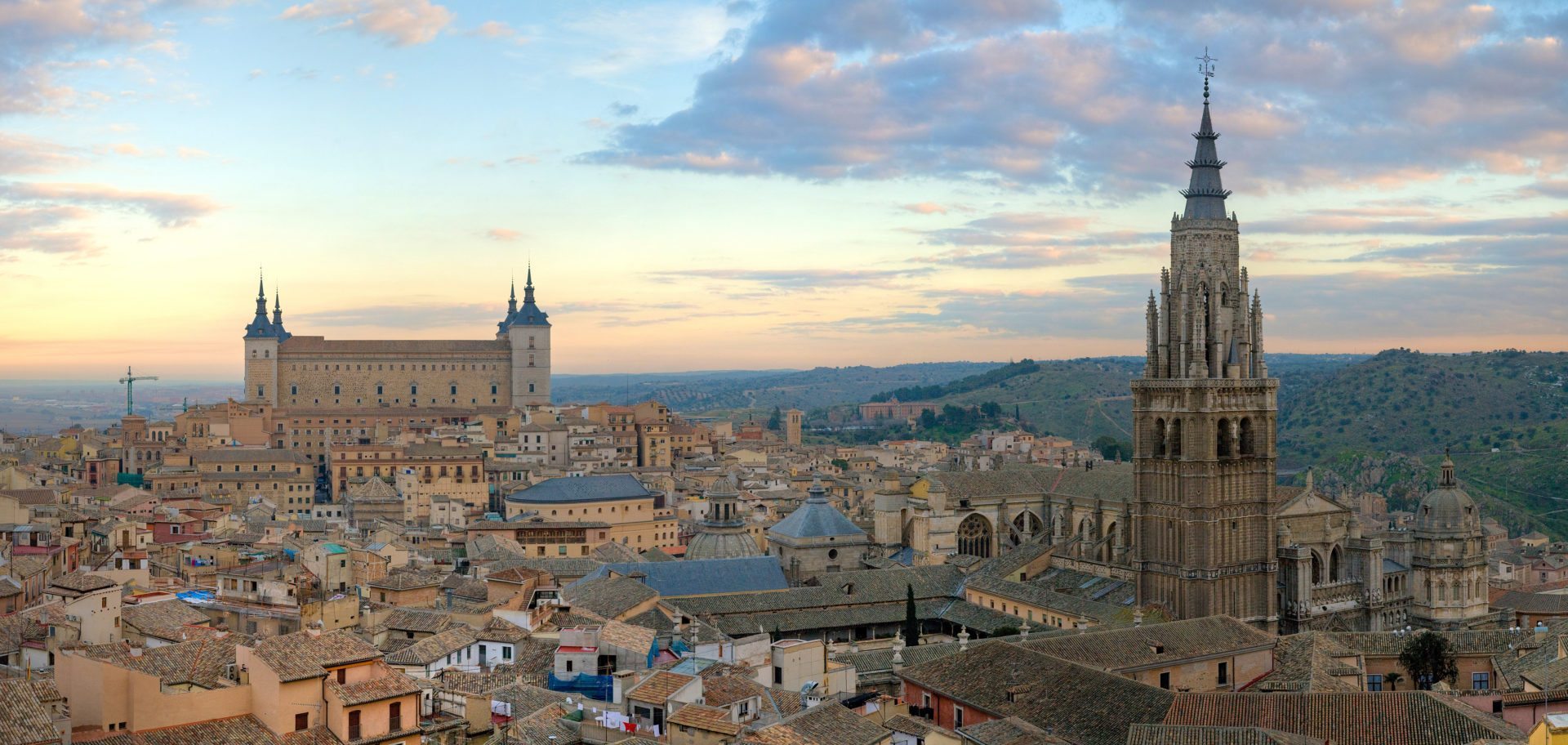
- Going to the wrong station. Madrid has two big train stations, Atocha and Chamartín, and tickets show them with long names: Madrid-Puerta de Atocha-Almudena Grandes and Madrid-Chamartín-Clara Campoamor. Trains to Toledo leave from Atocha; the AVE high-speed train to Segovia, from Chamartín.
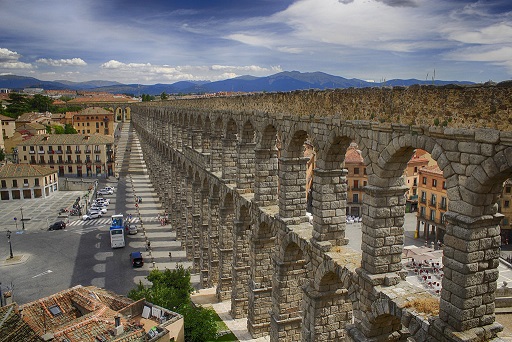
- Thinking the AVE drops you in the centre. The fast train to Segovia stops at Guiomar station, about seven kilometres from the aqueduct, and from there you have to take a city bus. If you plan to leave the city for a day, the options are in day trips from Madrid.
- Hiring a car to get around Madrid. The centre has low-emission zones and street parking is regulated almost everywhere. In the city a car gets in the way; it only makes sense for leaving it.
- Assuming everything is closed on Sunday. In Madrid the shops in the centre also open on Sundays and public holidays. What changes that day is La Latina, which fills up with the Rastro in the morning and with the aperitivo at midday.
- Travelling in August without allowing for the heat. In the afternoon temperatures easily top 35 °C and many neighbourhood bars close for the holidays. Outdoor visits first thing; the afternoon, for museums.
If your trip doesn’t look like this one
| If this is your case | Which mistake to watch most | What to do |
|---|---|---|
| You arrive on a Monday | Closed taverns | Book lunch somewhere open that day and leave the museums for Tuesday, except the Reina Sofía |
| You arrive on a Sunday | The Royal Palace closes at 16:00 | Palace first thing and the Rastro before 11:00 |
| You only have one day | Trying to see everything | One walking route around the centre and a single museum |
| You are travelling with children | The dinner timetable | Dinner at 20:30, the first hour kitchens open |
| You are travelling in summer | The afternoon heat | Outdoors in the morning and at dusk; museum from 15:00 to 18:00 |
| You are travelling in high season | Sold-out tickets | Buy the Prado and the Royal Palace several days ahead |
If you want to see how all this fits into a walking route, it is in Madrid in one day.
Your first trip to Madrid with Tour Travel & More
None of the mistakes on this list is serious. The problem is that on a first trip they all show up at once, when you still don’t know which taxi is the right one, what time the kitchens open or which of the five taverns on the same street is worth the stop.
With Tour Travel & More, these problems disappear:
- Airport pick-up in a luxury vehicle with a professional driver — No queues at the rank and no offers in the arrivals hall.
- 100% private tour — No groups, no strangers: the pace and the route adapt to you.
- Official licensed guide — Who tells you about the city and, along the way, where to eat, at what time and what to order.
- Tickets sorted in advance — Prado and Royal Palace with a set time, no ticket desks and no free time slots.
- Guardian Angel Service 24/7 — Human coordination before, during and after your trip.
The couple with the suitcases
Go back to the beginning, to the T4 arrivals hall. The couple who followed the man with the lanyard didn’t do anything strange: they were tired, they had two big suitcases and someone offered to solve the first problem of their trip. They got to the centre, most likely, paying a good deal more than 33 €.
They knew as much about Madrid as you did. The difference was reading just enough the night before, and knowing that in a new city the mistakes are almost never in the places you go to see, but in everything that happens between one and the next.
- Just your group
- Licensed guides
- Free cancellation