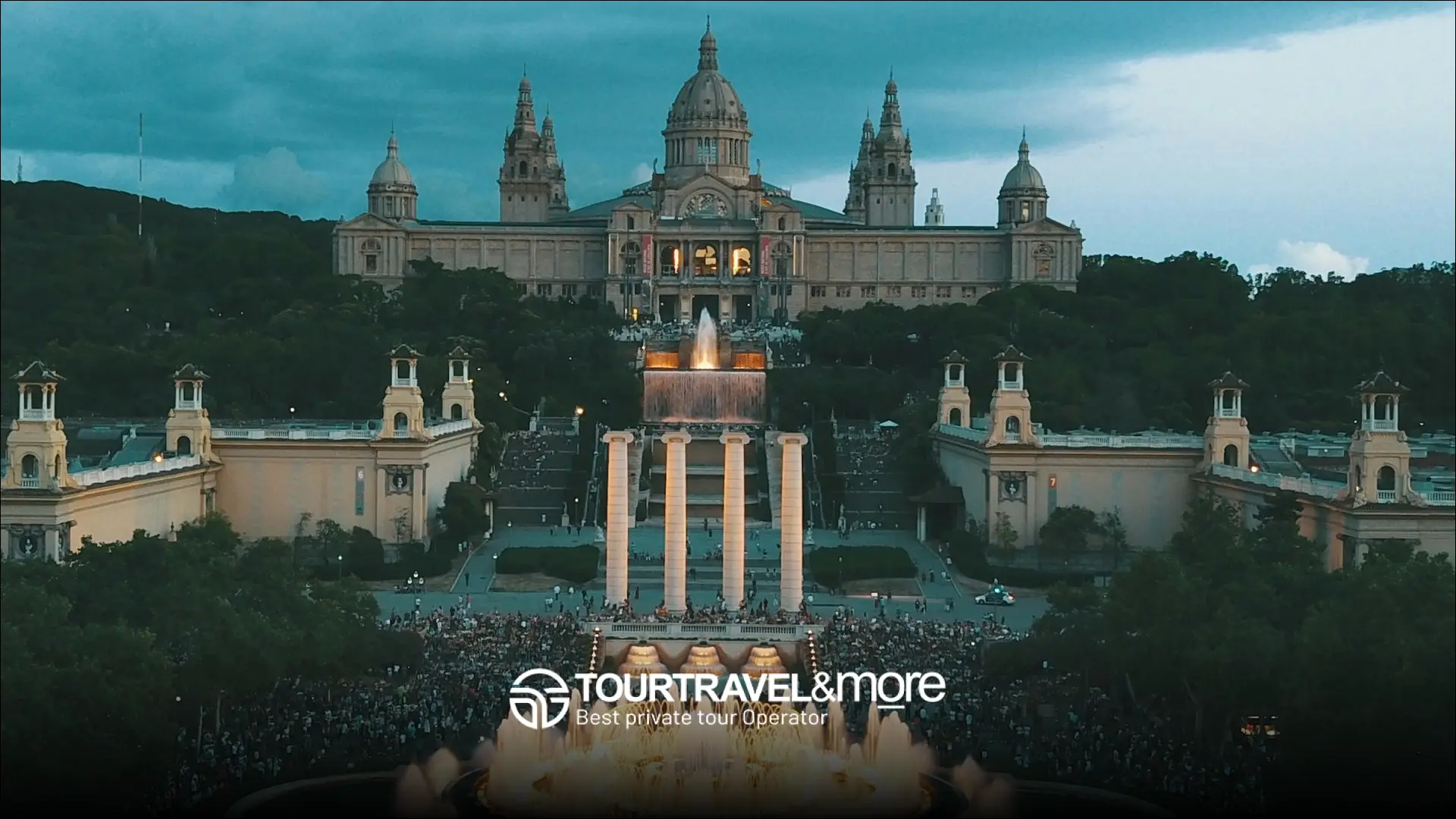
It’s eight in the evening on the third day and you’re sitting on the steps of the MNAC. Below you, the Magic Fountain has just started and the water changes colour with the music. Your feet hurt, but in three days you haven’t had to run once to make a ticket slot. Two steps down, a couple are going through a list of twenty-three places on their phone, arguing about whether there’s still time to go up to Tibidabo.
What follows are those three days, hour by hour, from the airport to the fountain: what each stop costs, how to get there and why it comes in that order. Because the trick to Barcelona in three days isn’t fitting in more places. It’s one neighbourhood a day, with the timed tickets spread out so they never clash.
Before you go — Three timed tickets, and none on the day you fly in
Of everything you’ll see, only three things have a fixed time slot and are worth buying before you arrive: the Sagrada Família (26 € for the basic ticket), Park Güell (18 € for the monumental zone) and whichever Gaudí house you choose on Passeig de Gràcia. Everything else can be seen without watching the clock.
The rule that saves the most trips is not to book any of the three for the day you land. A two-hour flight delay and you lose a ticket that can’t be refunded.
The only things that change with the day of the week
The itinerary works whatever day you start. Only three things depend on the calendar, and all three are fixed by swapping one day around:
- On Mondays the MNAC, the Fundació Miró and the Museu Picasso are closed. If one of your three days is a Monday, don’t make it the Montjuïc day.
- In winter, the Magic Fountain only runs from Thursday to Saturday. If your third day falls on another day, the afternoon on Montjuïc is still worth it; you just miss the fountain.
- The MNAC is free on Saturdays from 15:00 and on the first Sunday of the month, with a booking. Any other day it costs 12 €.
And if one of your days is a Sunday, half the city’s museums are free in the afternoon. They’re all set out in free things to do in Barcelona.
Day 1 — Arrive without rushing and stay in old Barcelona
11:20 — El Prat, and the ticket that shapes all three days
You walk out of the terminal and the first decision of the trip is your ticket. There are two options, and they cost almost the same:
- Hola Barcelona 72-hour card, 27.30 €: unlimited metro, bus and tram, with the airport metro included both ways. If you validate it at 11:00 on day one, it covers you until 11:00 on day four, just in time for your flight home.
- T-casual, 13 € for ten journeys, plus the Aerobús, 7.45 € each way to Plaça de Catalunya. Careful: the T-casual isn’t valid on the L9 Sud, the airport line. With the Aerobús there and back, it comes to about 28 €.
The real difference is time. The Aerobús gets you to the centre in about 35 minutes; the metro from the airport means changing lines and takes close to an hour. If your hotel is near Plaça de Catalunya, the Aerobús wins.
13:00 — A hotel in the Eixample, the centre of all three days
You drop your suitcase at a hotel in the Eixample, between Plaça de Catalunya and the Diagonal. That’s on purpose: from here the Gothic Quarter is just below, Gràcia and Park Güell are above, the Sagrada Família is to one side and Montjuïc is a couple of metro stops away. No day starts with half an hour of travelling.
15:30 — The Gothic Quarter and El Born, no tickets and no clock
You walk down Portal de l’Àngel and ten minutes later you’re standing in front of the cathedral. From there, the Gothic Quarter needs no map: Plaça de Sant Jaume, with the City Hall and the Generalitat facing each other, and streets so narrow the light only gets in from above. Behind one of the doors there are even Roman columns tucked inside a courtyard.
You cross Via Laietana into El Born and on to Santa Maria del Mar, the church many people end up preferring to the cathedral. It’s the best plan for your arrival day precisely because it asks nothing of you: no time slot, no booking, no rush.
18:00 — Barceloneta, and dinner on local time
From Passeig del Born, the beach is fifteen minutes on foot. You reach the sand as the sun goes down behind the city and have dinner in the neighbourhood, knowing that in Barcelona people eat from nine onwards. Back at the hotel by eleven: tomorrow Park Güell has a time slot.
 Private
 Private
 Private
Day 2 — Gaudí up the hill and Passeig de Gràcia
9:30 — Park Güell, with a time slot that won’t wait
You take bus 24 from Passeig de Gràcia, which drops you next to one of the entrances and saves you the climb. At Park Güell your ticket has a set time and you have 30 minutes to get through the entrance. Arrive later and you lose it.
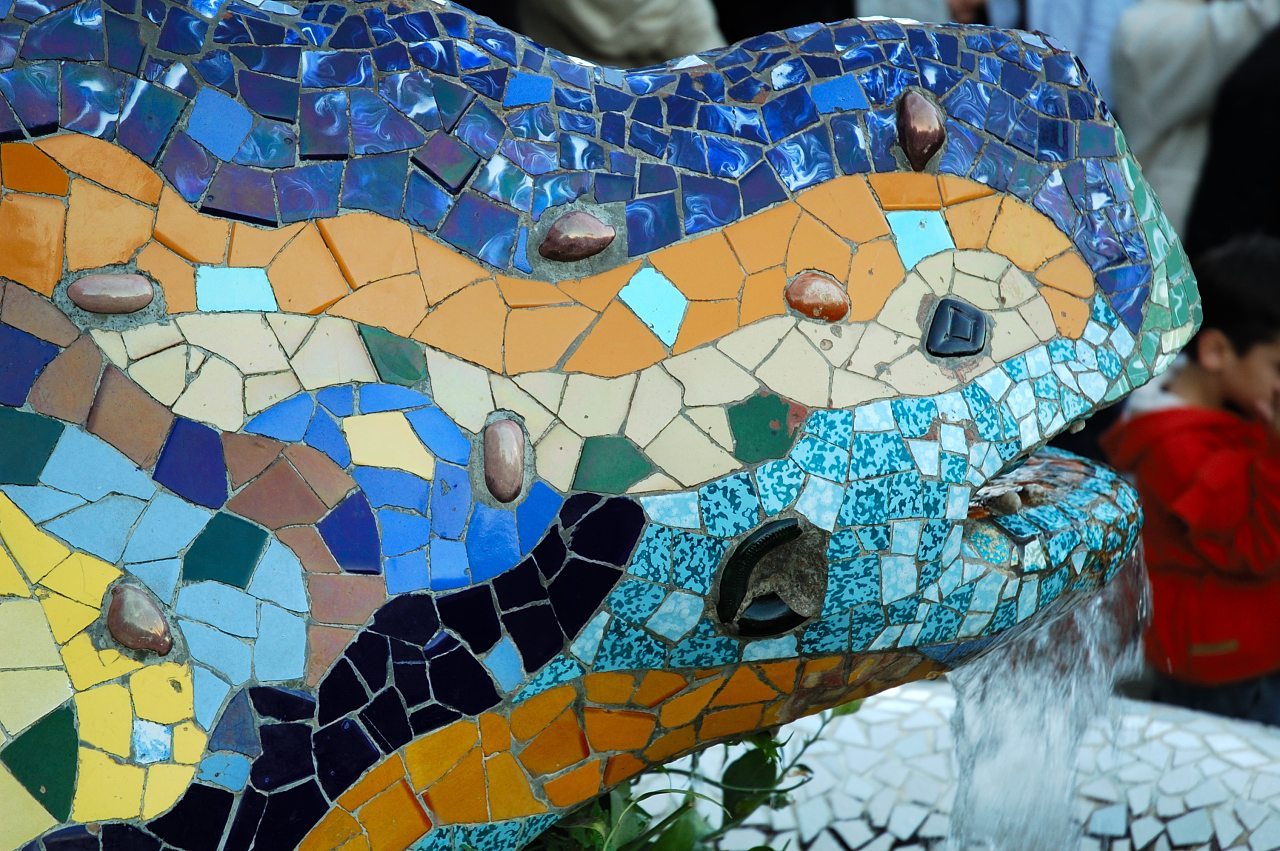
Inside are the dragon staircase, the hall of columns and the curving trencadís bench with the city stretching down to the sea. First thing in the morning, the large groups haven’t arrived yet.
11:30 — Walking down to Gràcia
This is the part almost no itinerary mentions: you go up to Park Güell by bus, but you come down on foot. It’s about twenty minutes downhill to Gràcia, and the city changes all at once: the coaches disappear and you get squares full of children, greengrocers and washing hanging from the balconies.
On Carrer de les Carolines you stop in front of Casa Vicens, Gaudí’s first house, with its façade of flower tiles. What it holds inside is in the most beautiful places in Barcelona.
13:30 — Lunch in a Gràcia square
You sit at a terrace on Plaça del Sol or Plaça de la Virreina. At half past one there are still tables; by half past two, there aren’t. The local restaurants put out the blackboard with the menú del día and you eat the way the people who live here do.
15:30 — The siesta no itinerary includes
Back to the hotel: fifteen minutes by metro and an hour lying down. It looks like lost time, but it’s the hour that saves your third day. Itineraries that cram five places into every day forget that by the last one you’re walking on someone else’s legs.
17:00 — Passeig de Gràcia, and only one house inside
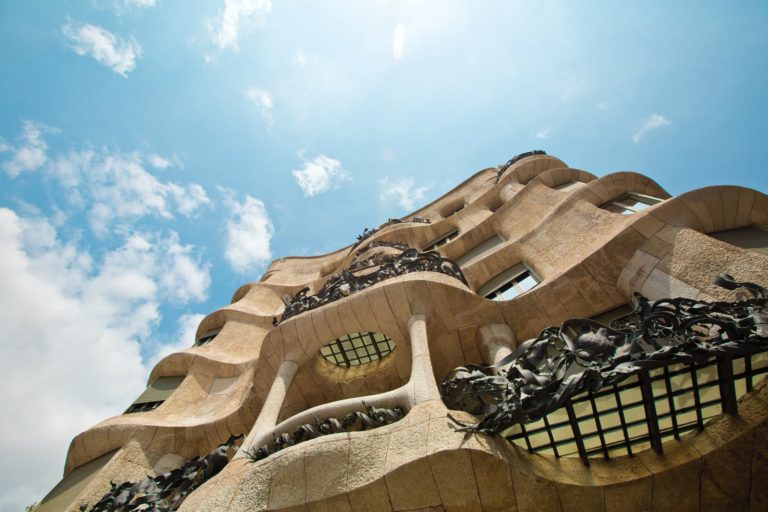
The temptation is to go into both Casa Batlló and La Pedrera. There’s no need: you can see both from the pavement, and one is enough inside. Which suits you best is in the must-sees in Barcelona.
You chose Casa Batlló, from about 29 € on weekdays. The price goes up at weekends and the later you book, and since 2025 the rooftop is no longer included in the basic ticket. Afterwards you have dinner two streets from the hotel and get an early night: tomorrow the Sagrada Família opens at nine.
Day 3 — The Sagrada Família early and Montjuïc until the fountain lights up
9:00 — Sagrada Família, the first slot
You go in on the first slot, with the basilica almost empty and the morning light coming through the stained glass. Two hours is enough for the nave, the basement museum and leaving without a rush.
Which ticket to buy, which door to use and how to skip every queue is set out step by step in how to avoid queues at the Sagrada Familia. What matters here is one thing: that you put it on the last morning, when there’s no flight left to be delayed.
11:30 — The L2, straight from the Sagrada Família to Sant Antoni
You go down into the metro on the same square and take the L2, the purple line. Without changing trains, a quarter of an hour later you’re in Sant Antoni.
The Mercat de Sant Antoni is an 1882 iron market that spent nine years under renovation and reopened in 2018. In the morning it’s full of locals doing their shopping and there isn’t a single tour group. The food market opens Monday to Saturday; on Sunday mornings, the second-hand book and trading card market sets up around the building.
13:30 — Pintxos on Carrer de Blai
You walk ten minutes to Poble-sec and turn into Carrer de Blai, a pedestrian street lined with pintxos bars. You take whatever you like from the counter and at the end they count the cocktail sticks. It’s the quickest lunch of the three days, and that’s deliberate: the afternoon is a long one.
15:00 — The Montjuïc funicular, on your metro ticket
The Montjuïc funicular leaves from Paral·lel station (L2 and L3). It runs on the same ticket as the metro, whether it’s the T-casual or the Hola Barcelona, and a couple of minutes later you’re at the top. The cable car from Barceloneta is prettier, but it’s paid separately and usually has a queue. Bus 150 from Plaça d’Espanya is the other option.
Walking down towards the MNAC, you pass the Fundació Miró (17 € online). You don’t go in today: it’s Miró or the MNAC, because both won’t fit into one afternoon.
15:30 — The MNAC, and the Romanesque nobody expects
The MNAC costs 12 €, and on Saturdays from 15:00 it’s free, if you book on its website first. From October to April it closes at 18:00, so you have two and a half hours.
You head straight for the Romanesque: wall paintings removed from churches in the Pyrenees that now cover apses rebuilt inside the museum. It’s one of those rooms nobody expects to find in Barcelona.
18:00 — The steps and the Magic Fountain
You step out onto the terrace in front of the museum. Below, Plaça d’Espanya; in the distance, Tibidabo, and the city lighting up street by street. It’s one of the best sunsets in town.
The Magic Fountain is free and in winter runs from Thursday to Saturday, 20:00 to 21:00, until 31 March. In early November it stops for a few weeks for maintenance, and in summer the days and times change: check the calendar on the City Council website before you go. Afterwards, dinner in Poble-sec, ten minutes back down the hill.
The three days at a glance
| Day | Area | Booked time slots |
|---|---|---|
| Day 1 | Gothic Quarter, El Born and Barceloneta | None: it’s the day you fly in |
| Day 2 | Park Güell, Gràcia and Passeig de Gràcia | Park Güell at 9:30 and Casa Batlló at 17:00 |
| Day 3 | Sagrada Família, Sant Antoni and Montjuïc | Sagrada Família at 9:00 and the MNAC at 15:30 |
One neighbourhood a day and never two timed tickets on the same morning. That’s what makes the third day as enjoyable as the first.


What the three days cost
| Item | Price | Note |
|---|---|---|
| Hola Barcelona 72-hour card | 27.30 € | Unlimited metro and bus, airport included |
| Sagrada Família, basic ticket | 26 € | Free for under-11s |
| Park Güell, monumental zone | 18 € | Fixed time slot with 30 minutes’ leeway |
| Casa Batlló | From 29 € | Goes up at weekends and the later you book |
| MNAC | 12 € | Free on Saturdays from 15:00 and on the first Sunday of the month |
| Magic Fountain | Free | Thursday to Saturday in winter |
Per person, about 112 € in tickets and transport, not counting hotel or meals, or about 100 € if your MNAC visit falls on a Saturday afternoon.
If your trip doesn’t look like this one
| If your trip is like this | What you change | Why |
|---|---|---|
| You fly home on the afternoon of day 3 | Drop Montjuïc; Sagrada Família and Sant Antoni in the morning | It’s the only part you can cut without the trip limping |
| It rains one day | That day, the Sagrada Família and Casa Batlló; Park Güell on the dry day | Park Güell is entirely outdoors |
| You’re travelling with young children | The day 2 siesta becomes a daily one | Three days of city weigh twice as much with a pushchair |
| It’s your second time in Barcelona | Swap Park Güell for lesser-known places | What’s left is in neighbourhoods you don’t set foot in the first time |
For the rainy day there’s a whole plan, hour by hour, in things to do in Barcelona when it rains.
Barcelona in 3 days with Tour Travel & More
Fitting in three timed tickets, the airport transfer and the days each museum closes is exactly what you can’t sort out from your hotel the night before.
With Tour Travel & More, these problems disappear:
- 100% private tour — No groups, no strangers: you set the pace of each day.
- Official licensed guide — Licensed by the Generalitat to guide inside the Sagrada Família and Park Güell.
- Tickets arranged in advance, with the time of each visit spread out so that none eats into another.
- Luxury vehicle with a private driver, including your arrival and departure at the airport.
- Guardian Angel Service 24/7 — Human coordination before, during and after your trip.
The couple with twenty-three places
Go back to the steps. The couple with the list probably saw more places than you did: the Sagrada Família, Park Güell, both houses on Passeig de Gràcia, Tibidabo and Camp Nou. And at eight in the evening on the third day they were still working out whether they could squeeze in one more.
You saw less and you remember more: the light in the Gothic Quarter on the first day, the walk down to Gràcia, the siesta nobody recommends and the fountain from the steps, without looking at the clock. In Barcelona, three days go a long way, as long as each one has its own neighbourhood and no ticket clashes with another.
- Just your group
- Licensed guides
- Free cancellation