Elena arrived in Barcelona with a list of twenty-three “must-sees” copied from a blog. By the third day she had been to almost all of them, had four hundred photos on her phone and a strange feeling: she wasn’t quite sure what she had seen. La Rambla, the Aquarium, the Arc de Triomf and Plaça de Catalunya took up as much space in her memory as the Sagrada Família.
That’s the problem with long lists. They put what you can’t miss on the same level as what you see in passing. Barcelona has seven or eight places that justify the trip on their own, and everything else falls into place around them.
Barcelona’s must-sees at a glance
Before the details, the short list. These are the places that, if you skip them, you go home without having seen Barcelona.
| Must-see | What not to miss inside | Booking and price |
|---|---|---|
| Sagrada Família | The interior with the light through the stained glass | Online only, from €26 |
| Park Güell | Nature Square and the trencadís bench | 30-minute slot, €18 |
| A Gaudí house on Passeig de Gràcia | Casa Batlló or La Pedrera, not both | Online with a time slot |
| Barri Gòtic and El Born | The cathedral, Sant Felip Neri and Santa Maria del Mar | Free streets |
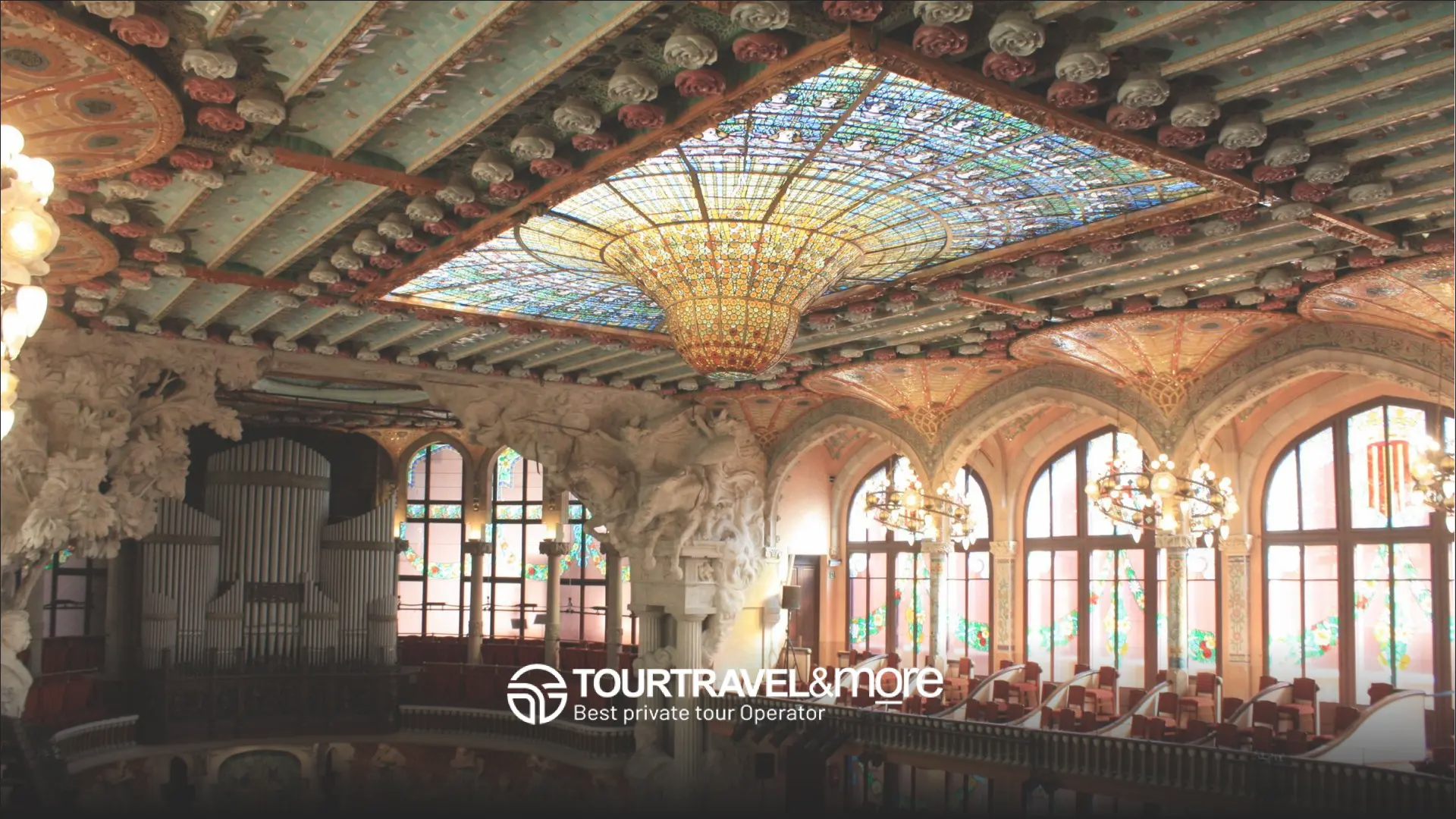
| Palau de la Música Catalana | The glass skylight in the concert hall | Guided tour or concert |
| Montjuïc | The view from the MNAC steps | Free from outside |
| Bunkers del Carmel | The 360-degree sunset over the city | Free |
Sagrada Família: the one place you can’t see from the outside
Almost everything in Barcelona can be enjoyed from the sidewalk. Not the Sagrada Família. The facade is impressive, but what makes it unique is inside: a forest of columns that branch out like trees and stained glass windows that flood the nave with blues in the morning and oranges and reds in the afternoon.
Why 2026 is a special year to visit
In February 2026 the Tower of Jesus Christ, 172.5 meters tall, was completed. It’s the tallest tower of the basilica and the one that makes the Sagrada Família the tallest church in the world. 2026 is also the centenary of Gaudí’s death: he died in June 1926 after being hit by a tram a few streets from here.
That doesn’t mean it’s finished. The Glory facade, the main one, is still under construction and isn’t expected before the next decade. If someone tells you “they’re finishing it this year,” they mean the tower, not the church.
What to know before you go
- There’s no ticket office. Tickets are sold online only, at sagradafamilia.org, from €26 for the basic ticket and €36 with a tower climb.
- Book at least two weeks ahead in high season. The afternoon slots sell out first, and for good reason: that’s when the light comes in best.
- Give it an hour and a half. Less means rushing; more only pays off if you climb a tower.
Park Güell: the best part isn’t the one in the photos
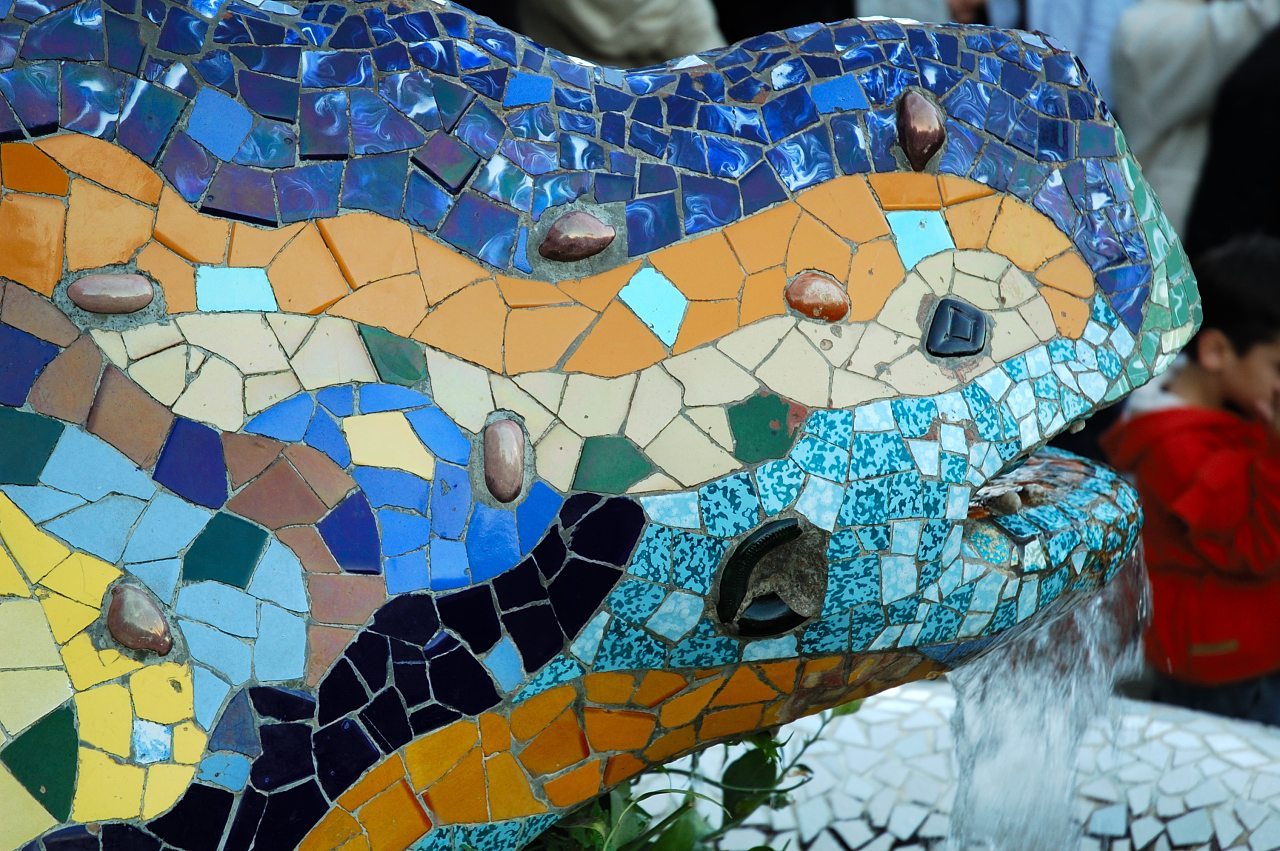
The Monumental Zone, with the dragon staircase and the curving trencadís bench, is what everyone comes to see. It costs €18 and works with 30-minute slots and limited capacity. Without a booking, you usually won’t find a free slot until the afternoon.
What few people do is climb afterwards into the free part, along the stone paths through the pine woods, up to the Turó de les Tres Creus. From up there you see the Sagrada Família, the sea and Montjuïc in the same photo, with no fences and no time slots.
A practical tip: take bus 24 from Plaça de Catalunya, which drops you level with the entrance. The Lesseps or Vallcarca metro stops look closer on the map, but a twenty-minute uphill walk awaits you.
Casa Batlló or La Pedrera: pick one
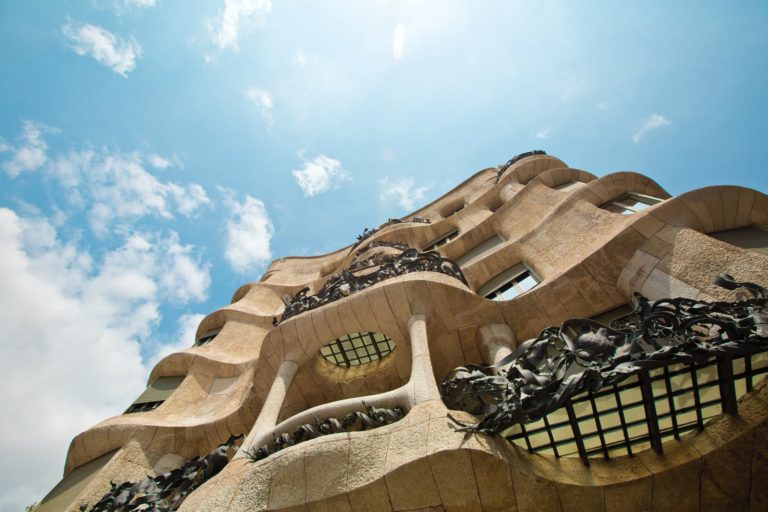
On Passeig de Gràcia there are two Gaudí houses five hundred meters apart. Both need an hour and a half and both are worth it. But trying to visit both on a short trip is the fastest way to end up with Gaudí overload.
- Casa Batlló, if it’s your first time. It’s the most theatrical, the one with the dragon-scale roof, and the easiest to understand without knowing anything about architecture.
- La Pedrera (Casa Milà), if you already know the Batlló or you’re more interested in the rooftop. Its warrior-shaped chimneys are among the most photographed sights in the city, and it has a night visit that changes the experience completely.
If you don’t go inside either, that’s fine. The facades are free and form part of the Block of Discord, where Gaudí, Puig i Cadafalch and Domènech i Montaner competed facade against facade.
Barri Gòtic and El Born: where Barcelona stops being a postcard
The old town is the part of Barcelona where you pay the least and need to look the most. Narrow streets, hidden squares and two thousand years of history stacked on top of each other, from the remains of the Roman wall to the Spanish Civil War shrapnel in Plaça de Sant Felip Neri.
Santa Maria del Mar, the church you can’t miss
If you go inside just one church besides the Sagrada Família, make it this one. Santa Maria del Mar was built in just 54 years, in the 14th century, with stone the port’s dockworkers carried on their backs from Montjuïc. It’s pure Catalan Gothic: a huge nave, slender columns and almost no decoration.
There’s a rooftop tour, for about €10, that hardly anyone knows about. You walk on the roof of the church with El Born at your feet.
The cathedral and its thirteen geese
Barcelona Cathedral keeps thirteen white geese in its cloister, one for each year of Saint Eulalia’s life, the city’s patron saint, when she was martyred. It’s one of those details that don’t make the lists and end up being what you remember most.
 Private
 Private
 Private
Palau de la Música Catalana: better with a concert than a tour
The Palau de la Música is the masterpiece of Catalan modernisme that Gaudí didn’t sign. It was designed by Domènech i Montaner and is a UNESCO World Heritage Site. The hall has an inverted glass skylight that looks like a sun descending from the ceiling.
Here’s what almost no guide tells you: a concert ticket often costs little more than the guided tour, sometimes even less. And listening to music in that hall is something else entirely from walking through it with an audio guide. Check the program before you travel; there are Spanish guitar, piano and chamber music concerts almost every week.
Montjuïc: the hill people leave for “if there’s time”
Montjuïc has a reputation as a secondary visit, and it isn’t one. From the steps of the MNAC, the National Art Museum of Catalonia, you get one of the best views of the city, and it’s free. Up top are the castle, the Fundació Joan Miró and gardens that step down in terraces towards the port.
The Magic Fountain, at the foot of the steps, puts on a light and music show some nights of the week. The schedule changes with the season and has been suspended during droughts, so check it on the city council website before counting on it.
Bunkers del Carmel: the viewpoint you can’t miss
The old Spanish Civil War anti-aircraft batteries, at the top of the Turó de la Rovira, are now the most complete viewpoint in Barcelona: 360 degrees, from the Sagrada Família to the sea and from Montjuïc to Tibidabo. It’s free.
Go at sunset and bring a layer, because it’s windy up there. Access has been restricted at times because of crowds, so check the opening hours on the day.
What you can skip (even though it’s on every list)
Cutting well is what separates a trip that works from an exhausting one. These places show up in almost every guide, but there are better alternatives or you see them in passing without setting time aside.
| Famous spot | Why you can skip it | What to do instead |
|---|---|---|
| Walking all of La Rambla | It’s the area with the most pickpockets and the worst restaurants in the center | Cross it in passing and walk down Rambla de Catalunya |
| La Boqueria at midday | After 11:00 AM it’s a corridor of juice stands for travelers | Mercat de Santa Caterina or Mercat de Sant Antoni |
| Camp Nou | The stadium is still under construction and the tour is limited | A match, if one falls during your trip |
| Tibidabo | It’s half a day for an amusement park | The views from the Bunkers del Carmel |
| Aquarium | Decent, but nothing you can’t see in another city | A walk around Port Vell at sunset |
| Arc de Triomf and Plaça de Catalunya | You see them on the way to other places | Parc de la Ciutadella, right next to the arch |
The Mercat de Santa Caterina, in El Born, has a colorful wavy roof you can see from the bunkers and the same produce as La Boqueria, with locals actually doing their shopping. Sant Antoni is the neighborhood market par excellence, and on Sunday mornings it fills up with stalls selling books and trading cards.
The must-sees almost nobody visits
If you already know the essentials or you’re coming back to Barcelona, these are the places worth the trip that are still off most people’s radar.
- Hospital de Sant Pau. Another UNESCO World Heritage Site by Domènech i Montaner, a ten-minute walk from the Sagrada Família. Ceramic pavilions and gardens, for about €15 and with a fraction of the crowds.
- Casa Vicens. The first house Gaudí designed, in the Gràcia neighborhood. Seeing where it all began helps you understand the Sagrada Família.
- The Gràcia neighborhood. Small squares, café terraces and neighborhood life fifteen minutes from Passeig de Gràcia. Plaça del Sol and Plaça de la Virreina are the best places to have dinner without tourists around you.
- Picasso Museum. Five Gothic palaces in El Born with the painter’s early years. It has free admission slots; check its website for the current ones and book, because they fill up.
On the map you’ll find the seven must-sees and the four places almost nobody visits. Seen together, it’s clear why they don’t fit into a single day: they stretch from the Bunkers del Carmel, up on the hill, to Montjuïc, by the port.


What not to miss at the table
Barcelona is also remembered for what you eat, and the trap here is the same as with the monuments: what’s most visible isn’t the best.
- Pa amb tomàquet. Bread rubbed with tomato, olive oil and salt. It goes with almost everything.
- The Barceloneta bomba. A large potato and meat croquette with two sauces, aioli and a spicy one. It’s said to have been born at La Cova Fumada, in the Barceloneta neighborhood.
- Weekend vermouth. At midday, locals go out “a fer el vermut” with vermouth on tap, patatas bravas and olives.
- Crema catalana. A cousin of crème brûlée, with cinnamon and lemon, and the sugar caramelized on the spot.
- Calçots, if you’re traveling between January and March. Tender spring onions grilled over the fire and dipped in romesco sauce, at a calçotada.
Be wary of paella with a photo at the door. The good kind is made to order, for at least two people, and takes a while to come out.
How many days you need to see the essentials
The question everyone asks before booking a hotel. With these estimates, and going inside only the places that call for it:
| Days | What fits | What gets left out |
|---|---|---|
| 1 day | Sagrada Família, Passeig de Gràcia from outside and the Barri Gòtic | A relaxed Park Güell, Montjuïc and the Palau |
| 2 days | All of the above, plus Park Güell, one Gaudí house and El Born | Montjuïc, Gràcia and Sant Pau |
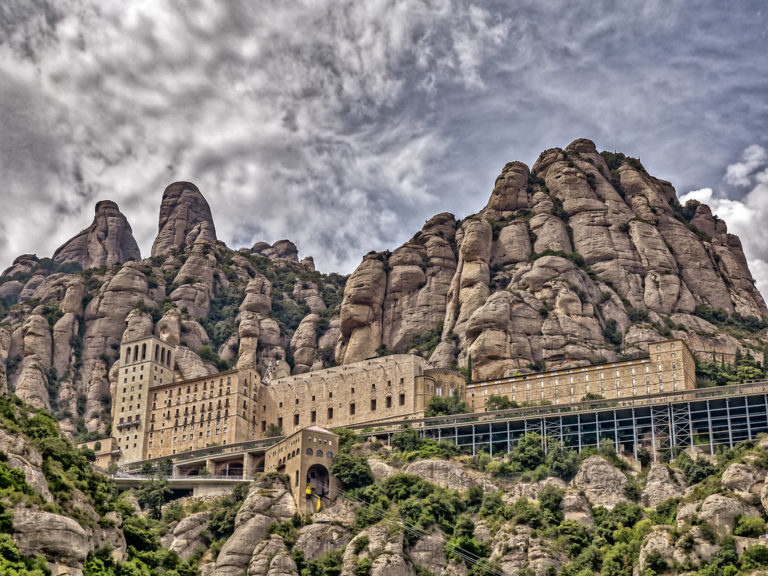
| 3 days | Every must-see in this article | Day trips to Montserrat or the Costa Brava |
| 4 days or more | The must-sees, the lesser-known places and a day trip | Almost nothing |
With three days you see Barcelona without rushing. If you only have one, the key is to book the Sagrada Família and accept from the start that Park Güell will wait for next time.
How not to miss anything along the way
- Book from home the Sagrada Família, Park Güell and whichever Gaudí house you choose. Those are the three that sell out.
- Backpack on your front on the metro, especially on L3 (Liceu, Drassanes, Passeig de Gràcia) and L5 (Sagrada Família). Never leave your phone on a café table.
- Get around with the T-casual, ten trips for about €13. If there are several of you, the T-familiar can be shared.
- In July and August, flip the day around. Outdoor sights first thing; the Sagrada Família, which stays cool inside, during the hottest hours.
- Mondays aren’t a problem for Gaudí. What closes on Mondays are some museums, like the Picasso Museum.
Barcelona with Tour Travel & More
Seeing all this on your own is possible. But the friction adds up: Sagrada Família slots sell out weeks ahead, Park Güell won’t let you in outside your time slot, and choosing between the Batlló and La Pedrera, or between the Palau and Sant Pau, without knowing which suits you is easy to get wrong.
With Tour Travel & More, these problems disappear:
- 100% private tour — It’s your pace, not that of a group following a raised flag.
- Official licensed guide — Explains why the Sagrada Família’s columns branch out like trees and which Gaudí house you’ll enjoy most, and reorders the route on the fly.
- Tickets handled for you for the Sagrada Família and Park Güell, even when they show as sold out on the official website.
- Luxury vehicle with a private driver to reach the bunkers or Montjuïc without the uphill walk, with pickup at your hotel or the cruise terminal.
- Guardian Angel Service 24/7 — Human coordination before, during and after the tour, in case anything goes wrong.
We’re from Barcelona: the company was founded here in 2014, and today we hold a rating of 4.9 out of 5 from more than 500 reviews by verified travelers.
The difference between ticking off a list and getting to know Barcelona
Elena came back a year later, with three days and a list of seven places. She went into the Sagrada Família at four in the afternoon, when the nave turns orange. She heard a guitar concert at the Palau de la Música, ate bombas in Barceloneta and watched the sun go down from the bunkers. She only set foot on La Rambla to cross it.
This time she knew exactly what she had seen. That’s what you can’t miss in Barcelona: not twenty-three places, but the seven that matter, seen with time.
- Just your group
- Licensed guides
- Free cancellation