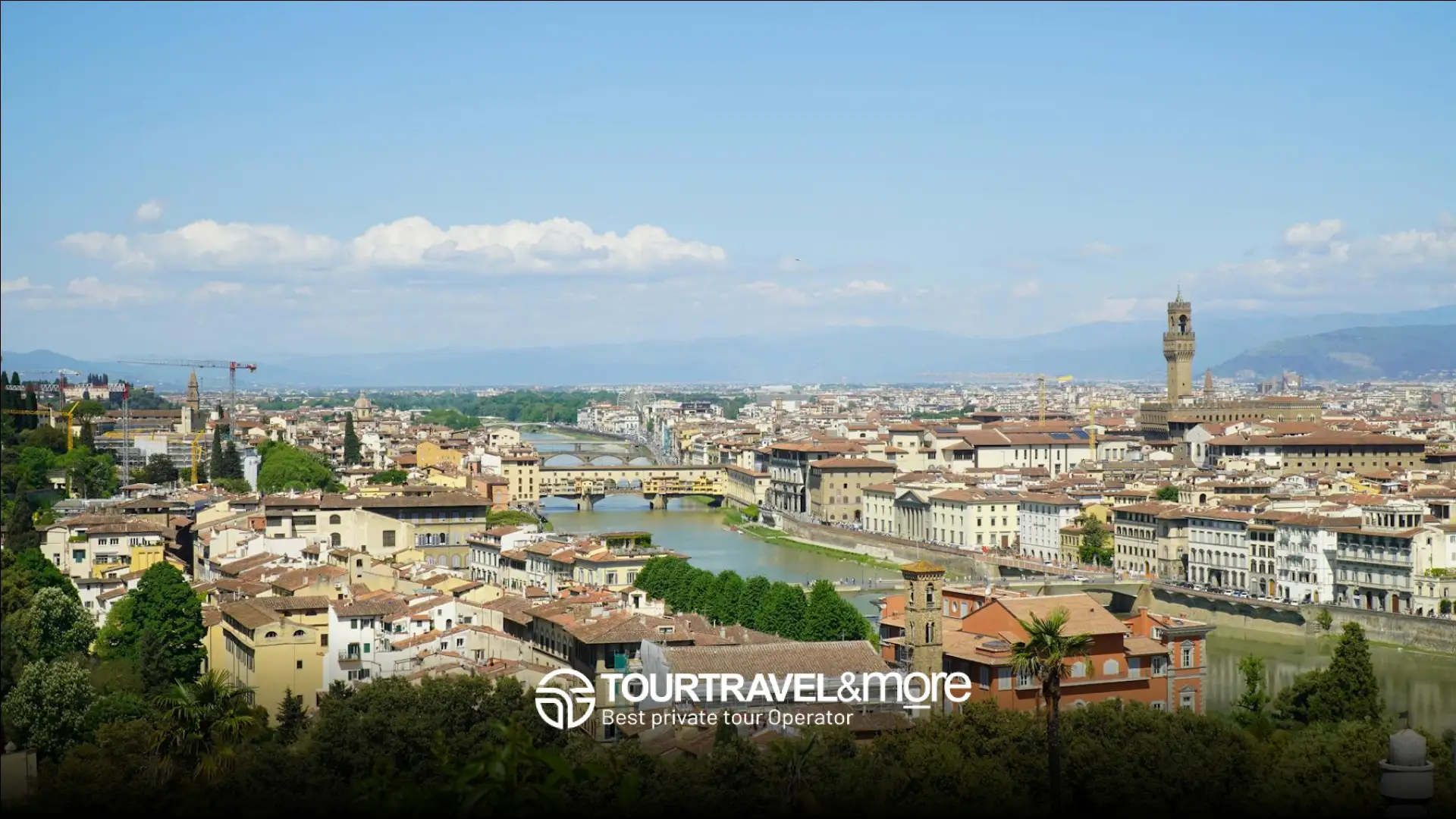
I arrived in Florence on a Sunday afternoon with an overstuffed backpack and an underwritten list of museums. The train pulled into Santa Maria Novella, I opened the door, and the first thing I saw was an orange dome hanging above the rooftops as if someone had placed it there so I wouldn’t get lost. In that moment I understood two things: Florence is not visited, it’s lived. And a week is barely enough.
If you have seven days here, congratulations. Few travellers give themselves that luxury. This guide tells you exactly how to use them — no rushing, no exhaustion, and with room for the things that don’t appear on any map.
| Aspect | What you need to know |
|---|---|
| Recommended days | 7 days: 4-5 in the city + 2 day trips |
| Best time to visit | April-May and September-October |
| Must-see museums | Uffizi, Accademia, Bargello, Palazzo Pitti |
| Mandatory bookings | Uffizi, Accademia, Brunelleschi’s Dome |
| Estimated budget | €80-120/day (excluding accommodation) |
| Getting around | On foot — Duomo to Ponte Vecchio is 15 min |
| Best day trips | Siena, Chianti, San Gimignano |
Before You Arrive: How to Plan the Week Without Wasting Time
Florence is a compact city. The entire historic centre — declared a UNESCO World Heritage Site — fits within a twenty-minute walking radius. That’s a huge advantage, but it also means the most famous places are all clustered together and people pile up at the same spots at the same times.
The golden rule: book the three main museums before you travel. The Uffizi, the Accademia and Brunelleschi’s Dome sell out weeks in advance during high season. It’s not an exaggeration: without a booking you can lose an entire morning queuing and end up getting in just when your body is crying out for a beer and a chair.
The other museums — Bargello, Palazzo Pitti, San Marco, Medici Chapels — don’t usually need advance booking, though going first thing in the morning is always better.
On days of the week: Tuesday and Wednesday are the quietest. The Accademia closes on Mondays — a classic mistake that ruins itineraries. On Sundays the centre fills with day-trippers and tour groups. If you can avoid arriving on a July or August weekend, do it.
Day 1: The Duomo, the Signoria and Your First Walk Through the City
On your first day, don’t try to cover everything. The city is going to overwhelm you anyway.
Start early at the Piazza del Duomo. Arrive before 9am — the difference between 8:30 and 11am in terms of queues and crowds is staggering. The Cathedral of Santa Maria del Fiore is free to enter, but the interior surprises you with how austere it is. Centuries of history with barely any decoration. The magic is in the scale: the central nave is so high it looks like the ceiling is floating.
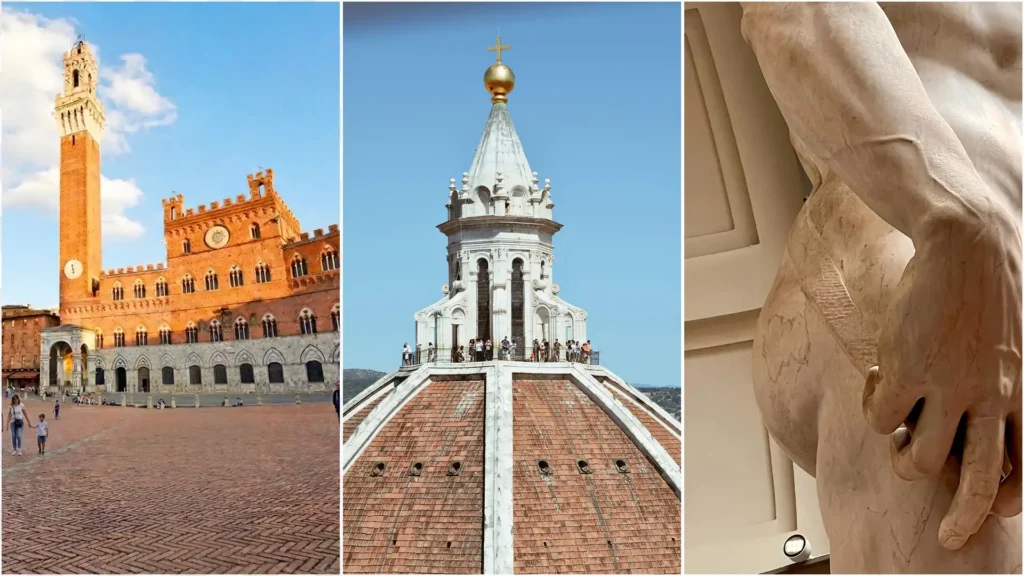
Brunelleschi’s Dome deserves its own morning and its own booking. It’s 463 steps with no lift, narrow in some sections, but every metre upward gives you a different perspective: first the Last Judgement frescoes from inside, then the entire city from the exterior lantern. The view from the top is the same one that appears in millions of photos, but in person it does something different. It stops you.
In the afternoon, Giotto’s Campanile — right next to the Duomo — offers the best views of the dome from outside, something the dome itself can’t give you. Fewer steps, shorter queue, and a perspective that most travellers miss because they’re already tired from the Duomo.
End the day at Piazza della Signoria. Not in a hurry: sit on the terrace of Caffè Rivoire, order an espresso, and look at the Loggia dei Lanzi — that open-air sculpture gallery that in any other country would be the national museum. Here it sits in the middle of the square, free, for anyone who walks past.
Secret that almost nobody knows: go up to the top floor of La Rinascente, the department store facing the Duomo. There’s a rooftop café open to the public with a direct view of the dome that puts many paid viewpoints to shame. Movie-quality coffee, no queue, no entrance fee.
Day 2: The Uffizi and the Soul of the Florentine Renaissance
The Uffizi is not a museum. It’s the definitive argument for why the Renaissance happened in Florence and nowhere else.
Book your ticket online at least a week in advance — in summer, two or three weeks. Enter first thing and head straight to rooms 10-14, where Botticelli, Fra Filippo Lippi and the collection that justifies the trip are housed. The Birth of Venus and Primavera are in the same room. Standing in front of both for ten minutes without anyone pushing you is one of the privileges that only an early morning can guarantee.
Then the Leonardo da Vinci rooms — with the Annunciation and the Portrait of Ginevra de’ Benci — the Michelangelo and Raphael rooms, and if your legs hold up, the Flemish collection on the upper floors. Don’t try to see it all in one visit: the Uffizi has 45 rooms and over 1,700 works. Choose what you don’t want to miss, go slowly, and leave before sensory saturation takes the pleasure away.
In the afternoon, walk without a map. Days 1 and 2 are museum-heavy and the best antidote is getting lost. The neighbourhood between the Duomo and Santa Croce has medieval streets that mass tourism hasn’t fully reached yet: artisan bookbinding workshops, small churches with frescoes and no queues, bars where an aperitivo with olives and crostini costs two euros and nobody minds if you stay for two hours.
Day 3: The David and the Medici
The Galleria dell’Accademia has one single reason to exist, and it stands 5.17 metres tall.
Michelangelo’s David is not a statue. It’s a demonstration of what marble can do when worked by someone who understood human anatomy better than most doctors of his era. Michelangelo was 26 when he started carving it. The marble block had been rejected by other artists as too narrow with a problematic grain. He saw it differently.
What surprises you when you stand before it is the scale. Photographs don’t convey the five metres of height. They don’t convey the tension in the neck tendons, the veins in the right hand, the expression of concentration before the throw. He’s not a victorious hero: he’s a young man about to do something that will change his life forever. That’s what makes him human.
Book the museum. It closes on Mondays. Go in the morning.
In the afternoon, the Medici Chapels and the Church of San Lorenzo. The Medici were the family that funded the Florentine Renaissance for over a century — bankers, patrons, popes, kings. The New Sacristy is by Michelangelo: the tombs of Lorenzo the Magnificent and Giuliano with the allegories of Day, Night, Dusk and Dawn carry a melancholy that feels surprisingly modern.
For the evening, cross the Arno and head to Oltrarno.
Oltrarno is the antidote to tourist Florence. On the other side of the river, the streets narrow, the prices drop, and the people you see having dinner are real Florentines. Look for Via dei Serragli or the area around Piazza Santo Spirito — the latter has an imposing Brunelleschi church that during the day is full of visitors and at night becomes the neighbourhood’s living room, with tables of young people, the occasional guitar, and an atmosphere that no five-star hotel can manufacture.
Rule for eating well in Oltrarno: go into any place that doesn’t have a menu written in four languages on the door. That’s the signal.
Day 4: Views, Neighbourhoods and the Secrets That Don’t Appear in Guidebooks
This day has no mandatory museums. It has something more valuable: time to discover the city at your own pace.
Start by taking bus 12 or 13 from the centre (€1.50) to Piazzale Michelangelo. Florence’s most famous viewpoint is worth the visit, even if you go at 10am to avoid the coach groups. The view from here — the Arno, the bridges, the dome emerging above the terracotta rooftops, the hills beyond — is the postcard of Florence for one simple reason: it really looks exactly like that.
But there’s a secret five minutes’ walk further up: the Basilica of San Miniato al Monte. An 11th-century Romanesque church with medieval mosaics, a small monumental cemetery and views practically identical to the Piazzale. A third of the tourists. Real silence. The monks ring the bells at noon.
Then walk down through San Niccolò, the residential neighbourhood between Piazzale Michelangelo and the Arno. Real people live here. There’s a hardware shop that has been open since 1960, a furniture restoration workshop where the master works with the door open, a bar where retired men play cards at 11 in the morning. This is the walk you’ll remember when you’ve forgotten the museum opening times.
In the afternoon, the Biblioteca delle Oblate: a public library inside a medieval convent with a terrace offering a direct view of Brunelleschi’s Dome. There’s a café on the top floor. Nobody queues. The view is museum-quality.
And if you have energy, the Mercato di Sant’Ambrogio: smaller, more local and more authentic than the Mercato Centrale. Cheese stalls, cold cuts, seasonal vegetables, and a ready-to-eat food section where local workers have lunch standing up. Tourism hasn’t fully arrived here yet — or at least, not completely.
| Place | Type | What you won’t find anywhere else |
|---|---|---|
| San Miniato al Monte | Basilica | Piazzale-level views, without the crowds |
| San Niccolò | Neighborhood | Authentic residential Florence, no pretense |
| Biblioteca delle Oblate | Café-terrace | Free dome view, no queue |
| Mercato Sant’Ambrogio | Local market | Where real Florentines shop and eat |
| Ponte Santa Trinita | Bridge | The best views of Ponte Vecchio — not from it |
Day 5: Palazzo Pitti, the Boboli Gardens and the Bargello
You cross the Ponte Vecchio — the only bridge in Florence to survive the Second World War, saved by direct order of Hitler according to legend — and arrive on the other side of the Arno. The jewellery shops that have occupied it since the 16th century have museum-level prices, but just looking at the windows is worth the walk.
The Palazzo Pitti is disconcerting in its scale. The Medici bought it in the 16th century and kept expanding it for two hundred years. Today it houses six separate museums: the Palatine Gallery (with the Medici painting collection: Raphaels, Titians, Rubens), the Royal Apartments, the Modern Art Gallery, the Fashion Museum, the Carriage Museum and the Porcelain Museum.
Don’t try to see them all. Choose the Palatine Gallery — unmissable — and if you have energy left, the Royal Apartments. The rest depends on your interests.
But the jewel of the day is outside: the Boboli Gardens. Four centuries of Italian landscape design on a hillside behind the palace. Terraces, fountains, artificial grottos, sculptures scattered among the cypresses, and views over Oltrarno from above that make you understand why the Medici chose exactly this spot to build their home. In summer it’s the only place in the centre where the heat becomes bearable in the shade of the trees.
In the afternoon, the Bargello. This is the museum that most travel guides mention in passing and that art connoisseurs visit before the Uffizi.
The building is the oldest seat of civil government in Florence — 13th century, predating the Palazzo Vecchio. Inside: the most important collection of medieval and Renaissance sculpture in Italy, with works by Donatello, Verrocchio, Ghiberti and a young Michelangelo still learning to work marble. Donatello’s Saint George is considered the first free-standing sculpture of the Renaissance — a total break from medieval art. It’s here, with no queues, almost no tourists.
Day 6: Day Trip to Siena and the Tuscan Villages
A week in Florence without leaving for a day is wasting Tuscany. And Tuscany is, quite possibly, the most beautiful region in Europe.
Siena is the perfect day-trip destination. The direct bus from the SITA station (next to Santa Maria Novella) takes 1 hour 20 minutes and arrives in the historic centre. There’s no convenient direct train: the bus is the best option.
Arrive at the Piazza del Campo mid-morning, before the heat and the organised tour groups fill it. This shell-shaped, sloping square with the Palazzo Pubblico at the far end is considered by many urban planners to be the most perfectly designed square in Europe. It has nothing to envy Florence — it’s a completely different world. More medieval, darker, more austere.
The Siena Cathedral makes Florence’s look restrained. Black and white striped marble, a Gothic façade pushed to its limits, and an interior with the floor completely covered in marble mosaics that are normally protected — if you visit between August and October you can see them uncovered. The Piccolomini Library, inside the cathedral, has frescoes by Pinturicchio that are one of the least-known gems of Italian art.
Eat at any trattoria outside the immediate Piazza del Campo area. Sienese ribollita and pici (thick hand-rolled pasta) with wild boar are the dishes to order.
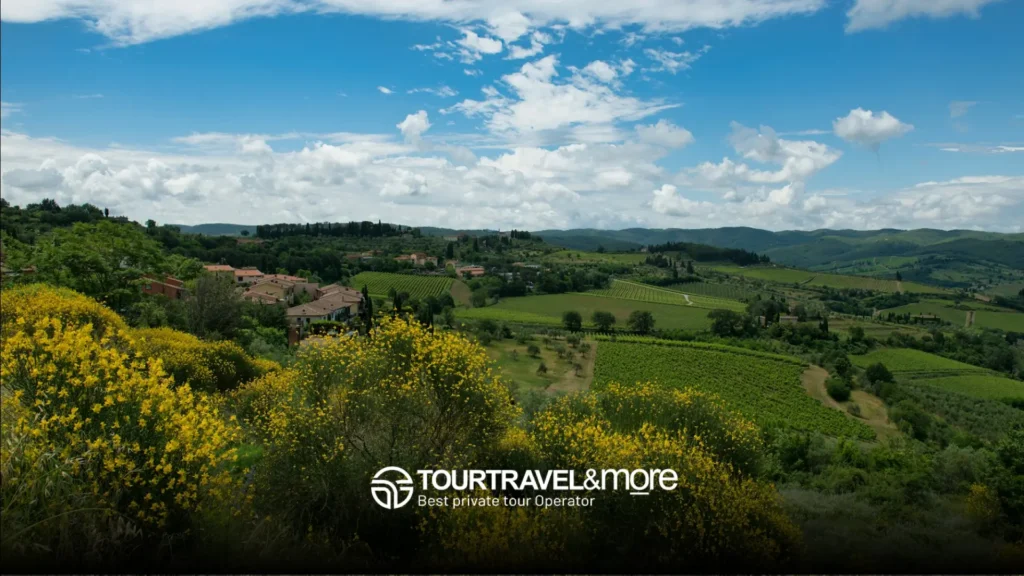
Chianti alternative: if you prefer a quieter day without buses, the Chianti Classico region is 30-40 minutes from Florence by car. Villages like Greve in Chianti, Panzano or Radda offer vineyards, wineries where you can taste directly from the barrel, and a quieter, greener Tuscany than you imagined. You don’t need to be a wine expert: the house wine in any Chianti trattoria is consistently good and costs three euros a quarter-litre.
If you’d rather not drive on Tuscan roads or hunt for parking in medieval villages — something that in summer can turn a day trip into a nightmare — Tour Travel and More runs private and group tours to Siena, the Chianti, San Gimignano and other Tuscan destinations with local guides who know the spots that don’t appear on tourist maps. Especially recommended if you’re travelling as a couple, with family, or simply want someone else to handle the logistics.
Day 7: Santa Croce, San Marco and a Slow Goodbye
The seventh day has one rule: don’t over-plan.
Start at the Basilica of Santa Croce. It’s the largest church of the Franciscan order in the world and also the pantheon of the great Italians: Michelangelo, Galileo, Machiavelli, Dante (though he’s buried in Ravenna, he has a cenotaph here), Rossini. The acoustics are breathtaking. Giotto’s frescoes in the side chapels predate those in the Scrovegni Chapel in Padua — and almost nobody mentions it.
The neighbourhood around Santa Croce has the best concentration of second-hand bookshops, leather craft shops and Florentine stationery in the city. If you’re looking for something authentic to take home — not a fridge magnet — this is the neighbourhood.
In the afternoon, the Museo di San Marco: a Dominican convent where Fra Angelico painted frescoes directly onto the walls of the monks’ cells in the 15th century. Each cell has its own Annunciation, its own Crucifix, its own biblical scene painted as if it were a private meditation. It’s one of the quietest and most beautiful museums in Florence. And it’s almost always half empty.
If you have the last free hours before dinner, go back to wherever you left wanting more time. That’s exactly what a good week in Florence does: leave you with a list of unfinished business that justifies coming back.
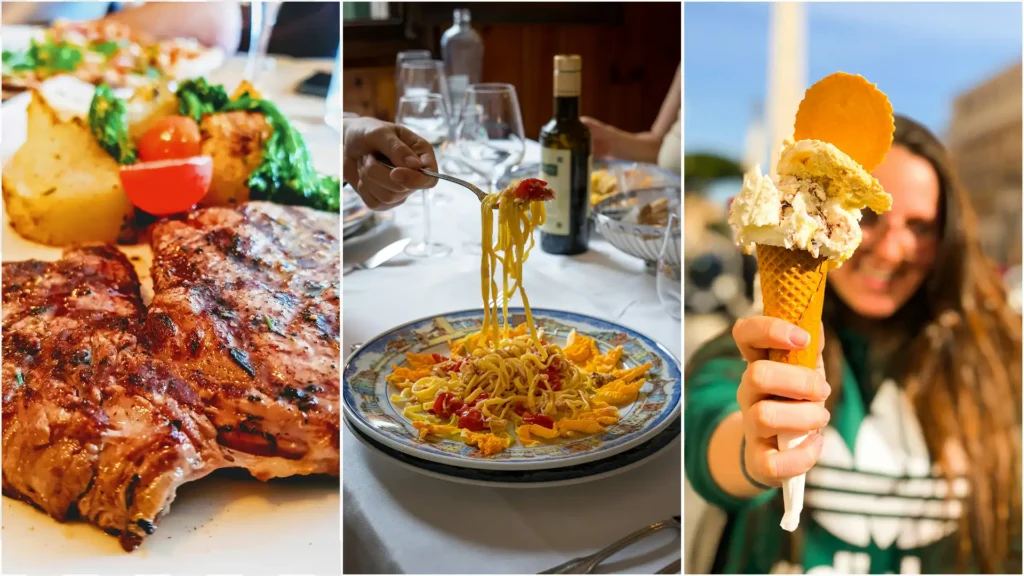
Food: How to Eat Well in Florence Without Breaking the Bank
The golden rule that locals never write in any guidebook: where you see Italians eating, you eat too. Three laminated menus with photographs, a tout on the pavement and a menu in four languages: keep walking. No exceptions.
Florentines don’t eat out every day — it’s expensive and home cooking is good. When they do go out, they go to specific places where the quality-price ratio justifies the expense. Ask at your accommodation where the owner has dinner. That recommendation is worth more than any TripAdvisor list.
Where to eat like a local:
- Trattoria Da’i Boia (Oltrarno): small, no tourist menu, with a bistecca alla fiorentina that justifies the trip. Dinner for two around €55.
- Il Santino (San Frediano): four tables, short menu, wine from small producers. Tuscan cooking with no concessions to international tastes.
- Mercato di Sant’Ambrogio: the best quick lunch in Florence. Hot food stalls, cheeses, cold cuts, Altamura bread. Eat standing, eat well, spend five euros.
What you absolutely must eat:
| Dish | What it is | Where to try it |
|---|---|---|
| Bistecca alla fiorentina | Chianina beef T-bone grilled over charcoal, minimum 600g | Trattoria Da’i Boia, Buca Mario |
| Ribollita | Thick bread, bean and winter vegetable soup | Trattorias in Oltrarno |
| Lampredotto | Tripe sandwich with salsa verde | Stalls at Mercato Centrale |
| Pappardelle al cinghiale | Wide pasta with Tuscan wild boar ragù | Any trattoria with a handwritten menu |
| Schiacciata con l’uva | Flat bread with grapes, olive oil and sugar (autumn only) | Bakeries near Santa Croce |
On gelato: it’s consistently good across the entire city. Don’t search for the best gelateria or queue at the ones with 200 reviews. Artisan gelato in Florence is a cultural constant, not an exception.
On wine: order the house wine. In any Oltrarno or Chianti trattoria the house wine is a Chianti Classico or Morellino from local producers that would cost €15 in a shop. At the table it costs three. Nobody will judge you for ordering it.
Getting to Florence and Getting Around the City
By train is the most comfortable option from any Italian city. From Rome: 1h 30min on a high-speed train (Frecciarossa or Italo). From Milan: 1h 45min. From Bologna: 35 minutes. Santa Maria Novella station is in the heart of the historic centre.
By plane: Amerigo Vespucci Airport (FLR) is 10 minutes from the centre by tram (T2 line, €1.50). Pisa Galileo Galilei Airport (PSA) has direct trains to Florence every hour (1h 10min, ~€10) and tends to have cheaper flights.
Getting around the city: on foot. 90% of what’s worth seeing in Florence is in the historic centre, which is a Limited Traffic Zone — private cars can’t enter. Everything is 15-20 minutes’ walk from everything else. For Piazzale Michelangelo and San Miniato, buses 12 and 13 from Piazza Ferrucci (€1.50) get you there in 10 minutes.
Don’t hire a car to get around the city. Only hire one if you plan to do the Chianti day trip independently.
Frequently Asked Questions About a Week in Florence
Is a week in Florence too long?
No. Most travellers leave with the feeling they didn’t have enough time. The key is combining 4-5 days in the city with 1-2 day trips into Tuscany. Florence has layers: the big museums in the first few days, the neighbourhoods and secrets after that.
Which museums absolutely need to be booked in advance?
The Uffizi, the Accademia and Brunelleschi’s Dome. Without a booking you can lose half a day just queuing. The Bargello, Palazzo Pitti and Medici Chapels don’t usually need much advance booking, although in summer it’s worth booking those too.
How much money do I need per day in Florence?
Between €80 and €120 per day excluding accommodation is a realistic estimate for eating well, visiting museums and getting around comfortably. Just the Uffizi + Accademia + Dome tickets add up to over €45-50. Add transport, meals and the occasional trattoria dinner and the budget climbs quickly if you don’t plan ahead.
Is a day trip to Siena worth it?
Absolutely. Siena is the perfect counterweight to Florence: more medieval, quieter, with a Piazza del Campo that literally makes people sit down on the ground to contemplate it. They’re completely different worlds 1 hour 20 minutes apart by bus. Don’t stay only in Florence.
What day of the week is best for museums?
Tuesday and Wednesday are the quietest days. The Accademia closes on Mondays — an error that ruins many itineraries. Sundays the centre gets saturated. Always go early: arriving at the Uffizi at 9am on a Tuesday is a completely different experience from arriving at noon on a Saturday.
What is the best time of year to visit Florence?
April-May and September-October. The weather is pleasant, the light is the best for photographing the city, and the queues are manageable. July and August are the most crowded and hottest months: the historic centre can exceed 38°C at midday and the museums turn into air-conditioned refuges packed with people.
Can you do all of this on foot?
90% yes. The historic centre is compact and flat — from the Duomo to Ponte Vecchio is 15 minutes. For Piazzale Michelangelo and San Miniato al Monte, bus 12 or 13 (€1.50) gets there in 10 minutes. You don’t need a taxi or private transport for anything in the centre.
When the train pulled out of Santa Maria Novella on my last day, I turned my head to see the dome one final time. It was still there, orange and enormous, completely indifferent to my leaving. Florence is like that: it doesn’t need you, but once you’ve walked its streets, you need it.
Seven days are not enough. But they are a magnificent beginning.