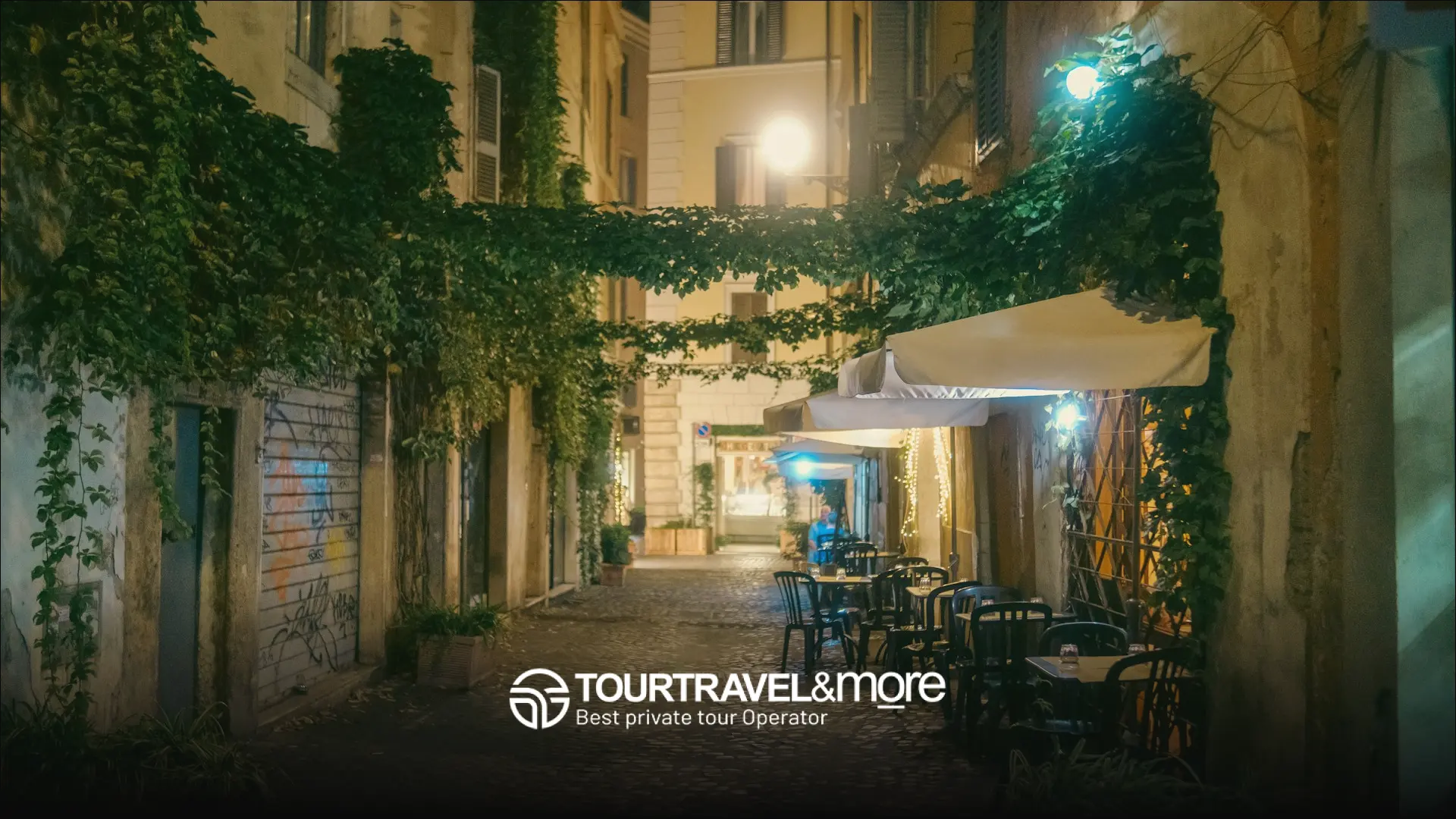
I booked five nights in Rome and arrived in the city without having settled where I’d sleep the first one. I’d had two tabs open for weeks: an apartment with a balcony in Trastevere and a hotel two streets from the Pantheon, right in the Historic Center. Both had great reviews, both cost about the same, and every time I asked someone who’d already been to Rome, I got the opposite answer to the one before. In the end I cheated: I booked the first night in Trastevere and the rest of the week in the Historic Center, so I could compare both neighborhoods with the same suitcase in tow.
What I didn’t expect was that the difference wouldn’t be so much in the quality of the accommodation as in how my entire day changed depending on where I laid my head each night.
Why I Couldn’t Decide Between the Two Neighborhoods Before Booking
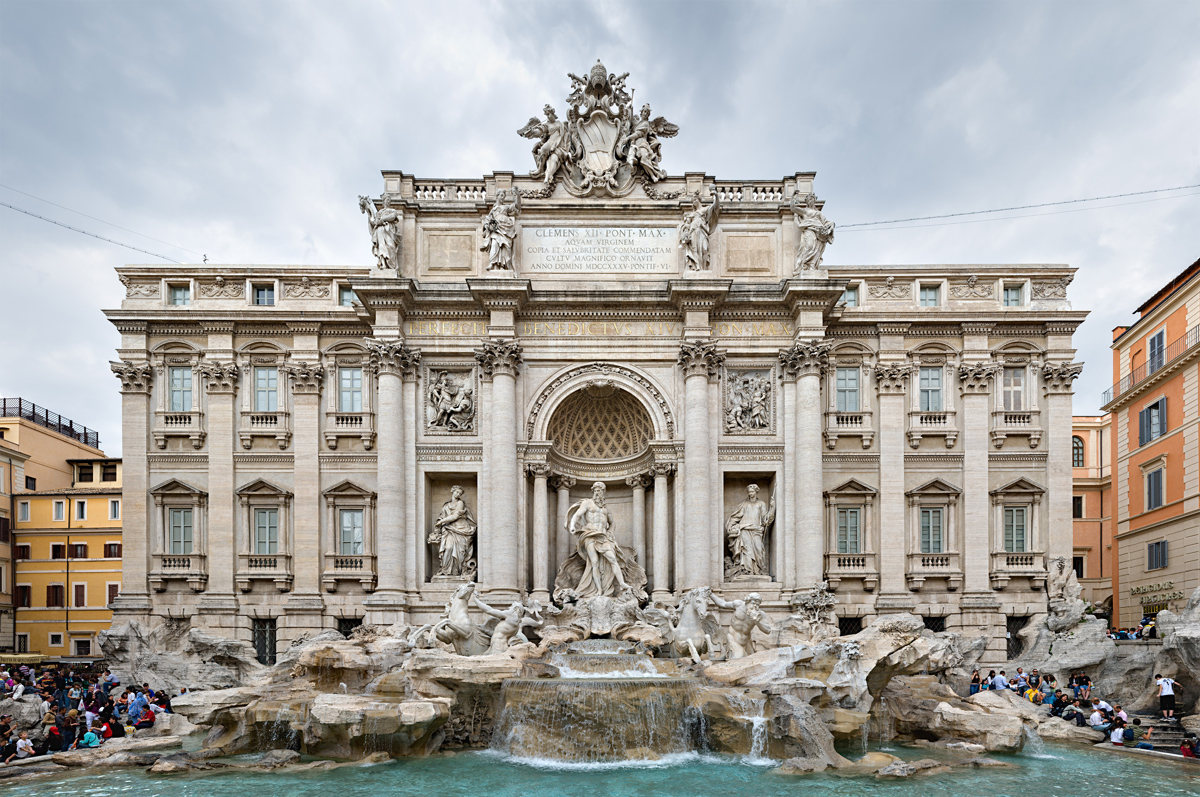
Before traveling I’d read the same thing you’ve probably read: that Trastevere is the “authentic” neighborhood, with cobblestone streets, laundry hanging between balconies and Rome’s liveliest nightlife, and that the Historic Center is where the places you actually go to Rome for are —the Pantheon, the Trevi Fountain, Piazza Navona— in exchange for paying a bit more to sleep there. That description wasn’t wrong, but it oversimplified two things I only understood by walking them: how much having the Tiber River in between actually weighs in practice, and how much noise you have to be willing to put up with depending on the exact street, not just the neighborhood in general.
I also found out that “Historic Center” is a broader term than it seems on booking sites: sleeping right behind the Pantheon isn’t the same as sleeping ten minutes away near Termini, even though both listings advertise themselves the same way.
What It’s Like to Stay in Trastevere, Night After Night
On the first night, in an apartment behind Piazza di Santa Maria in Trastevere, I had dinner at a trattoria with no English menu and walked back at eleven with the square still full of people sitting on the fountain steps. It was the prettiest Rome I saw on the whole trip. It was also the night I slept the least: the street didn’t go quiet until past two in the morning, and by seven delivery vans were already coming through the narrow alleys.
Trastevere by day is a completely different thing from Trastevere by night. In the morning it’s quiet, almost like a real neighborhood, with bakeries and locals doing their shopping. From eight in the evening onward it fills up with tourists and young Romans out for dinner and drinks, on weeknights too, not just weekends. If your room faces a street with restaurants, plan for that.
 Private
 Private
 Private
How Everything Changed When I Moved to the Historic Center
On the fourth day I switched accommodation, and that same afternoon I walked out of the hotel, turned two corners, and I was already standing in front of the Pantheon, no map or planning needed. That was the biggest difference I noticed compared to Trastevere: not having to decide “is it worth going now or should I wait until tomorrow” before every visit, because everything was a short walk away. In exchange, the neighborhood itself felt less “lived-in” to me —more restaurants with menus in four languages and less neighborhood life— and the price of accommodation rose noticeably compared to Trastevere for a room of similar size and quality.
At night, the Historic Center also has atmosphere, but concentrated in specific squares like Piazza Navona or Campo de’ Fiori. Outside those areas, plenty of streets go fairly quiet after dinner, which I appreciated after that first night in Trastevere.
| Aspect | Trastevere | Historic Center |
|---|---|---|
| Nightlife | Neighborhood life, terraces and music until late, on weeknights too | Lively in specific squares, quiet on the rest of the streets |
| Accommodation price | Somewhat more affordable for similar quality and size | More expensive for being steps from the main monuments |
| Nighttime noise | Noticeable if your street has restaurants or is near a lively square | Low, except around Piazza Navona or Campo de’ Fiori |
The Real Difference When It Came to Reaching the Places I Wanted to See
This was what weighed most on my final decision. It’s not just whether a neighborhood “is closer” to the center, but how many real minutes add up from crossing the river or not, every single time you want to see something. From Trastevere, any plan near the Pantheon or Piazza Navona started with crossing the Ponte Sisto, and that walk, pleasant at ten in the morning, felt like an uphill climb by the sixth time that day. From the Historic Center, on the other hand, the Colosseum and the Forum were just as far as they were from Trastevere, so it wasn’t a perfect solution for everything either.
| Point of interest | From Trastevere | From the Historic Center |
|---|---|---|
| Pantheon and Piazza Navona | About 20 minutes crossing the Ponte Sisto | 3-5 minutes |
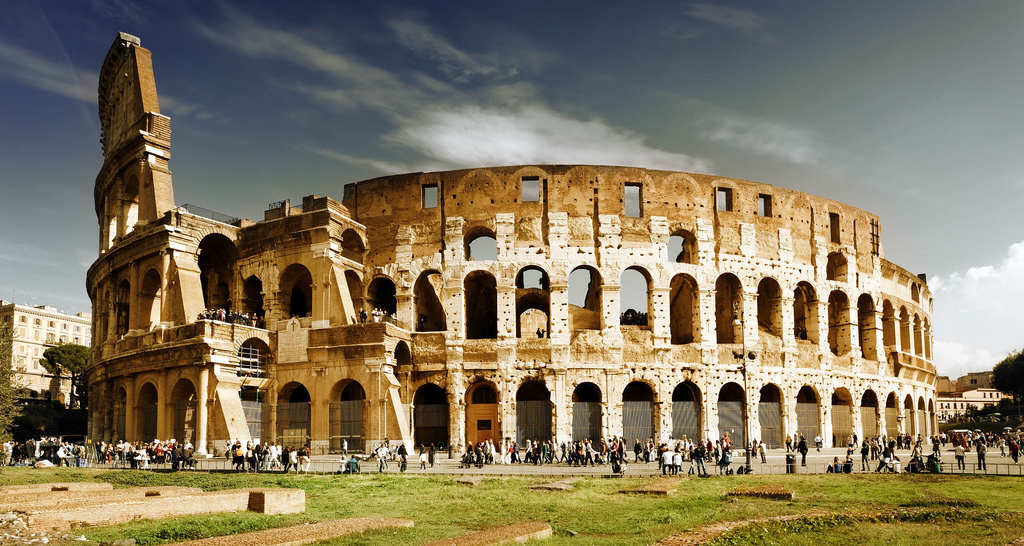
| Colosseum and Roman Forum | 30-35 minutes on foot or a short bus ride | 15-20 minutes |
| St. Peter’s Basilica | 20-25 minutes along the river | 20-25 minutes, a similar distance |
Why the Neighborhood Stopped Mattering So Much With Tour Travel & More
For the guided visits I’d booked in advance, especially the Vatican and the Colosseum, I hired a private tour with Tour Travel & More instead of working out each route myself depending on where I was sleeping that night. That’s what really took the weight off the “Trastevere or Historic Center” decision, because I stopped having to choose a neighborhood based on logistics and could choose it based only on what atmosphere I wanted to live.
With Tour Travel & More, the neighborhood stopped dictating the itinerary:
- Pickup at your accommodation, wherever it was — The guide picked me up both at the apartment in Trastevere and at the hotel in the Historic Center, so I never had to add extra walking minutes before starting the day.
- Routes that didn’t depend on crossing the river on foot — On the hottest days or the busiest ones, I didn’t have to cross the Ponte Sisto back and forth the way I did on the afternoons I went on my own.
- Itinerary adjusted to wherever I was sleeping that night — The guide coordinated the order of the visits around my accommodation at the time, instead of forcing me into a route planned for another part of the city.
- An honest recommendation about the neighborhood — He confirmed what I already suspected myself: for a short getaway, paying a bit more for the Historic Center pays off, and for a full week, Trastevere is worth at least a few nights.
So, Trastevere or the Historic Center?
With the five nights behind me, there’s no single winner, and I suspect that’s why the answers I got before traveling were so contradictory. If your trip to Rome lasts two or three days and you want to make the most of every hour without walking extra, the Historic Center makes up for the higher accommodation price. If you have a week or more, sleeping in Trastevere for at least a couple of nights is worth it for the atmosphere, even if it means putting up with a bit more noise and the occasional long walk across the river.
If I did the trip again, I’d split it in two just like I did this time. But that second time, I’d once again leave the logistics of the guided visits in the hands of someone who already knows how to adapt to wherever I’m sleeping that night, instead of recalculating the map myself every morning.
- Just your group
- Licensed guides
- Free cancellation