
Search for how to get around Rome and you’ll always get the same list of transport options: metro, bus, tram, taxi, walking. What almost no guide explains is that the real problem isn’t choosing between those options, but getting the ticket right and nailing the first leg — the one from the airport to the hotel — which is where most tourists end up overpaying without even realizing it.
Rome’s transport isn’t complicated in itself: three metro lines, a dense but somewhat slow bus network, and a historic center that’s better covered on foot than in any vehicle. What actually changes the outcome is knowing in advance which pass pays off for your length of stay and how to avoid the two classic traps: buying the Roma Pass just for the transport, and the unofficial taxi waiting outside the terminal.
Rome’s metro: lines, hours and what to expect
Rome has only three metro lines — A, B/B1 and C — far fewer than other European capitals of similar size. The reason is well known: every new excavation runs into archaeological remains that force construction to stop, so the network grows slowly and doesn’t reach every point of interest directly.
Line A (red) runs from Battistini to Anagnina and connects Ottaviano (Vatican and Vatican Museums), Spagna (Spanish Steps) and Termini. Line B/B1 (blue) runs from Laurentina to Rebibbia or Conca d’Oro and stops at Colosseo and Piramide. Line C (green), the newest, reaches San Giovanni and keeps expanding toward the center.
The metro runs from 5:30 AM to 11:30 PM Sunday through Thursday, and until 1:30 AM on Fridays and Saturdays. Outside those hours, the night bus network takes over.
Bus and tram: when they beat the metro
With more than 350 lines, the bus covers areas the metro simply doesn’t reach: Trastevere, Testaccio and much of the historic center, where digging is banned due to archaeological risk. Night buses, marked with the prefix N, replace the metro once it closes.
Trams are just six lines, but they solve very specific routes: line 8 connects Trastevere with the center and Largo Argentina, and others cover Testaccio and the eastern part of the city.
Tickets are bought before boarding — at tobacco shops (“tabacchi”), metro machines or the official app — and validated on entry. Carrying a valid ticket without having validated it counts as traveling without one and can mean the same fine as having no ticket at all.
Which ticket to buy based on your plans
Rome’s ticket and pass options are designed to fit the length of your trip, but since they’re scattered across several pages, no one sees them side by side. Here’s the full comparison:
| Ticket type | Approximate price | Who it’s worth it for |
|---|---|---|
| BIT (100 min, 1 metro ride + unlimited buses/trams) | €1.50 | 1-2 day stays with few separate trips |
| 24-hour pass | €7 | A full day with 4 or more trips |
| 48-hour pass | €12.50 | 2 full days of stay |
| 72-hour pass | €18 | 3-day stays; usually the best value with 3+ trips a day |
| CIS (weekly) | €24 | 5 to 7 day stays |
| Roma Pass 72h (transport + 1 admission) | €52 | Only if you’ll actually use the included museum or site admission |
The Roma Pass doesn’t pay off if bought just for the transport: it costs more than the equivalent 72-hour pass, and its real advantage is the free admission it includes, not the travel.
 Private
 Private
 Private
Taxis and ride-hailing apps: official rates and how to avoid being overcharged
In Rome, only the white vehicles with a municipal license and a visible meter are official taxis. Anyone who offers to carry your bags or “help” you find a taxi right at the terminal door, without a queue or official stand involved, isn’t one, and the price they charge isn’t regulated by anyone.
FreeNow lets you book an official taxi from your phone, avoiding the language barrier and with the fare calculated before the ride. Uber in Rome doesn’t work like in other cities: it only operates with licensed cars (Comfort category or similar), not private drivers, so it usually ends up pricier than a regular taxi, not cheaper.
Within the Aurelian Walls — the area where almost all the tourist sites are concentrated — official taxis run on the meter except on trips to and from the airports, which have a fixed rate set by the city council regardless of traffic.
From the airport to the center: Fiumicino and Ciampino compared
Nowhere explains the options for Rome’s two airports side by side, so every visitor ends up comparing only part of the picture:
| Route | Approximate time | Approximate price |
|---|---|---|
| Fiumicino → Termini (Leonardo Express, direct) | 32 min | €14 |
| Fiumicino → Trastevere/Ostiense/Tiburtina (FL1 regional train) | 45-50 min | €8 |
| Fiumicino → city center (official taxi, fixed rate) | 40-60 min depending on traffic | €50-55 |
| Ciampino → Termini (shuttle bus) | 40 min | €6 |
| Ciampino → city center (official taxi, fixed rate) | 30-40 min | €31 |
The fixed taxi rate is what protects you most from overpaying: it doesn’t change even in traffic, and it’s exactly what people miss when they take an unofficial taxi thinking they’re haggling a better price.
The historic center is better covered on foot
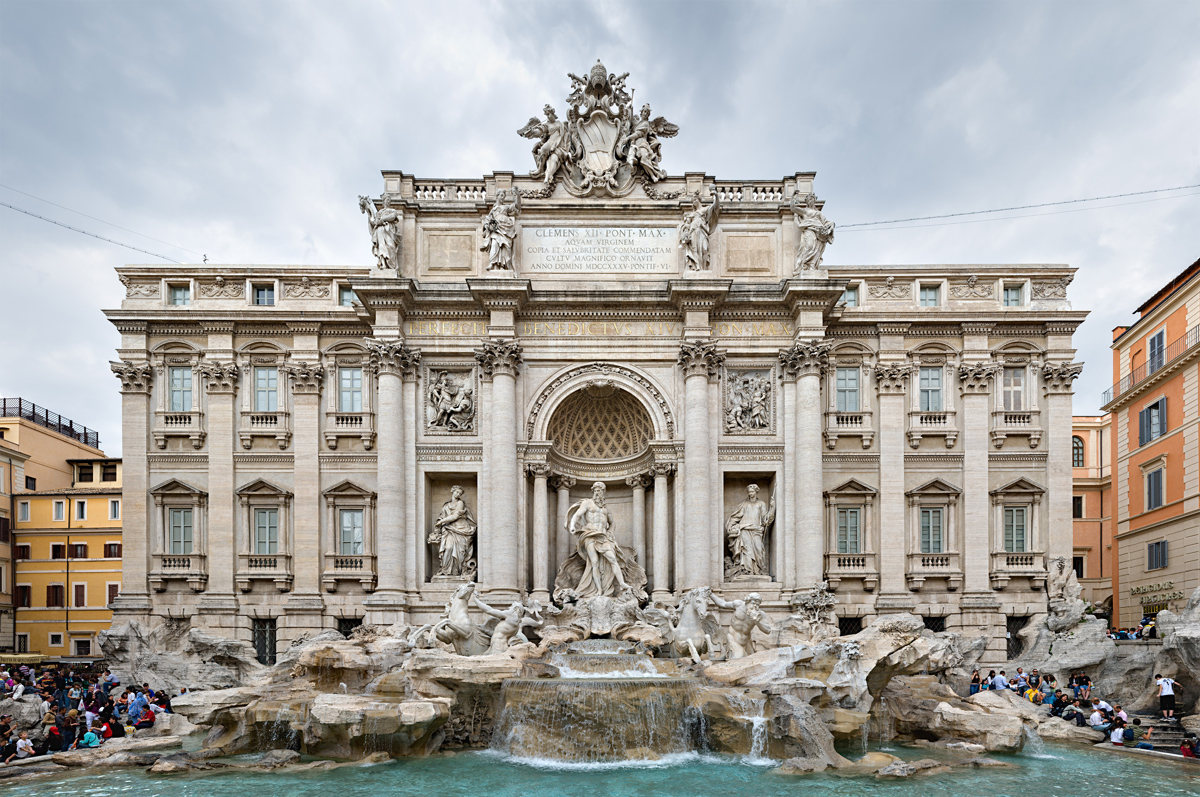
Rome’s cobblestones — the “sampietrini” — and the narrow streets of the center mean that, between the Pantheon, Piazza Navona, Trevi Fountain and Campo de’ Fiori, walking is almost always faster than waiting for a bus and then walking the same stretch from the stop anyway. The metro, moreover, has no station within that area due to the ban on digging near the archaeological sites.
Comfortable shoes matter more for transport planning than it seems: on sampietrini, any shoe without a good sole makes a 15-minute walk feel twice as long.
Apps worth having installed before you arrive
Moovit and Google Maps give real-time schedules for metro, bus and tram, something the physical panels at stops don’t always reflect accurately. Roma Mobilità, ATAC’s official app, lets you buy and validate your ticket from your phone without stopping at a tobacco shop.
The most convenient option is Tap&Go: any contactless bank card or your phone can be tapped directly on the metro or bus validator, with no physical ticket needed, and the system charges per ride up to a daily cap equal to the 24-hour pass.
Bikes and e-scooters: when they’re worth it and when they’re not
Lime, Bird and Dott run dockless e-scooters and e-bikes in Rome, with an unlock fee of around €1 plus €0.15-0.25 per minute. They work well for short, flat trips in modern neighborhoods, but they’re not a good option on the sampietrini of the historic center or on the slopes of the Aventine or Janiculum hills, where the uneven surface and gradient make them uncomfortable and less safe.
How to get around Rome with Tour Travel & More
Figuring out which ticket to buy, how to get from the airport without overpaying and which routes are worth walking is the part of the trip nobody wants to deal with once they’re already on vacation.
With Tour Travel & More, these problems disappear:
- Private airport-hotel transfers — no relying on a taxi fare or a train schedule.
- Luxury vehicle with chauffeur — no hauling luggage down metro stairs or working out line transfers.
- Official licensed guide — knows what’s better covered on foot and what route is worth doing by car.
- Tailored itinerary between attractions, with no dependence on bus lines that don’t reach the historic center directly.
- 24/7 Guardian Angel Service — human coordination before, during and after every transfer, in case the plan changes along the way.
The question that matters isn’t which transport to use, but which ticket and which first ride to choose
Rome’s transport has no trick to it once you’re there: metro, bus and tram cover the city reasonably well, and the historic center is better walked than driven. Where money actually gets lost is in the two moments almost nobody plans ahead for: the ticket that doesn’t match the length of the trip, and the airport-to-hotel ride settled with the first taxi offered at the door.
Before arriving in Rome, the question worth asking isn’t “which mode of transport is best,” but “how many days will I be here, and how do I plan to get from the airport to the hotel without overpaying.”
- Just your group
- Licensed guides
- Free cancellation