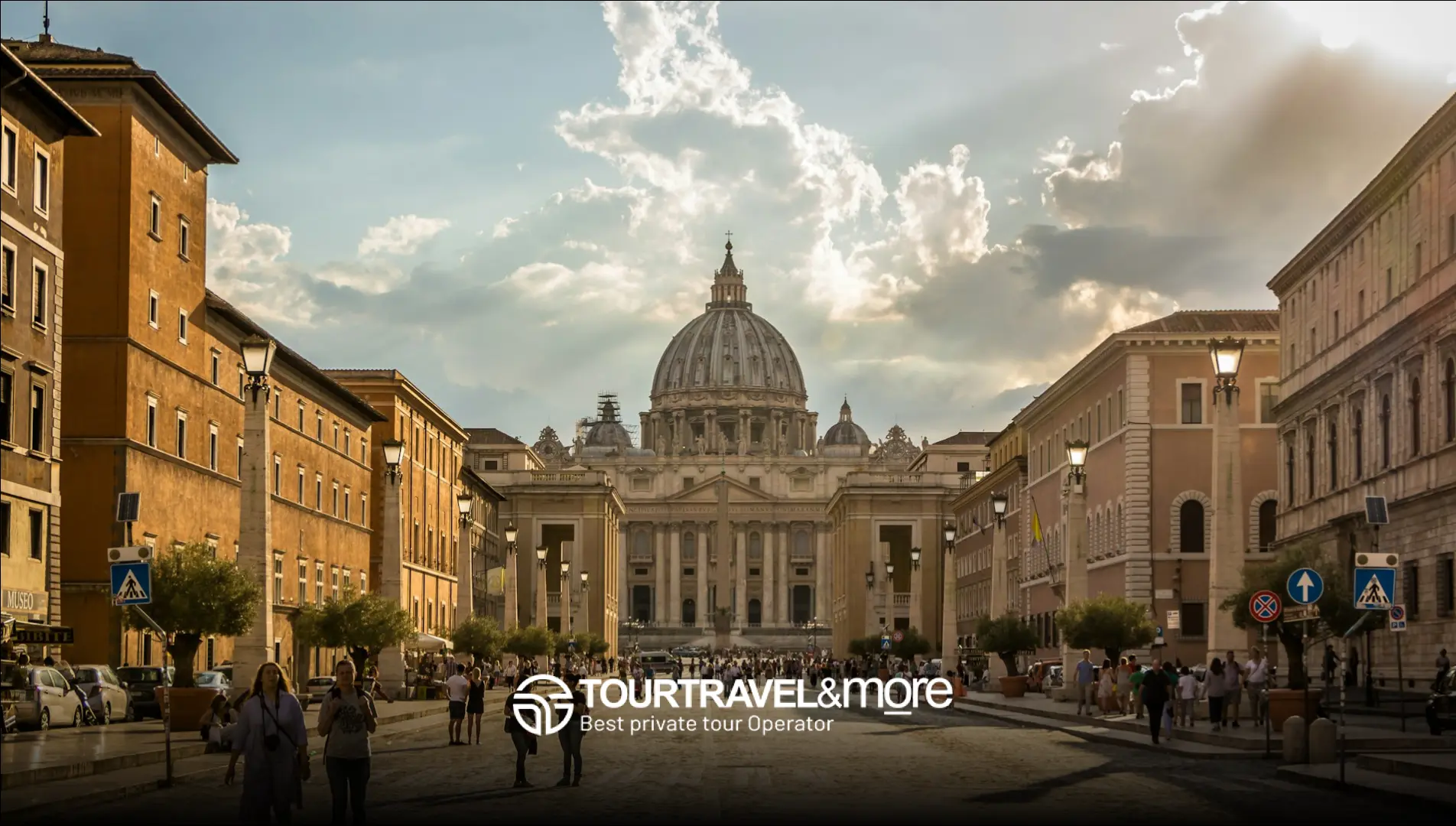
Nuria posted the question in a group of travelers the week before flying out: “private guide in Rome, or is that 300 euros down the drain?” Forty people answered within two days, split into two camps with equal certainty: some swore it was the best part of the trip, others said Rome is perfectly fine seen with a phone and an audio guide app. Neither camp was lying.
The reason both are right at once is that Rome isn’t one single kind of place. It’s a mix of monuments that need someone to explain what you’re looking at, and streets and squares that are enjoyable on their own, with no explanation needed. Mixing up those two categories is exactly what makes the same question get opposite answers.
Why the Same Question Gets Two Opposite Answers
A guide doesn’t add the same value everywhere. It adds a huge amount where what’s in front of you doesn’t explain itself, and very little where the experience already works just by walking and looking.
The Roman Forum is the clearest example: without a guide, it is, literally, a field of broken columns and stone blocks with no signage explaining which building was which. With a guide, those same stones turn into a Senate, a temple, a courthouse basilica, the scene rebuilt inside the listener’s head. The change isn’t one of degree, it’s one of kind: you go from seeing ruins to understanding an entire city.
Piazza Navona, on the other hand, is just as enjoyable with or without a guide. It’s a living baroque square, with Bernini’s fountains, terraces and atmosphere, and its beauty doesn’t depend on someone narrating its history for you to feel it. A guide adds anecdotes, it doesn’t change the core experience. Lumping these two cases into the same question (“is a guide in Rome worth it?”) is exactly what produces contradictory answers that aren’t actually contradicting each other: they’re talking about different places.
| Place | Without a guide | With a guide |
|---|---|---|
| Colosseum and Roman Forum | Scattered columns and stones, hard to picture how it worked | Visually rebuilds the building and how each area was used |
| Vatican Museums and Sistine Chapel | Over 7 km of route with no narrative thread, easy to get lost in the maze | Picks a route that makes sense and explains what to look at in each room |
| Trastevere, Piazza Navona, Fontana di Trevi | Just as enjoyable walking without explanation | Adds anecdotes, but doesn’t change the core experience |
Neither side of the debate is wrong. Each one describes a different half of the city.
The Colosseum and Roman Forum Without a Guide: Scattered Stones
The Colosseum on its own is reasonably easy to understand: the shape of the amphitheater is obvious, and an explanatory sign at the entrance covers the basics. The problem shows up as soon as you cross into the Roman Forum, included on the same ticket, where 90% of what’s still standing is foundations, loose columns and arches with no visual context connecting them.
A licensed guide rebuilds there what no sign can sum up: where the Senate stood, why the Via Sacra was the empire’s most important street, what exactly happened in front of the Temple of Vesta. Without that narration, most visitors walk twenty minutes among stones, take a few photos, and leave without realizing they were standing on the political center of an empire that ruled half the known world.
Italy, moreover, regulates by law who is allowed to guide inside these archaeological sites: only officially licensed guides (guida turistica abilitata) may act as one within the grounds. That matters because it’s exactly where the difference shows most between paying for a qualified guide and hiring someone without that training: the first connects every stone to real history, the second repeats generic facts anyone could read off a plaque.
The Vatican Museums, Where a Guide Matters Most
If there’s one place in Rome where the question “is a private guide worth it?” gets an almost unanimous answer, it’s the Vatican Museums. The full route to the Sistine Chapel runs over seven kilometers of corridors and rooms, with thousands of pieces on display and no obvious narrative thread for a first-time visitor.
Without a guide, the usual experience is getting lost among galleries of maps, tapestries and Raphael’s rooms, not knowing which ones are worth stopping for and which can be walked through quickly, arriving at the Sistine Chapel exhausted and unable to really take it in. A private guide picks a route that makes sense, paces the time spent in each room, and saves just enough energy for Michelangelo’s ceiling, explaining beforehand which scenes to look for, since talking out loud is forbidden once inside.
The other advantage, less talked about, is access: guided tours with a reservation go in through a different entrance than the general line, which matters a lot if the visit falls during high season or on the last Sunday of the month, when free admission multiplies the crowds. In a space this large and this dense with information, the guide isn’t a narrative luxury: it’s the difference between leaving with a clear idea of what you saw or with a blurry sense of accumulated art.
Trastevere, Piazza Navona and the Squares: Where a Guide Matters Less
This is the part almost no tour website admits, because it doesn’t sell: there are entire areas of Rome where a private guide adds relatively little compared to just walking around.
Trastevere is best enjoyed wandering without a plan through narrow streets, balconies hung with laundry and sunset light, and no historical fact changes that feeling. Piazza Navona and the Fontana di Trevi work the same way: they’re scenes you feel with your eyes, not through an explanation. A guide can add why the square is oval-shaped or the legend behind the coin in the fountain, but taking that anecdote away doesn’t break the experience the way removing the guide from the Roman Forum does.
The practical takeaway is that a private guide for the entire trip, morning to night, spends budget on hours where that spending doesn’t register, while concentrating the guide on the monuments with lost context (Colosseum, Forum, Vatican) and leaving the squares and neighborhoods for free walking is the combination that gets the most value for the money.
How Much a Private Guide in Rome Costs
| Duration | Approximate price | What’s usually included |
|---|---|---|
| 2-3 hours (one monument) | €250-500 per group | Licensed guide, sometimes without tickets included |
| Half day (4 hours) | €400-700 per group | Guide plus a combined itinerary for two sites |
| Full day (8 hours) | From €1,500 per group | Guide and, in some cases, private vehicle included |
Prices vary by season, language and whether the guide includes tickets or transport, but the relationship holds: the bigger and more complex the site, the more the cost shows up in the experience, not just the bill. Booking 2 loose hours for the Colosseum usually costs more per hour than a full combined day, because the guide’s fixed cost gets spread across less time.
The Real Mistake Isn’t Hiring a Guide, It’s Hiring the Wrong One
Most negative reviews about private guides in Rome aren’t actually about it “not being worth it” — they’re about unlicensed guides repeating a generic script, or websites selling a “private tour” that’s really a small group with fixed stops and no room to adapt it.
An official guide licensed by Italy’s Ministry of Tourism has passed specific exams on the art history and the site they guide, and holds legal authorization to speak inside archaeological and museum grounds — something an unlicensed guide can’t do without risking having the site itself pull their access. The difference between the two doesn’t show up in the price of the ad, it shows up halfway through the visit, when one connects every room to the last and the other improvises.
When It’s Worth It and When You Can Skip the Expense
It’s always worth it at the Roman Forum, the Vatican Museums, and any site where what you’re looking at doesn’t explain itself. It’s also worth it if the trip is short and there’s no room to research on your own beforehand. It matters less in neighborhoods made for walking, squares that are already photogenic on their own, and on longer trips with time to spare for wandering without a rush.
The right question isn’t “guide, yes or no?” — it’s “at which moments of the trip does the guide change what I’m going to understand, and at which ones does it only change what I’m going to hear while looking at something that already explains itself?”
Private Guide in Rome with Tour Travel & More
Telling apart which monuments need context and which are enjoyable on their own, on top of finding a guide with a real license instead of a generic stand-in, is the part of the trip almost no one gets right without having been to Rome before.
With Tour Travel & More, these problems disappear:
- 100% private tour — The itinerary focuses on the monuments where the guide genuinely changes the experience, without wasting hours on filler stops.
- Officially licensed guide — Authorized to speak inside the Colosseum, the Roman Forum and the Vatican Museums, with training an unlicensed guide doesn’t have.
- Priority access to the Colosseum, Roman Forum, Palatine Hill and Vatican Museums with the Sistine Chapel, skipping the general line.
- Luxury vehicle with chauffeur, if the plan combines several monuments the same day without relying on public transport.
- Guardian Angel Service 24/7 — Human coordination before, during and after the tour, in case plans change on the fly.
The 300 Euros Nuria Did Spend
Nuria ended up booking a guide only for the Colosseum, the Roman Forum and the Vatican Museums, three mornings spread across a four-day trip. She spent the rest of her time wandering without a plan through Trastevere, sitting for half an hour in front of the Fontana di Trevi with no one explaining anything, and getting purposely lost in the streets behind Piazza Navona.
When she got home, she wasn’t wondering whether it was worth it: she was wondering why she’d almost spent that money on a guide for the entire trip, when half her best memories were the moments when no one explained anything at all — she just walked.