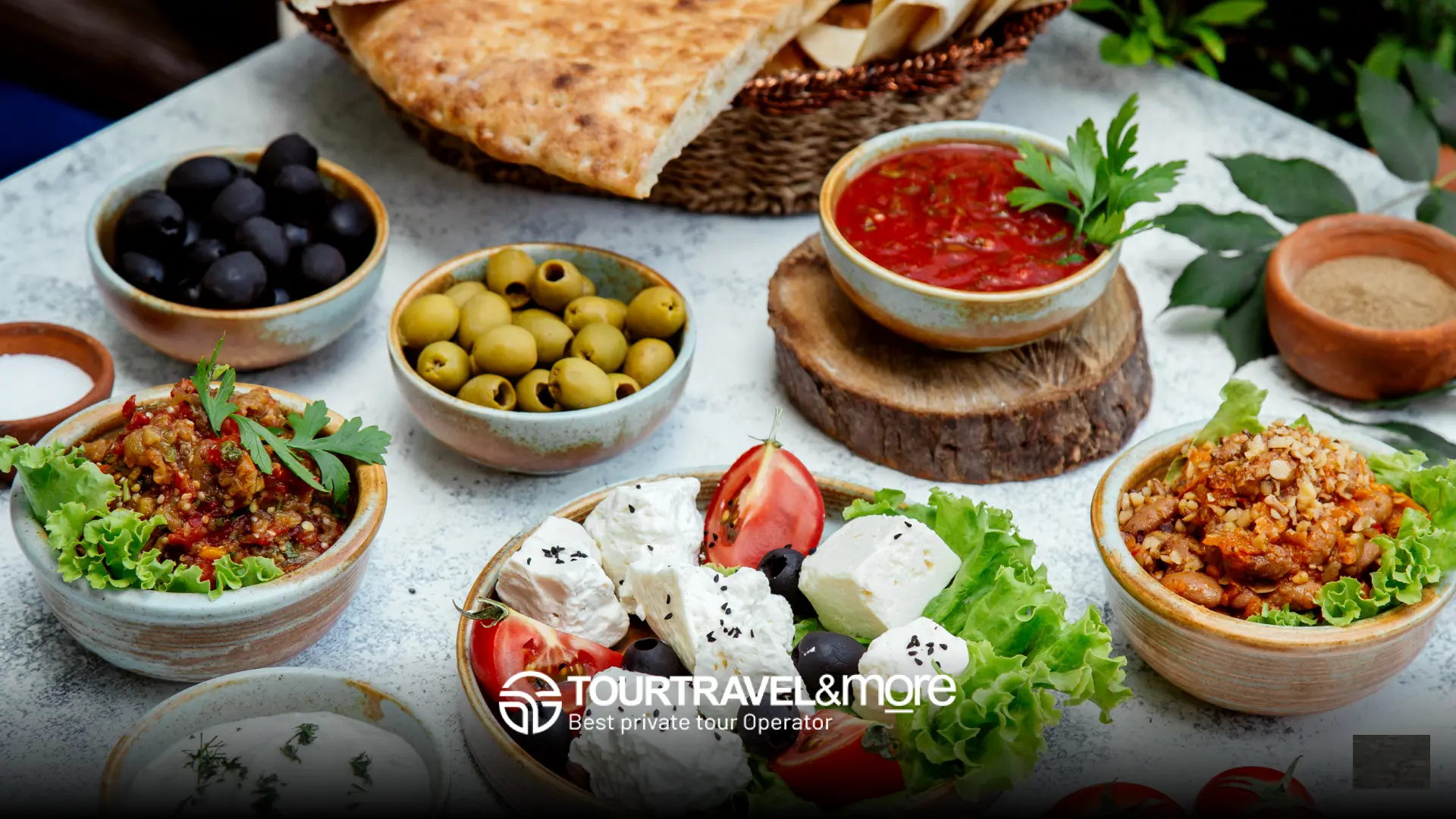
The first time Athens made me truly hungry was after a walk that started as “a quick stroll” and turned into an epic hike. Streets that climb, real heat, two viewpoints “just for a minute,” and an accidental stop to stare at a column like it was modern art. When my stomach started growling, I got the city’s trick: in Athens you don’t just come to see history—you come to let history work up your appetite. And there, between the smell of warm bread and charcoal grill, the city adopts you… through your taste buds.
The dish that makes you say, “Okay, now I get Greece”
Moussaka, queen of the Acropolis
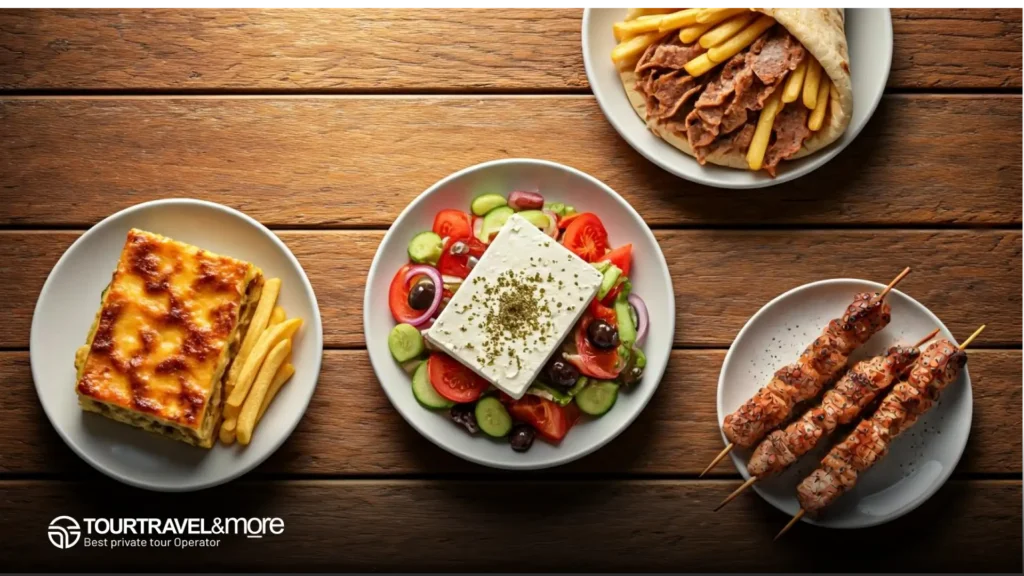
Moussaka is the signature dish. To picture it easily: it’s like an Italian lasagna and an eggplant had a very talented child. Layers of eggplant, meat (usually lamb or beef), and a golden béchamel topping that looks like a cloud.
Honest warning: it’s very filling. It’s the kind of meal that makes you slow down and enjoy. Great for sharing, or for those nights when you’re fully committed to eating well.
Pastitsio, the elegant cousin
If you love baked comfort food, put pastitsio on your list. Thick pasta, meat, and béchamel, all baked together. If moussaka is the queen, pastitsio is the cousin who shows up quietly… and steals the applause.
Street food rules: what you eat while walking (and it saves your day)
Athens is made for walking, which is why street food is basically sacred.
Gyros, the universal lifesaver
Gyros is the Greek cousin of kebab—same idea, more swagger. Pita stuffed with shaved meat from the rotating spit, tomato, onion, fries, and tzatziki. It works anytime: late morning, lunchtime, or at midnight.
Souvlaki and kalamaki, grilled and straight to the point
Souvlaki is marinated meat grilled on a skewer. If it’s served just on the stick, you’ll often see kalamaki. If it’s wrapped in pita, it becomes a full meal you can eat on the go. Best part: it’s usually budget-friendly and seriously satisfying.
| Typical on the street | What it is | When it saves you |
|---|---|---|
| Gyros | Pita with meat and sauce | Sudden hunger |
| Souvlaki | Grilled skewer | Fast lunch |
| Kalamaki | Skewer without pita | All-day snacking |
Starters that turn the table into a party
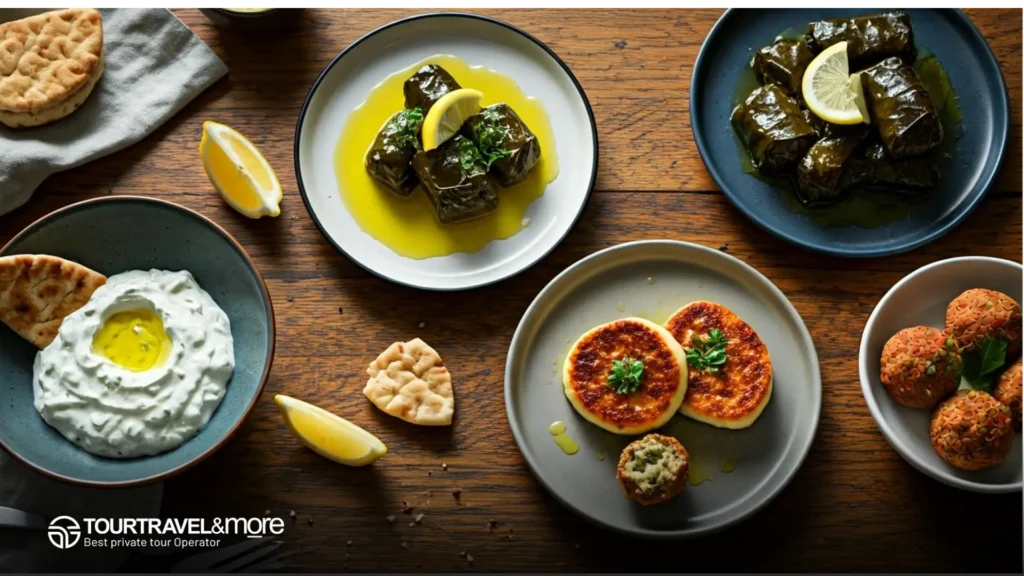
In Athens, you don’t start with one big dish—you start by sharing plates.
Tzatziki (yogurt, cucumber, garlic) is like air conditioning for your mouth. Cool, creamy, and good with everything.
Horiatiki (Greek salad) is not “diet food”: tomato, cucumber, Kalamata olives, and a generous slab of feta.
Dolmades (rice wrapped in vine leaves) are small and dangerous—you try one and suddenly they’re gone.
Other classics worth ordering:
- Saganaki: fried or pan-seared cheese, salty and golden.
- Keftedes: Greek meatballs with herbs and spices, juicy inside.
Classic bakeries: how Athenians actually do breakfast
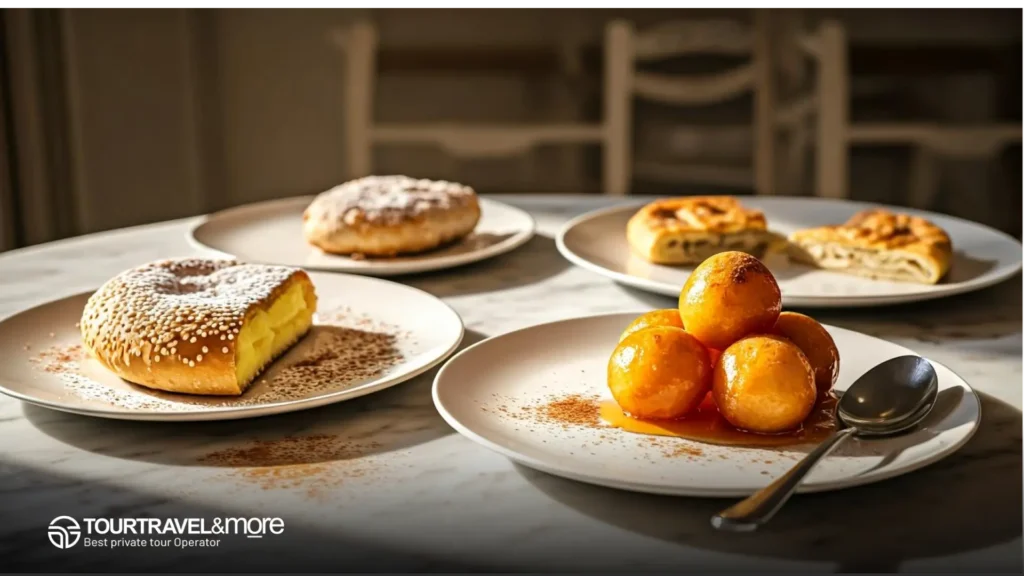
Mornings in Athens smell like bread and phyllo pastry. The everyday grab-and-go staple is koulouri, a sesame-covered bread ring you’ll see in half the city’s hands. One clear tip: buy it early—later in the day it can get dry.
If you want something more serious, step into a bakery and order bougatsa: flaky pastry filled with cream, dusted with powdered sugar and cinnamon. It feels like a warm hug from a Greek grandma.
This is also where Athens’ iconic bakeries shine. Ariston (since 1906, on Voulis Street) is famous for tiropita, a feta-filled pastry that tastes like pure tradition. Krinos, near Ermou, is a classic stop for loukoumades and cream-filled bougatsa. And when time stops mattering, Thessaloniki in Psiri, open 24 hours, fixes any late-night craving with hot phyllo goodness.
| Typical breakfast | What it includes | Best time |
|---|---|---|
| Koulouri | Sesame bread ring | Early morning |
| Bougatsa | Pastry with custard | A proper, filling breakfast |
| Tiropita / Spanakopita | Phyllo pastry with cheese or spinach | Mid-morning |
Eating without meat: typical options that aren’t “just a compromise”
Greece isn’t only about meat, and Athens proves it.
- Spanakopita (spinach + feta), the most Greek take-away ever.
- Tiropita, feta wrapped in crispy phyllo (dangerously good).
- Yemista, tomatoes or peppers stuffed with rice and herbs.
- Dolmades, often vegetarian (ask to be sure).
If you want something lighter, fish and seafood also have their place—especially paired with salad and bread.
The sweet moment: when you say “just one” and order two
Loukoumades are happiness bombs: fried dough balls, crisp outside, fluffy inside, drenched in honey and sprinkled with cinnamon. The plan is always the same: “let’s just taste them,” and suddenly you’re negotiating the last one.
What to drink in Athens (without summoning the gods)
Retsina is a white wine with a pine resin note. It’s unusual—like wine gave a tree a big hug. You should try it at least once.
Ouzo is the national spirit. Anise aroma, smooth entry, and stronger than it seems. Best taken slowly, with ice or water, and with food.
How to order in Athens without overthinking it
You don’t need perfect Greek. These phrases are more than enough:
- Yia sas – Hello
- Efharistó – Thank you
- Parakaló – Please / you’re welcome
- Ti mas sinístinete? – What do you recommend?
- Ena gyros / ena souvlaki, parakaló – One gyros / one souvlaki, please
- Neró, parakaló – Water, please
If you’re unsure, ask for the dish of the day—that’s where the most home-style food often hides.
Eating well without tourist traps
You can eat very well in touristy areas, but it helps to watch for a few signs.
| Signal | Good sign | Bad sign |
|---|---|---|
| Menu | Short and clear | Huge and full of photos |
| Atmosphere | Locals eating | Only tourists |
| Host approach | They let you look | They pressure you |
A nice local detail: in many places you’ll get free water when you sit down, and sometimes a complimentary dessert at the end.
What to order depending on the time of day
- Morning: koulouri if you’re in a rush; bougatsa if you want a real breakfast.
- Lunch: gyros or souvlaki so you don’t lose time.
- Dinner: shared starters and a big baked dish like moussaka or pastitsio.
Quick table: pick a dish based on your craving
| If you’re craving… | Order | Why |
|---|---|---|
| Something hearty | Moussaka / Pastitsio | Oven-baked goodness + béchamel |
| Something quick | Gyros / Souvlaki | Street food that just works |
| To share | Tzatziki + Saganaki + Keftedes | A fun table, guaranteed |
| Something fresh | Horiatiki | Balances everything out |
| Something sweet | Loukoumades | Pure happiness |
Mini glossary: understand Athens menus at a glance
- Meze / Mezedes: small sharing plates.
- Taverna: traditional tavern.
- Psistaria: grill-focused restaurant.
- Phyllo (fýllo): ultra-thin crispy pastry.
- Feta: traditional Greek cheese.
- Saganaki: fried or pan-seared cheese (often the dish).
- Horiatiki: classic Greek salad.
- Kalamaki: skewer.
- Gyros: meat roasted on a vertical spit.
- Neró: water.
Frequently asked questions about Athens’ typical food
What’s the most typical food in Athens?
Moussaka is the dish that best represents traditional Greek tavern cooking.
Are gyros and souvlaki the same?
Not exactly. Gyros is shaved meat from the rotating spit; souvlaki is meat on a skewer (and can be wrapped in pita too).
What’s the cheapest thing to eat in Athens?
Gyros and souvlaki are usually the most affordable.
What do Athenians eat for breakfast?
Koulouri, bougatsa, and phyllo pastries.
Which typical dessert can’t miss?
Loukoumades.
Is retsina worth trying?
Yes—at least once, as part of the experience.
When evening falls and you walk back with a happy belly, Athens feels different. The streets seem lighter, the noise feels softer, and you realize what you’re taking home isn’t only the Acropolis. It’s that mix of warm bread, garlic, honey, and slow conversation that quietly turned the trip into something personal.