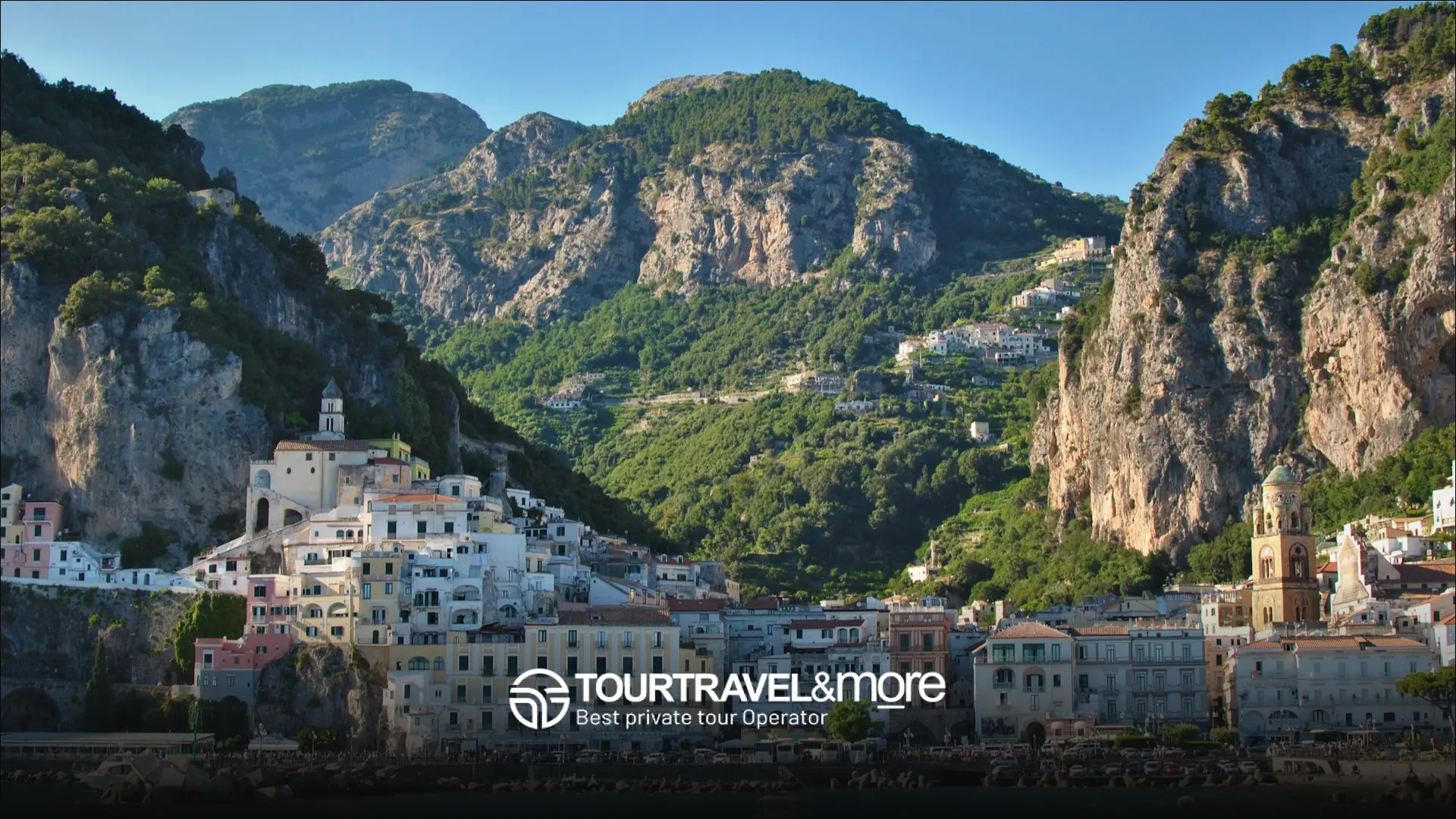
The area between the Gulf of Naples and the Amalfi Coast concentrates some of Italy’s most recognisable landscapes: cliffs dropping into the Mediterranean, colourful houses stacked on hillsides, lemon-scented alleys and villages that have been drawing travellers for centuries. Choosing where to go makes the difference between a memorable trip and one ruined by the crowds.
This guide covers the nine villages most worth visiting, from the unmissable to the ones most travellers walk straight past.
| Village | From Naples | Best for |
|---|---|---|
| Positano | ~2 h (bus/ferry) | Viewpoints, colourful houses |
| Amalfi | ~2 h (bus/ferry) | Cathedral, maritime history |
| Ravello | ~2.5 h (bus) | Views, gardens, festival |
| Atrani | ~2 h (bus) | Authenticity, no crowds |
| Furore | ~2 h (bus) | Fjord, calm, cliff diving |
| Cetara | ~1.5 h (bus/train) | Gastronomy, quiet beach |
| Vietri sul Mare | ~1 h (train) | Ceramics, eastern gateway |
| Sorrento | ~1 h (train) | Base for the coast, views |
| Procida | ~1 h (ferry) | Authentic island, no crowds |
Positano
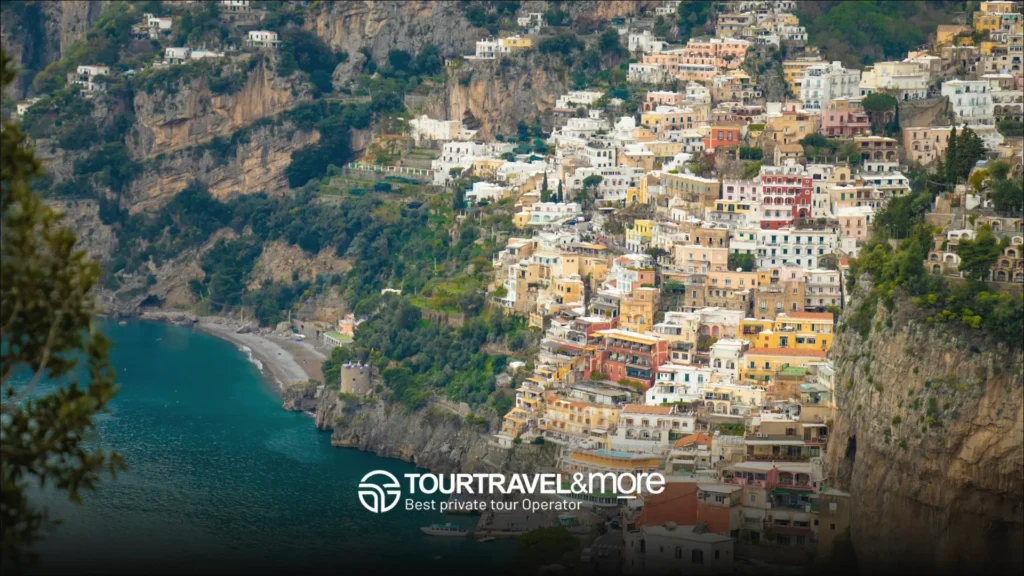
Positano is the village that appears most in photos of the Amalfi Coast, and for good reason. Its white, pink and orange houses cascade down the cliff to Spiaggia Grande, a dark-pebble cove that contrasts sharply with the deep blue of the Tyrrhenian Sea. The church of Santa Maria Assunta, with its multicoloured majolica dome, is the village’s emblem.
For the best views, climb to the Via Positanesi d’America viewpoint or take the ferry from Naples or Amalfi — seeing the village from the water is a completely different experience. In the late afternoon, once the day-trippers have left, Positano regains a calm that seems impossible during peak season.
How to get there from Naples: Ferry from Beverello port (~80 min) or SITA bus from Sorrento (~45 min). Arriving by car is tricky: the SS163 road is narrow and parking is very scarce.
Amalfi
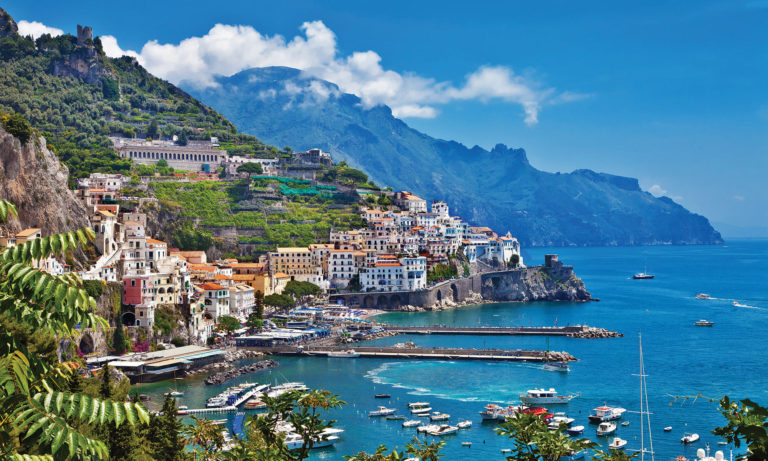
Amalfi was one of Italy’s four great Maritime Republics, alongside Genoa, Pisa and Venice. Between the 9th and 11th centuries it dominated Mediterranean trade, and that glorious past is still visible in the Cathedral of Saint Andrew — built in the 10th century and expanded over the centuries with Arab, Norman and Baroque influences. The crypt holds the relics of the Apostle Andrew, which made it a destination for medieval pilgrims.
The Paper Museum (Museo della Carta) documents another industry Amalfi exported to the rest of Europe: watermarked paper, produced in the Valle dei Mulini mills since the 13th century. The valley is well worth a walk, away from the bustle of the main square.
How to get there from Naples: Ferry from Beverello port or SITA bus from Sorrento, ~2 hours total.
Ravello
Ravello is not on the coast — it sits 350 metres above it, and that is exactly its advantage. From the Terrazza dell’Infinito at Villa Cimbrone, the Tyrrhenian Sea stretches uninterrupted to the horizon. Villa Rufolo, with its Arab-Norman gardens, inspired Wagner’s setting for the second act of Parsifal in 1880 — the composer left a note in the guest book that is still preserved today.
Every summer, the Ravello Festival transforms these gardens into an open-air stage for classical music concerts with the sea as a backdrop. The night-time concerts, with the view illuminated below, are hard to forget. Ravello is also one of the starting points for the Sentiero degli Dei (Path of the Gods), one of the finest treks in southern Italy.
How to get there from Naples: SITA bus to Amalfi, then a local bus up to Ravello (~25 min). There is no direct connection.
Atrani
One kilometre from Amalfi and covering just 0.12 km², Atrani is officially the smallest municipality in Italy. Despite sitting right next to its famous neighbour, most visitors pass through without stopping — which makes it one of the most authentic villages on the entire coast.
Its main square, Piazza Umberto I, opens directly onto the beach: one of the few stretches of real sand on the Amalfi Coast. The Collegiate Church of Santa Maria Maddalena and the Torre dello Ziro — reached via a ~5 km path from Amalfi — are the two main points of interest. The tower served as a prison and execution site in the 16th century; the views from the top are the best in the area.
How to get there from Naples: Same as Amalfi. Walk along the coast from there in 10–15 minutes.
 Private
 Private
 Private
Furore
Furore is a unique case: technically a municipality, but with no urban centre. Its houses and farms are scattered across the hillside with no square or main street — earning it the name ‘il paese che non c’è’ (the village that doesn’t exist). What does exist is its fjord: a limestone gorge through which a small stream flows before opening into a narrow, sheltered cove.
From the bridge crossing the fjord 30 metres above, the Red Bull Cliff Diving World Series competitions take place. Outside those dates, the fjord is a place of extraordinary calm, with turquoise waters and very few visitors — reaching it on foot requires descending steps cut into the rock.
How to get there from Naples: SITA bus from Amalfi or Positano. The fjord is accessed from the SS163 road.
Cetara
Cetara is a fishing village that has turned its main product into a brand identity: colatura di alici, a fermented anchovy sauce derived directly from Roman garum, with Protected Designation of Origin status. It is produced only here, and the restaurants along the seafront use it in pasta dishes, meats and salads. If you stop in Cetara, eating at the harbour is non-negotiable.
The village has a 15th-century watchtower built to defend the coast from Saracen raids. Its beach — small but well sheltered by the cliffs — is one of the least crowded on the coast and one of the best places to swim without fighting for space.
How to get there from Naples: Bus from Salerno (~20 min) or connection from Vietri sul Mare. From Naples, ~1.5–2 hours.
Vietri sul Mare
Vietri is the eastern gateway to the Amalfi Coast and the only town on the coast with a direct train from Naples (Trenitalia, ~65 minutes, from ~€5.50). Its ceramics are known throughout Italy: hand-painted tiles featuring fish, lemons and flowers have covered façades, staircases and fountains across the village since the 17th century.
The church of San Giovanni Battista, with its dome of blue and yellow ceramic tiles, is the most photographed building in the village. The Ceramics Museum, housed in an 18th-century villa, documents four centuries of local production and is the best way to understand why this craft tradition survives in the industrial age.
How to get there from Naples: Direct Trenitalia train from Naples Central Station, ~65 min, from ~€5.50.
Sorrento
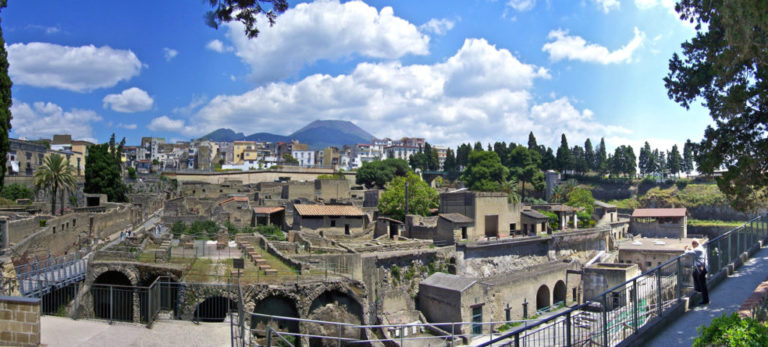
Sorrento is not technically part of the Amalfi Coast, but it is the most convenient base for exploring it from the north. It is connected to Naples by the Circumvesuviana — the same train that stops at Pompeii and Herculaneum — making it possible to combine archaeology and coastline in the same day without a car.
From the Terrazzo del Convento di San Francesco and from the Villa Comunale, the views of the snow-capped Vesuvius over the gulf are one of the most iconic postcards of southern Italy. Sorrento produces the region’s most renowned limoncello, made from IGP-certified local lemons: larger, more aromatic and less acidic than those from other areas. Shops in the historic centre let you watch the artisan production process.
How to get there from Naples: Circumvesuviana from Naples Central or Garibaldi station, ~65–70 min, from ~€4.50.
Procida
Procida is the smallest island in the Gulf of Naples and the one that has changed least in the past fifty years. While Capri and Ischia have become mass-tourism destinations with peak-season prices that last almost all year, Procida retains the character of an authentic fishing village: nets drying in the port, yellow and ochre houses clustered in the Terra Murata neighbourhood, fishing boats heading out at dawn.
In 2022 it was named Italian Capital of Culture, drawing international attention to an island that many travellers were still overlooking. Chiaiolella beach in the southern tip and the Corricella harbour — the most photogenic on the island — are the two essential stops. For those looking for an alternative to Capri without the prices or the crowds, Procida is the answer.
How to get there from Naples: Ferry or hydrofoil from Beverello port or Calata Porta di Massa, ~35–50 min, from ~€15.
Which Village to Visit According to Your Profile
Not every village on the Amalfi Coast suits every traveller. This table helps you choose based on what you’re looking for:
| If you’re looking for… | Go to… | Why |
|---|---|---|
| Stunning photos | Positano | Unique viewpoints, colourful houses |
| History and culture | Amalfi | Maritime Republic, medieval cathedral |
| Panoramic views | Ravello | Terrazza dell’Infinito, 350 m above sea level |
| Authenticity without crowds | Atrani | Italy’s smallest village, right next to Amalfi |
| Local gastronomy | Cetara | Colatura di alici, fishing tradition |
| Quiet island | Procida | No crowds, real village atmosphere |
| Well-connected base | Sorrento | Train to Naples, Pompeii and the coast |
How to Get from Naples to Each Village
| Village | Transport | Time and approx. price |
|---|---|---|
| Vietri sul Mare | Direct Trenitalia train | ~65 min · from €5.50 |
| Sorrento | Circumvesuviana | ~65–70 min · from €4.50 |
| Procida | Ferry / hydrofoil | ~35–50 min · from €15 |
| Positano | Ferry or bus via Sorrento | ~2 h · from €20 |
| Amalfi | Ferry or bus via Sorrento | ~2 h · from €20 |
| Ravello | Bus via Amalfi | ~2.5 h · from €20 |
| Atrani | Bus via Amalfi | ~2 h · from €20 |
| Furore | Bus via Amalfi | ~2 h · from €20 |
| Cetara | Bus from Salerno | ~1.5–2 h · from €10 |
When to Visit Each Village
May, June and September are the most balanced months for the whole coast: pleasant temperatures, a swimmable sea and fewer crowds than peak summer. July and August see the highest visitor numbers in Positano and Amalfi; if your destination is Cetara, Vietri or Atrani, the difference is much less noticeable.
The Ravello Festival (July–August) and Furore’s Red Bull Cliff Diving (June) are the only events worth visiting during peak-demand dates. For all other villages, the earlier you arrive at Positano or Amalfi in the day, the better — the SS163 road and ferries get congested before 11am in summer.
| Village | Best time | Peak season | Highlight event |
|---|---|---|---|
| Positano | May–Jun, Sep | Jul–Aug | — |
| Amalfi | May–Jun, Sep | Jul–Aug | Historic Regatta (Jun) |
| Ravello | May–Jun, Sep | Jul–Aug | Ravello Festival (Jul–Aug) |
| Atrani | May–Jun, Sep–Oct | Jul–Aug | — |
| Furore | May–Jun | Jul–Aug | Red Bull Cliff Diving (Jun) |
| Cetara | May, Sep–Oct | Jul–Aug | Sagra del Tonno (Aug) |
| Vietri sul Mare | Apr–Jun, Sep–Oct | Jul–Aug | — |
| Sorrento | Apr–Jun, Sep–Oct | Jul–Aug | — |
| Procida | May–Jun, Sep | Jul–Aug | — |
Frequently Asked Questions about the Villages near Naples and the Amalfi Coast
Which is the most beautiful village on the Amalfi Coast?
Positano is the most photogenic and most frequently cited, but the answer depends on what you’re looking for. If you want history, Amalfi has more layers. If you want views, Ravello is unrivalled. If you want authenticity without the crowds, Atrani or Cetara are better choices. The “most beautiful” is usually the one that matches your travel style.
How many days do I need to visit these villages?
With 5 days you can cover the essentials: Positano, Amalfi, Ravello and a day trip to Procida or Sorrento. With 7 days you have room to add Atrani, Cetara and Furore without rushing. Fewer than 3 days means choosing: the most common option is to focus on Positano and Amalfi.
Is it better to travel by car or public transport?
Public transport is the most practical option. The SS163 road along the coast is narrow, with tight bends and very little parking in the main villages. The SITA bus covers the entire coast and the ferry connects villages with sea views. A car only makes sense if you plan to reach inland villages like Ravello or if you’re travelling outside peak season.
Can you visit the Amalfi Coast from Naples in a day?
Yes, but with limitations. In one day you can realistically visit one or two villages at a comfortable pace. The most common option is to take the ferry from Naples to Positano and Amalfi in the same day. To see more without rushing, it’s best to stay on the coast for at least one or two nights.
What is the best time to visit?
May, June and September are the ideal months: good weather, a swimmable sea and less crowding than in July and August. July and August are the hottest and most crowded months, especially in Positano and Amalfi. In winter the coast is quiet but some businesses close and the ferry runs a reduced service.
Plan Your Trip with Tour Travel & More
The SS163 road is narrow, ferries fill up in summer and parking in Positano or Amalfi is practically impossible. Planning a self-guided coastal trip has its pitfalls: connections that don’t link up, seasonal timetables and hours wasted at unnecessary stops.
At Tour Travel & More we solve this differently: private transfers in luxury vehicles from Naples or your hotel, with a local driver who knows the access roads, the timetables and the hidden spots that don’t appear in guidebooks. No packed buses, no searching for parking, no improvising.
What our service includes:
- Luxury car transfers — high-end vehicles with private chauffeur, door to door
- Tailor-made itineraries — designed around your interests, pace and available days
- Access to the less touristy villages — Atrani, Furore, Cetara, with real time to explore
- Local guide included — historical context, restaurant recommendations and ticket management
- Just your group
- Licensed guides
- Free cancellation