Naples has a relationship with street food that goes far beyond pizza. In every historic neighbourhood there is a rosticceria, a frittura or a bakery selling sandwiches made to recipes that have been part of the local tradition for decades, some for centuries. They are cheap, eaten standing up, and taste like few other things in the world.
These are the sandwiches you need to order when you visit Naples.
The panino napoletano: the sandwich born from leftovers
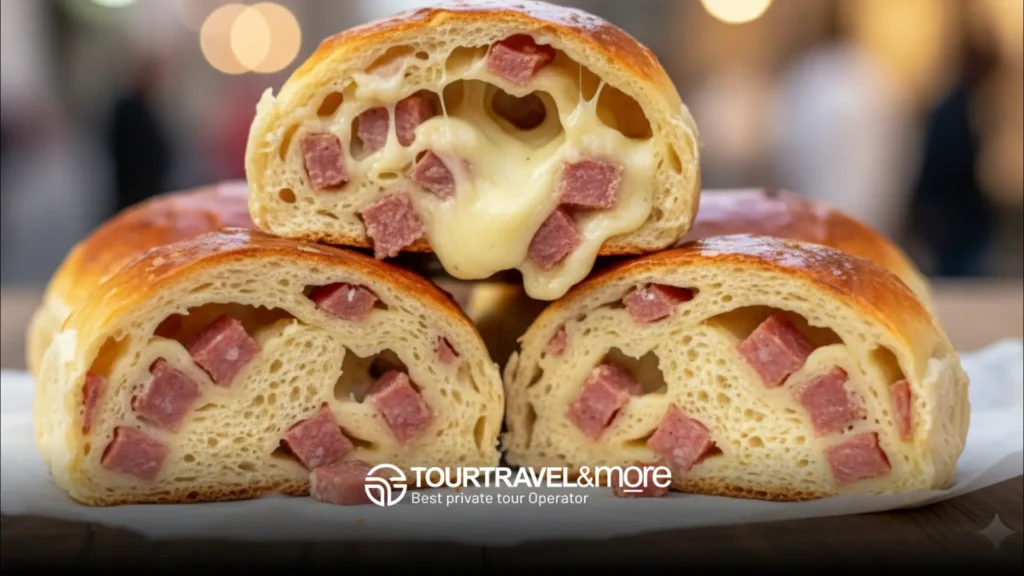
The panino napoletano has a humble and straightforward origin: it was invented by Neapolitan housewives to make use of the previous day’s leftovers. Cured meats, cheese, hard-boiled egg, leftover bread dough. All rolled together and baked. What began as a survival solution became one of the icons of the city’s street food scene.
It is a close relative of the casatiello — the festive Neapolitan bread stuffed with cured meats and eggs — but softer, easier to handle, and designed to be eaten with one hand while walking. The Neapolitans call it interchangeably panino napoletano or pagnottiello, the affectionate diminutive given to it by the neighbourhood.
Ingredients of the classic panino napoletano
The dough is not supermarket bread. It is made with flour, fresh yeast, milk, olive oil and a touch of sugar that gives it a tender, slightly sweet crumb. It is rolled out, filled with Neapolitan salame, provolone, grated Parmigiano and hard-boiled egg, then rolled up before going into the oven.
The result is crispy on the outside, spongy and moist on the inside from the cheese that has melted during baking. No sauce, no lettuce. It needs nothing more. That balance between fluffy dough and rich filling is what makes it irresistible hot, on the first bite.
A common variation replaces the salame with prosciutto cotto, which is milder. Both versions can be found at the counter, and the choice depends on what was baked earliest that day.
Where to buy it in Naples
The rosticcerias in the historic centre and the Quartieri Spagnoli have them from mid-morning. Poppella at Via Arena alla Sanità 24 is one of the Sanità neighbourhood’s historic reference points. Antica Friggitoria Spaccanapoli at Via Benedetto Croce 42 sells them alongside other classic fried foods. Luise at Piazzetta Duca d’Aosta is also a regular stop for locals.
The price is around one and a half euros per piece. If the counter is almost empty when you arrive, that is a good sign: it means the day has gone well and what is left is the freshest.
The cistecca montese: the sandwich with an American passport
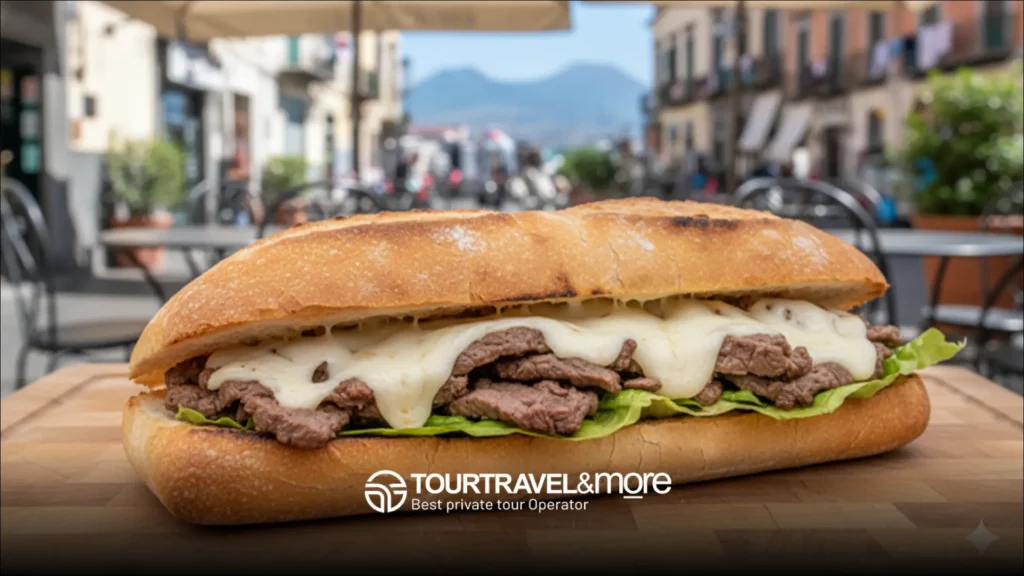
The cistecca montese is one of the most popular sandwiches in the Naples province, and very few tourists know its story: it was born in Philadelphia in the 1930s, created by Italian emigrants, and arrived in Naples in the 1980s when some of those emigrants returned to their homeland with the recipe. The American sandwich that went Neapolitan.
Today there is a consortium that certifies venues that follow the original recipe and controls the quality of the ingredients. It is not marketing: mediocre cistecca exists and bears no resemblance to the real thing.
Ingredients and how to recognise an authentic one
It contains thin slices of sautéed veal, aubergine, melted smoked scamorza and grated provolone. All inside a crispy small baguette, toasted on the inside before filling. Certified venues do not substitute the scamorza with another cheese and respect the proportions of meat and aubergine.
Practical tip: if you do not see the consortium seal in the venue, ask directly whether they use the original recipe. The question itself already filters quite a lot.
The pagnottiello: the pocket snack tourists ignore
The pagnottiello in its smaller version — distinct from the rolled panino napoletano — is an independent round roll, filled with cheese, pancetta and salami. Nothing more. It is the mid-morning snack of the Neapolitans, what you have when coffee is no longer enough and lunch is still far off.
It can be found in most bakeries and rosticcerias in the centre, and the price rarely exceeds one euro. Tourists walk past without going in because there is no bar counter or menu written in English. Classic mistake.
What makes the pagnottiello special is not the complexity of the filling but the quality of the bread: tender, with a tight crumb, slightly oiled. In Naples bread is not a support, it is part of the dish. A pagnottiello made with mediocre bread is a completely different thing.
Another detail few visitors know: the name changes by neighbourhood. In the Sanità they call it panino, in Spaccanapoli pagnottiello, in the Vomero sometimes simply rustico. All refer to variations of the same concept: filled bread, baked, to be eaten standing up.
The cuoppo napoletano: the fried food served in a cone
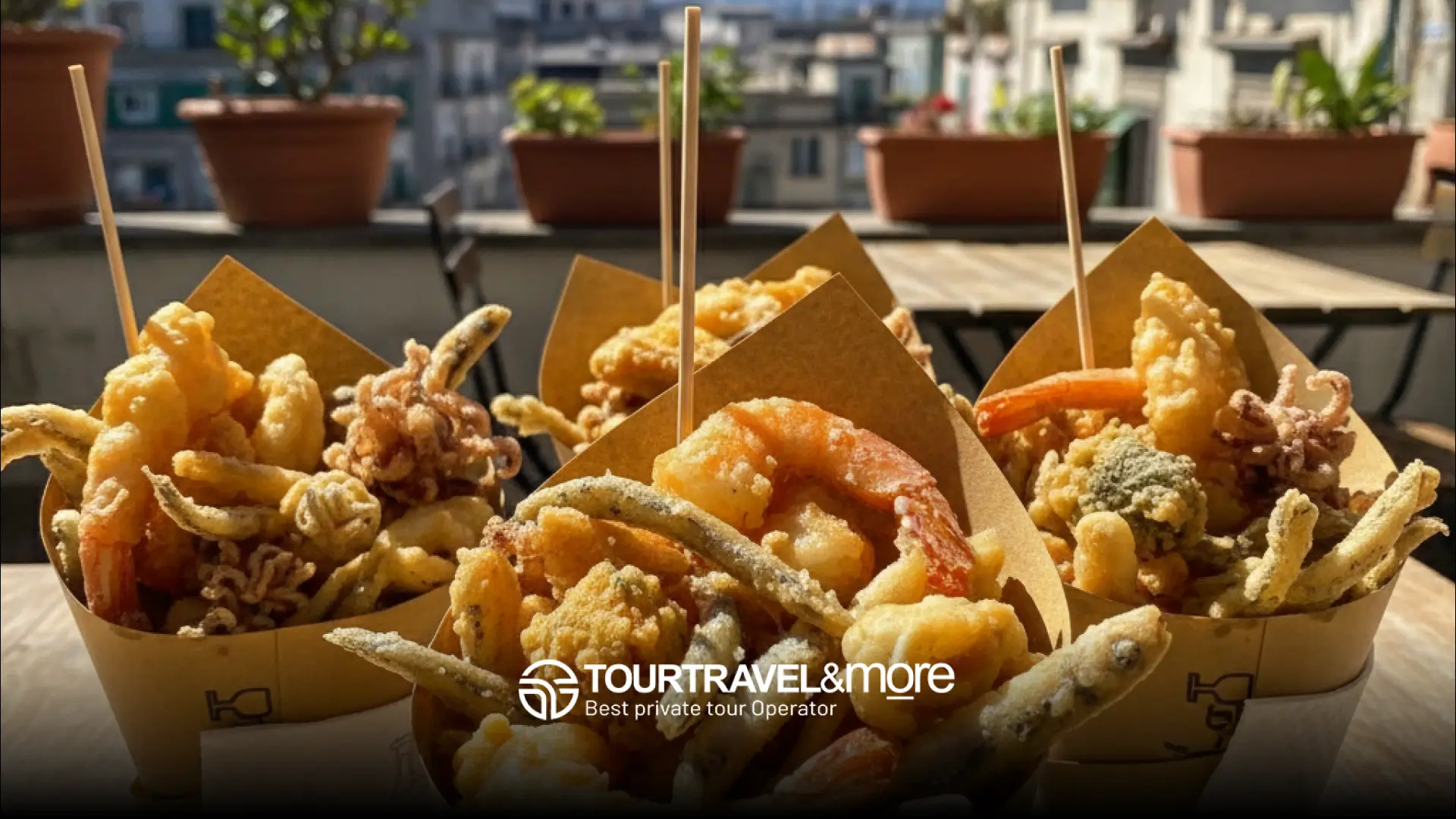
The cuoppo is not a sandwich in the strict sense, but it belongs to the same ecosystem of eating with your hands while walking. It is a paper cone filled with assorted fried foods, freshly pulled from the oil. You hold it with one hand, eat it with a wooden skewer, and it represents better than any other dish the ancient art of Neapolitan frying.
What’s inside a cuoppo
Fry shops offer two main versions:
- Cuoppo di mare: battered anchovies, fried salt cod fillets, calamari rings, prawns. Freshly fried seafood, no sauce, no sides.
- Cuoppo di terra: potato croquettes, zeppolinas of fried dough, battered vegetables, pasta frittatine. The land version, equally filling.
Many venues allow you to mix and order half and half. The contents vary by day and what is fresh at the market — there is no fixed menu, and that is part of the charm.
Where to eat the best cuoppo in Naples
Friggitoria Fiorenzano at the Pignasecca market is a historic institution: it has been at the heart of the market for decades and the queue of local customers is the best guarantee. Friggitoria Vomero is the reference point for the upmarket neighbourhood. In the historic centre, Di Matteo on Via dei Tribunali serves cuoppo alongside pizza fritta. For a more unusual setting, La Passione di Sofì at Via Toledo 206 is a fry shop in a nineteenth-century venue that is uncommon for this type of food.
The price of a standard-size cuoppo is around 3–4 euros. Enough to keep you going through a morning of sightseeing.
Pizza fritta: when the sandwich gets fried
Technically it is not a conventional sandwich, but it is eaten standing up, folded in one hand and has everything a good street food should have: cheap, hot and filling. Pizza fritta is pizza dough fried in oil, filled before closing with ricotta, salame and cicoli — Neapolitan pork scratchings. It is closed like a calzone and fried.
The result is crispy on the outside, creamy on the inside and substantial enough to last you a full afternoon of sightseeing. Pizzeria Di Matteo on Via dei Tribunali is an essential reference, as are the Sorbillo stalls. At both, the queue is part of the experience, and sizing up your hunger before joining it is useful advice.
Neapolitan street food comparison
| Street food | Main ingredients | Approx. price | Where to find it |
|---|---|---|---|
| Panino napoletano | Homemade baked dough, salame, provolone, egg | €1.50 | Poppella (Sanità), Spaccanapoli, Luise |
| Cistecca montese | Veal, smoked scamorza, aubergine, small baguette | €5–8 | Certified venues in Naples and province |
| Pagnottiello | Round roll, pancetta, salami, cheese | €1 | Bakeries and rosticcerias in the centre |
| Cuoppo | Sea or land fried foods in a paper cone | €3–4 | Fiorenzano (Pignasecca), Vomero, Di Matteo |
| Pizza fritta | Fried dough, ricotta, salame, cicoli | €2–3 | Di Matteo (Via Tribunali), Sorbillo |
How to order and when to go: what locals do
In Naples nobody asks for “a sandwich, please.” You say the name directly: “un panino napoletano,” “una cistecca,” “un pagnottiello,” or “un cuoppo di mare.” If you do not know what they have that day, look at the counter. What is most within reach is the freshest.
Timing matters more than you might think. Hot sandwiches are sold in the morning and at lunchtime. After four in the afternoon the rosticceria has what is left over. If you arrive between ten and one you have the best moment of the day. The cuoppo and pizza fritta last a little later because they are made to order, but they also peak in quality between noon and two.
Most importantly: buy it and eat it in the street. Naples is a city of movement consumption. Nobody sits at a table to eat a panino. You receive the sandwich in wax paper, step away from the counter and eat while walking or leaning against a wall. That is how it works and that is how it tastes best.