
Naples can’t be explained. It has to be lived. And before booking a flight, everyone asks the same question: how many days do I need to visit Naples?
The short answer is: it depends. The long answer is this article.
Because Naples isn’t a city you can measure in days the way you’d measure a visit to Florence or Venice. Here, chaos is part of the landscape, unexpected detours are the plan, and there’s a moment when you stop “seeing” things and start understanding the place. That moment usually comes on the second day. Or the third.
Instead of giving you a generic list, I’m going to give you a decision map: how many days you need based on what you want to do, and how to divide them so you don’t feel like you missed the best parts.
| Aspect | What you need to know |
|---|---|
| Absolute minimum | 2 full days for the city alone |
| Sweet spot | 3 days: city + one day trip |
| With Pompeii | Add 1 full day on top |
| With the Amalfi Coast | Plan 5–6 days in total |
| First-day trap | Always the hardest; don’t give up |
| Best combination | 2 days city + 1 day archaeology |
1 day in Naples: technically possible, but you’ll regret it
One day in Naples is enough to see a few facades, eat a pizza, and confirm that the city is, indeed, chaotic. It is not enough for anything else.
And here’s something one-day itineraries never tell you: Naples has a shock effect that takes time to wear off. Traffic with no respected traffic lights, Vespas weaving between pedestrians, constant noise, fruit stalls next to 17th-century baroque churches. The first hour can feel overwhelming. Many travellers admit that during day one they almost regret coming.
The problem is that if you only have one day, you’ll leave at that exact point. Without ever reaching the other side.
What can you do with 1 day? If there’s no alternative, here’s the minimum that makes sense:
- Morning: Spaccanapoli, the Cappella Sansevero and the Veiled Christ (book in advance), the Duomo
- Midday: pizza in the historic centre — anywhere with a queue of locals, not tourists
- Afternoon: Via Toledo, the Toledo metro station (worth going down just to see it), Castel dell’Ovo at sunset
That’s all the time allows. No archaeological museum, no getting lost in the Quartieri Spagnoli, no climbing Castel Sant’Elmo to grasp the city’s geometry.
One day in Naples is like reading the first chapter of a book and saying you know it.
2 days in Naples: the minimum to understand it (barely)
Two full days is the real entry point. With 48 well-distributed hours you can visit the essential sights without feeling like you’re in a constant sprint.
The most important thing that happens on the second day is psychological: you’re no longer processing the initial impact. You slept one night with Naples sounds outside the window, had breakfast at a neighbourhood bar, and when you step back outside you see things differently. The chaos is still chaos, but it no longer paralyses you. It starts to seem fascinating.
2-day Naples breakdown:
Day 1 — Historic centre and art
Start at Spaccanapoli, the artery that cuts through the old town in a straight line for two millennia. Spend the morning along the Spaccanapoli–Via dei Tribunali axis: churches, street markets, Via San Gregorio Armeno with its nativity workshops (open all year, not just at Christmas). In the afternoon, the Cappella Sansevero to see the Veiled Christ — book online or you won’t get in — and finish with Toledo station, which is, without exaggeration, one of the most beautiful in the world.
Day 2 — Views, castles and the seafront
Take the funicular from Montesanto station up to Castel Sant’Elmo. The views of Naples from there are the image you take home. Then head down into the Quartieri Spagnoli — the neighbourhood where the Neapolitan pulse is felt most strongly — and end the day along the lungomare, the seafront promenade facing Vesuvius, before dinner in the Chiaia area.
Can you do more in 2 days? Yes, if you rise early and don’t stop. But the key here is depth, not quantity. Naples punishes the traveller who rushes.
 Private
 Private
 Private
3 days in Naples: the sweet spot
Three days is the right answer if you want to see Naples and one of its star excursions. It’s the balance between time and thoroughness I almost always recommend.
With three days you can spend the first two as described above — the city at a relaxed pace — and dedicate the third to heading out. And here comes the decision that defines your trip.
| Type of traveller | What to do on day three |
|---|---|
| History and archaeology lover | Pompeii + Herculaneum (Circumvesuviana train) |
| Nature and adventure enthusiast | Mount Vesuvius |
| Postcard seeker and relaxation fan | Capri by ferry |
| Food and village traveller | Sorrento or Positano (start of the Amalfi) |
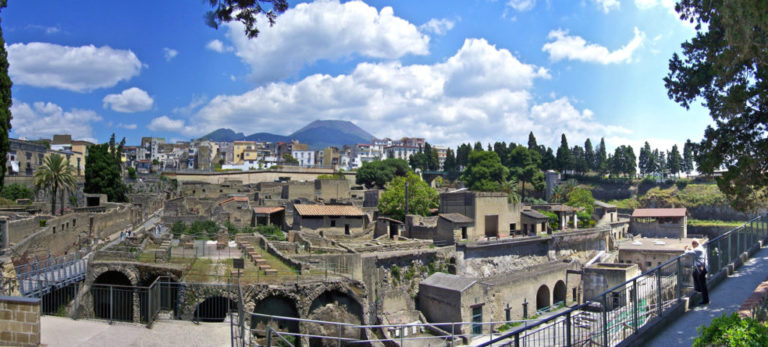
Day three for archaeology is one of the most intense travel days you can have in Europe. Pompeii is like nothing else. It’s not a museum. It’s a city frozen in 79 AD that you can walk through, peer into windows, read graffiti on the walls. You need between 3 and 5 hours to see it properly. Herculaneum is smaller but better preserved — the colours, the wood, the rooftops still visible — and deserves at least 2 hours.
If you do both in the same day, take the Circumvesuviana train from Naples Centrale station: it stops at Ercolano Scavi (Herculaneum) and Pompei Scavi Villa dei Misteri. The ticket costs just over €3. Start early.
Day three for Vesuvius is different. You travel to the crater car park by bus or organised tour, then walk the final 20–30 minutes up to the rim. Seeing the inside of the volcano that destroyed Pompeii with your own eyes is something you won’t easily forget.
Three days in Naples don’t let you do all of this. They let you choose one thing well and do it properly.
4 days or more: Naples without a clock
Four days or more changes the nature of the trip. You’re no longer executing an itinerary. You’re inhabiting the city.
With four days you can:
- Visit the National Archaeological Museum with real time (it’s one of the world’s finest ancient museums; it needs at least 3–4 hours)
- Do Pompeii AND Vesuvius on separate days, without rushing
- Wander through neighbourhoods without an agenda: Rione Sanità, the Pignasecca market, the port area of Pozzuoli
- Head up to Parco di Capodimonte and see the painting collection that includes works by Caravaggio, Titian and Raphael
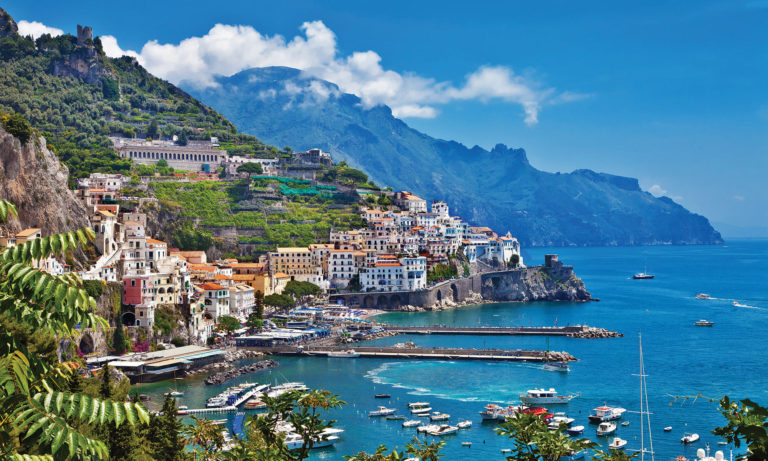
With five or six days you can comfortably add the Amalfi Coast: a day in Positano, another in Amalfi and Ravello, and back to Naples by evening.
What four-day itineraries usually overlook: mornings in Naples are magical. If you’re up by 7:30, you have the city almost to yourself for nearly two hours. The historic centre without tourists, markets opening, coffee at the counter of a neighbourhood bar where all the other customers are locals. That Naples exists. You only see it if you’re not in a hurry.
How to divide your days based on what you want to see
Not all Naples trips are the same. The optimal split depends on what you came here for.
If your priority is the historic centre and art
Spend the first two days entirely in the city. No day trips, no rushing. The National Archaeological Museum deserves a full day — or at least a full morning — if you have any interest in Roman history. The Cappella Sansevero isn’t large, but it can hold you for forty minutes if you let it. Castel Sant’Elmo closes earlier than you’d think: check opening hours.
Optional third day: Capodimonte or the Rione Sanità neighbourhood and its catacombs.
If you want Pompeii and Herculaneum
This requires its own planning. Pompeii is too large to rush through: travellers who combine it with Herculaneum on the same day often end up overwhelmed. The recommendation if you have three days: one day city, one day Pompeii, one day Herculaneum + partial Vesuvius hike.
If you only have two days, choose between Pompeii and Herculaneum. Don’t try to do both at once if you want to actually remember them fondly.
If the Amalfi Coast or Capri is calling
The Amalfi Coast from Naples is doable as a day trip, but not ideal. The coastal villages deserve at least one night. If you’re passing through, Sorrento works better as a day base: well connected, manageable, and from there you can take the ferry to Positano or Amalfi.
Capri as a day trip from Naples is perfectly viable. The ferry leaves from Molo Beverello and takes about 50 minutes. What they don’t tell you: in July and August, queues for the Blue Grotto can eat three hours of your day. If you’re going in high season, manage expectations or prioritise the beaches and the village centre.
| Days available | Recommended combination |
|---|---|
| 2 days | City only: Spaccanapoli, Vomero, lungomare |
| 3 days | City (2) + Pompeii or Capri (1) |
| 4 days | City (2) + Pompeii (1) + Vesuvius or Herculaneum (1) |
| 5–6 days | All of the above + 1–2 days Amalfi Coast |
| 7 days | Full itinerary at a relaxed pace with nights on the coast |
What nobody tells you before going to Naples
There are things travel articles don’t usually say because they don’t fit neatly into an itinerary.
The first day is always the hardest. Not because Naples is dangerous — tourist crime rates are comparable to many European capitals — but because the city has an energy unlike anywhere else. The volume, the movement, the visual intensity. Many travellers arrive with postcard expectations and find a city that doesn’t ask permission to exist. That throws people off. The trick: accept the chaos instead of resisting it. Naples is not going to calm down for you.
The second day changes everything. Almost without exception, travellers who spend more than one night in Naples agree: by day two the city starts making sense. What on day one looked like disorder, on day two has a logic. Neighbourhoods start to feel distinct. You recognise faces. You find your bar.
The pizza is not a cliché. It is literally different. The dough, the water, the ingredients. A margherita in Naples and a margherita anywhere else in the world are not the same dish. If you only go once to a recommended place and don’t go back for seconds, you’ve done something wrong.
Museums close on Tuesdays. The National Archaeological Museum and other major Neapolitan museums typically close on Tuesdays. Plan accordingly.
How many days for Naples and its surroundings
If Naples is just the starting point of a broader trip through Campania, the calculations change.
Naples + Pompeii: minimum 3 days
This is the most popular combination and the most justified. Two days in the city, one in Pompeii. If you want to add Herculaneum, you need a fourth day or have to sacrifice something in Naples.
Naples + Amalfi Coast: plan at least 5–6 days
The Amalfi Coast deserves its own time. If you’re going to do it properly — Positano, Amalfi, Ravello, and maybe Praiano — you need at least two nights on the coast. Add two city days in Naples and you have the minimum of 4–5 days. With six days you can actually breathe.
One piece of advice that changes the experience: don’t do the coast from Naples as a round-trip day excursion. Positano in late afternoon light, without the tour groups, with a table on a terrace above the sea, is a different experience entirely. It’s worth staying one night.
Naples + Capri: add one more day
Capri as a day trip from Naples works. Not ideal, but it works. If you already have 3 days in the city, add a fourth day for Capri and catch the earliest morning ferry. You’ll arrive before the cruise ship passengers do.
Frequently asked questions
Is Naples safe for tourists?
Yes, with common sense. As in any major European city, there are situations that require attention — pickpockets exist in the historic centre, especially in busy areas — but Naples is no more dangerous than Barcelona, Rome or Marseille. The reputation exceeds the reality.
What is the best time to visit Naples?
Spring (April–June) and autumn (September–October) are ideal: pleasant temperatures, fewer crowds than summer, and perfect light for photographing the city. July and August are possible but hot and packed, especially on coastal excursions.
Do I need to book tickets in advance?
For the Cappella Sansevero, yes: it’s small and tickets sell out. For Pompeii in high season, online booking is also advisable. The National Archaeological Museum usually has walk-up availability.
How much does it cost to get around Naples?
Public transport is cheap and functional. A metro or bus ticket costs around €1.10. The Unico Campania card covers the Circumvesuviana as well, letting you reach Pompeii or Herculaneum. The funicular to Vomero is also included.
Is it worth renting a car in Naples?
Inside the city, no. Traffic is chaotic, parking is a nightmare, and Vespas don’t believe in lanes. For the Amalfi Coast it can make sense, though the roads are narrow and in summer there are serious traffic jams. Consider the SITA bus as an alternative.
Why travel to Naples with Tour Travel and More
Organising a Naples trip on your own is perfectly possible. But there’s a difference between arriving in a city and arriving ready to make the most of it.
We handle what takes the most time and energy:
- Personalised itinerary based on your available days and priorities — no generic templates
- Tickets booked in advance for the Cappella Sansevero, Pompeii and the Archaeological Museum, no queues or surprises
- Accommodation in the right location — not all Naples neighbourhoods are equal for getting around on foot
- Coordinated transfers from the airport and between Naples and excursion destinations (Pompeii, Herculaneum, the coast)
- Trusted local guide for the moments that make the difference: places that don’t appear on Google Maps, restaurants where Neapolitans actually eat
The result: you arrive in Naples with everything sorted. No hours spent comparing options, no stress from the unexpected, no days lost mid-trip to logistics problems.
Naples has too much to offer to waste energy on organisation.
When is your trip?
- Just your group
- Licensed guides
- Free cancellation