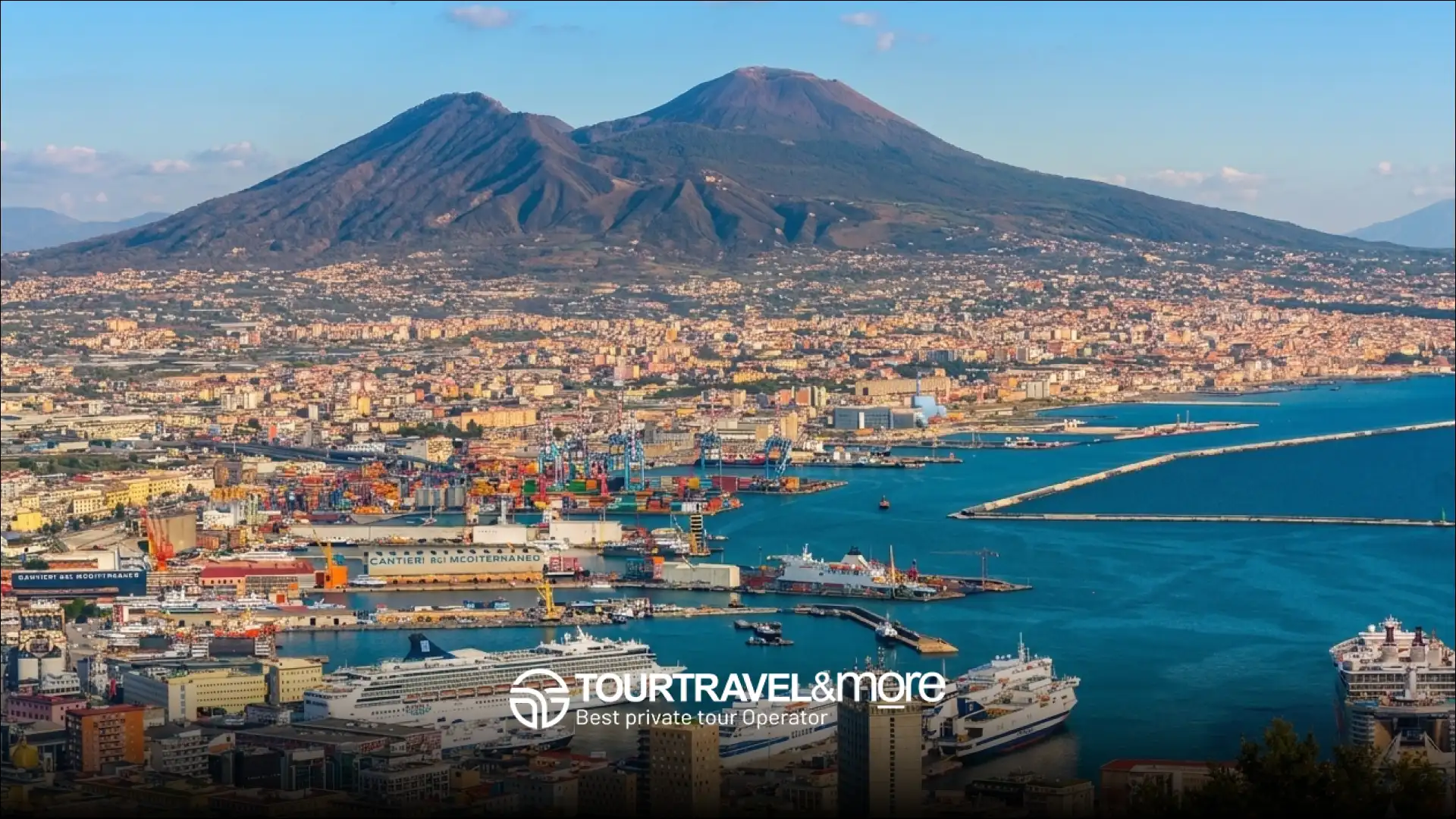
Naples hooks you or overwhelms you. There is no middle ground. The first time I stepped out of the metro at Piazza Garibaldi, I thought I had gotten off at the wrong city: the noise, the chaos, scooters weaving through impossible sidewalks. Then I turned toward Spaccanapoli and everything clicked. This city does not introduce itself — it hits you.
If you only have one day, that is not nothing. It is enough to take home the essentials, eat the best pizza of your life, and leave with the feeling that you need to come back. But it only works if you move smartly from the start.
| At a Glance | What You Need to Know |
|---|---|
| Starting point | Piazza del Gesù Nuovo or Spaccanapoli |
| Total distance | ~6-7 km on foot, mostly flat |
| Route duration | 6-8 hours including stops and food |
| Attraction requiring booking | Cappella Sansevero (book online in advance — no exceptions) |
| Estimated budget | €30-50 (tickets + pizza + coffee) |
| Transport | 100% on foot within the historic centre |
| Must-sees | Veiled Christ, Via Tribunali, pizza at Sorbillo |
| Best time to set out | 8:30-9:00 AM to avoid queues and heat |
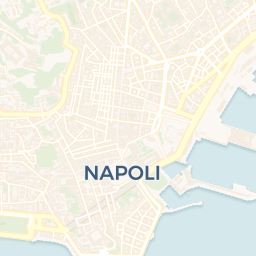








Where to Start: The Heart of Historic Naples
Naples’ historic centre is a UNESCO World Heritage Site. I do not say that as a throwaway fact — I say it because when you walk its streets you will understand exactly why it earned that title. You are treading on over 2,500 years of history. Literally.
The logic of the route is simple: start along the east-west axis (Spaccanapoli and Via dei Tribunali) and then work your way south toward the sea. Do it the other way around — starting at the waterfront and ending in the centre — and you burn your energy when you need it most.
Spaccanapoli: The Street That Splits the City in Two
Spaccanapoli means exactly that: “the one that splits Naples.” From a high vantage point, you can see the city cut into two perfect halves by this straight line that never deviates a centimetre. Down on the ground, the experience is something else: a continuous stream of baroque churches, fruit vendors, university students and tourists clutching paper maps.
Start at Piazza del Gesù Nuovo. The façade of the church of the same name — that stone skin covered in diamond-point reliefs — is the kind of building that makes you stop and stare even if you are not going in. Continue east along Via Benedetto Croce, which becomes Via San Biagio dei Librai. This transition is the soul of Spaccanapoli.
Do not try to visit every church you pass. There are so many that Naples itself has lost count. Pick one, step inside, and give it five genuine minutes. That is worth more than peering through ten doorways from the outside.
The atmosphere shifts every fifty metres. Second-hand bookshops, tiny cafés where espresso costs €1, street-food stalls that smell incredible. Spaccanapoli is not an open-air museum — it is a street that lives.
Via dei Tribunali: The Oldest Main Street in the Western World
Running parallel to Spaccanapoli, Via dei Tribunali is the decumanus maximus of the ancient Greek city founded in the 5th century BC. The alignment has not changed in twenty-five centuries. There are very few streets in Europe that can say that.
The concentration of pizzerias, pastry shops and street stalls here is at its peak. This is also where you will find some of the best places to eat. Note it now: Sorbillo is on this street. If you want the pizza everyone recommends without it feeling touristy, this is the place.
The stretch between Via Duomo and Via San Gregorio Armeno is the most interesting. Street markets, churches with half-open doors, locals carrying shopping bags who weave past you with effortless naturalness. This street does not perform for tourists. It just works.
The Cappella Sansevero and the Veiled Christ: The Visit You Cannot Skip
Some sculptures leave you speechless. Others leave you unable to understand how they are even possible. The Veiled Christ by Giuseppe Sanmartino (1753) belongs firmly in the second category.
The cloth covering Christ’s body is carved from marble. Solid marble. And yet it looks like a damp gauze pressed against skin. You can see the veins, the sunken cheekbones, the expression of exhaustion. Centuries of baroque technique staring back at you from a single block of stone.
The first time you see it, the normal reaction is disbelief. People crouch down, circle the sculpture, look for the join between the cloth and the body. They will not find it.
How and When to Book Tickets
Book online before you travel. No exceptions. The Cappella Sansevero has very limited capacity and sells out days — sometimes weeks — in advance, especially during peak season. The official website sells time-slot tickets. Prices are around €8-10.
The entrance is at Via Francesco De Sanctis, 19, a couple of minutes’ walk from Spaccanapoli. The chapel itself is small — only a few dozen people at a time — and the visit takes about 30-40 minutes at a relaxed pace.
Why the Veiled Christ Is Still a Mystery
For centuries, the legend circulated that Prince Raimondo di Sangro had “petrified” a real piece of cloth through a secret alchemical process. The story persisted because the technique was so advanced that no one could explain it. Today it is accepted that Sanmartino carved it directly from marble, but whether Di Sangro — himself an obsessive inventor and scholar — gave him specific technical instructions remains an open question.
The Veiled Christ is not alone in the chapel. Other notable sculptures include La Pudicizia and Disillusione (Deception Unmasked). But let us be honest: nobody remembers exactly where those were positioned once they have seen the Christ.
Naples Cathedral: Blood, Faith and Centuries of History
Five minutes on foot north from Spaccanapoli stands the Cathedral of Santa Maria Assunta, known simply as the Duomo. Its 19th-century neo-Gothic façade conceals a layered interior that by rights should not work so well — and yet somehow does.
The first thing that surprises you is the central nave: tall, light-filled, with Gothic arches alternating with baroque elements. The feeling is not chaos but depth — time accumulated in layers.
The Chapel of San Gennaro and the Miraculous Blood
The Duomo’s centrepiece is the Chapel of the Treasure of San Gennaro, a baroque space of overwhelming ornamental richness. It houses the relics of Naples’ patron saint, including two small vials believed to contain his coagulated blood.
Three times a year — the first Saturday of May, 19 September and 16 December — Neapolitans gather en masse to witness the miracle: if the blood liquefies, the city will be safe. If it does not… the year ahead looks difficult. The last time it failed to liquefy, according to tradition, was before the 1944 eruption of Vesuvius.
Entry to the cathedral is free. The Chapel of the Treasure may have restricted hours or a small access fee; worth checking the day before.
How Much Time to Allow at the Duomo
30-45 minutes is enough to see the nave, the Chapel of San Gennaro and the early Christian baptistery — one of the oldest in Italy. If archaeology interests you, the baptistery floor conceals remains of the ancient Greek and Roman city beneath. On some days, you can go down.
 Private
 Private
 Private
San Gregorio Armeno: The Christmas Street That Never Closes
Perpendicular to Via dei Tribunali, San Gregorio Armeno is simultaneously the most kitsch and most authentic street in Naples. Artisan workshops have been making nativity figures on this same stretch for centuries, and the spectacle today is unmatched.
Maradona alongside the Three Kings. The Pope blessing Messi. Figures of local politicians, singers and current celebrities. In Naples, the nativity is not just a religious tradition — it is a running social commentary.
The best time to walk through is in the morning, before the street fills with tour groups. At peak season, the narrow width of the street turns it into a human bottleneck. If you can get there before 10:00 AM, the experience is entirely different.
You do not need to buy anything. Just walk, look in the windows and let an artisan show you how they make a terracotta face. If something catches your eye, prices are reasonable and the work is genuinely handmade.
Piazza del Plebiscito and Via Toledo: Monumental Naples
After the intensity of the historic centre, Piazza del Plebiscito feels like a breath of fresh air. It is vast, open, with the Basilica of San Francesco di Paola at the far end — the one that looks as if it was lifted directly from the Pantheon in Rome — and the Palazzo Reale to one side.
The square is perfect for pausing, recovering your sense of scale and remembering that Naples was once the capital of an important kingdom. The Kingdom of the Two Sicilies ruled southern Italy from here for centuries, and this monumental space was designed precisely to project that power.
| Attraction | Time | Don’t Miss |
|---|---|---|
| Piazza del Plebiscito | 15 min | Head-on view of the basilica |
| Galleria Umberto I | 20-30 min | The glass dome from the centre |
| Quartieri Spagnoli | 20 min | Maradona murals |
| Via Toledo | At your own pace | The metro station (public art) |
Galleria Umberto I: The Most Beautiful Ceiling You Will Ever Walk Under
Cross Via Toledo and step into the Galleria Umberto I. This 19th-century shopping arcade has an iron-and-glass dome that, viewed from the centre of the crossing, is one of the most photogenic interiors in the city.
The ground floor has ordinary shops, cafés, the odd place with more history than customers. But the architecture speaks louder than all of that. Look up, stop at the centre, and stare. It is one of those photos you were not planning to take that ends up being the best of the trip.
Quartieri Spagnoli: Five Minutes That Shift Your Perspective
Behind Via Toledo to the west lie the Quartieri Spagnoli. The grid of narrow streets with laundry strung between balconies, ground-floor mechanics’ workshops and street shrines to San Gennaro or Maradona is the most iconic image of working-class Naples.
Several of the murals dedicated to Diego Armando Maradona — who played for Napoli between 1984 and 1991 and remains a secular god in the city — are here. Walk along Via Emanuele de Deo and the surrounding streets and you will find them without even looking.
You do not need to go deep into the Quartieri if time is tight. One way in, one way out, twenty minutes and open eyes, and you have the essence of it.
Eating in Naples: Pizza Is Not Optional
Naples invented pizza. That is not a marketing slogan — the marinara and margherita pizzas as we know them are documented to have originated here. And the difference between an authentic Neapolitan pizza and what you eat everywhere else in the world is significant enough to deserve its own section.
Neapolitan pizza has a tall, airy crust (the cornicione), a thin base that is slightly moist in the centre, and is baked in a wood-fired oven at extremely high temperatures for 60-90 seconds. The result is something that cannot easily be replicated outside this city.
Where to Eat Real Pizza
L’Antica Pizzeria da Michele (Via Cesare Sersale, 1): serves only marinara and margherita. No other options. The queue outside looks daunting but moves faster than you expect. This is the pizza from the movies — literally, a scene from Eat Pray Love was filmed here.
Sorbillo (Via dei Tribunali, 32): more variety, equally good, equally long queue. If you are walking Via dei Tribunali at lunchtime, you are already nearby.
Di Matteo (Via dei Tribunali, 94): less famous internationally, just as good among locals. Bill Clinton ate here in 1994 and the photo is still on the wall.
A full pizza with a drink should not cost more than €8-12. If they charge you more, you are in the wrong place.
Do not skip the street food. Pizza fritta (a kind of fried calzone), potato crocchè and various fried snacks are the perfect fuel to keep walking without sitting down for a full meal.

The Waterfront at Sunset: The Perfect End to Your Day
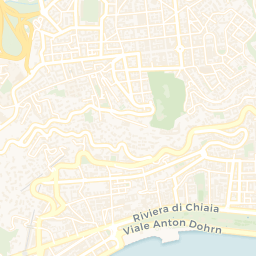
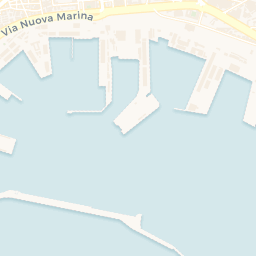
If you have followed the route in order, late afternoon means heading down to the sea. Lungomare Caracciolo is Naples’ seafront promenade: one and a half kilometres with the Gulf ahead, Vesuvius in the background and Castel dell’Ovo to the right.
In the last hours of daylight, when the light shifts colour, this becomes something special. Neapolitans come out to walk, children ride bikes, elderly couples occupy the benches. Nobody is in a hurry. It is the perfect antidote to the chaos of the historic centre.
Castel dell’Ovo: The Essential Photo
Castel dell’Ovo — the Egg Castle — is built on a small islet connected to the mainland by a bridge. Its silhouette against the Gulf and Vesuvius is the most recognisable postcard image of Naples.
Entry is free. Inside, you can climb to terraces with views over the Gulf and the city. There are no spectacular museums, but the views from the top make the detour worthwhile.
The name comes from a legend: Virgil — yes, the poet — supposedly buried a magic egg in the castle’s foundations. As long as the egg remained intact, the city would be safe. Make of Virgil’s structural engineering skills what you will.
Prefer to See It All Without the Hassle? A Private Tour Changes Everything
Doing this route on your own works perfectly. But if time is your scarcest resource — or you simply want to focus on experiencing the city rather than organising it — a private tour with a local guide is a different proposition entirely.
What changes when you go with a guide:
- You see more in less time. No detours, no minutes lost looking for entrances or exits, no hesitating over whether something is worth going in. The guide has the route optimised.
- You actually understand what you are looking at. The Veiled Christ is impressive on its own. With someone who explains the story of Raimondo di Sangro standing beside you, it is breathtaking.
- No queues, no surprises. Priority access, tickets handled, logistics sorted. You only have to enjoy it.
- An itinerary built around you. If archaeology fascinates you more than baroque art, the guide adapts. It is your tour — not one shared with twenty strangers.
Tour Travel & More operates with official guides in over 200 cities worldwide — Naples included — and is the world’s first private tour operator with a 5-star rating on TripAdvisor. Private vehicle, certified guide, available even on the day of your visit.
Practical Tips to Make the Most of Your Day
How Much Does a Day in Naples Cost?
| Expense | Approximate Cost |
|---|---|
| Cappella Sansevero (ticket) | €8-10 |
| Duomo (optional interior) | Free or €3 |
| Pizza at a traditional pizzeria | €6-10 |
| Espresso coffee | €1 |
| Street fried food | €1-3 |
| Metro or bus (if needed) | €1.30 single / €4.50 day pass |
| Estimated total | €30-45 |
Safety: What Is Real and What Is Myth
Naples has a reputation for being dangerous that is partly exaggerated and partly grounded in reality. Here is an honest breakdown:
What is real: pickpockets do exist, particularly in high-traffic tourist areas (around the train station, Spaccanapoli during rush hours). Wearing your bag across the front, not pulling out your phone absentmindedly in the street and not leaving your backpack on the back of a chair are basic precautions that apply in any large European city.
What is exaggerated: the idea that you will definitely be a victim of something. The vast majority of visitors — myself included, across multiple stays — have had no problems whatsoever. Naples is not a dangerous city for tourists who use common sense.
What nobody mentions but should: the traffic. Scooters ignore traffic lights with the same effortlessness with which Neapolitans gesture when they talk. Always look both ways before crossing, even on a green light.
Frequently Asked Questions About Naples in One Day
Can You Visit Naples in a Day Trip from Rome?
Yes. The high-speed train between Roma Termini and Napoli Centrale takes 65-75 minutes and runs frequently. Catch the first train of the morning (around 7:00 AM), arrive in Naples before 9:00 AM and you have a full day before heading back in the evening. Book tickets in advance to get the best price.
Do You Need to Book the Cappella Sansevero in Advance?
Yes, always. The Cappella Sansevero has limited capacity and sells out days or weeks ahead during peak season (spring, summer and Christmas). Book through the official website before you travel. Turning up without a ticket and hoping for walk-in availability is a gamble that almost never pays off.
Is Naples Safe for Tourists?
Yes, with standard common sense. Keep your bag across the front of your body, avoid displaying valuables unnecessarily and stay aware of your surroundings. The historic centre has plenty of tourist activity and a visible police presence; the real risks come from carelessness rather than active threat.
What Is the Best Time of Year to Visit Naples?
Spring (April-June) and autumn (September-October) are the best windows: pleasant temperatures for walking, no extreme summer heat and without the visitor overload of peak summer. Summer works but demands an early start to beat the queues and the midday heat. Winter brings fewer tourists and lower prices, though a rainy day can complicate an all-walking route.
What to Do If You Only Have Half a Day in Naples?
Prioritise in this order: Cappella Sansevero (book your ticket first), a walk through Spaccanapoli and Via dei Tribunali, pizza at one of the addresses on Via dei Tribunali. Three and a half hours is enough to do this without rushing. Save the Lungomare and the Duomo for your next visit.
- Just your group
- Licensed guides
- Free cancellation