




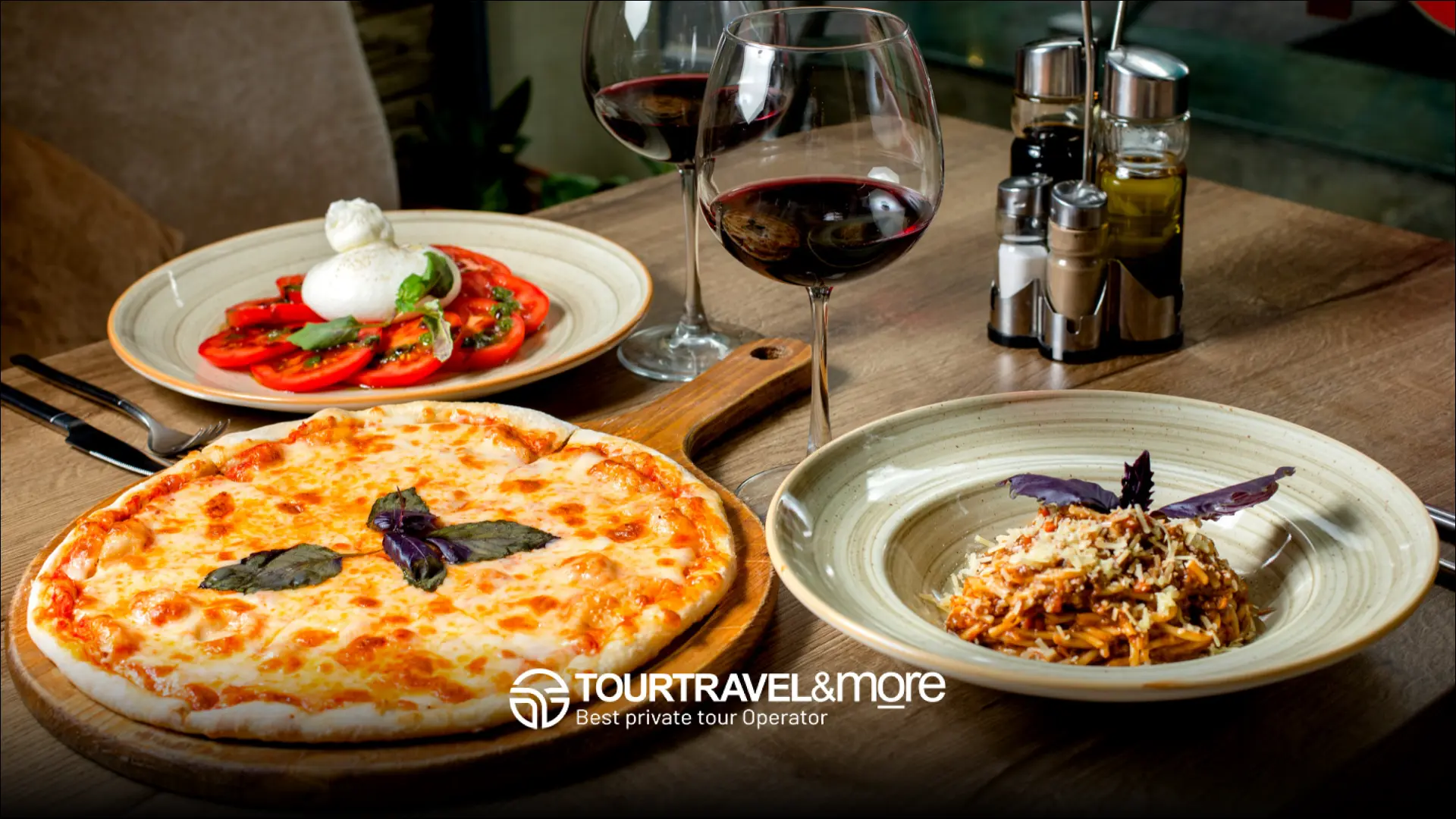
Florence is not just the city of the Uffizi and the Duomo. It is also the city where gelato was invented, where a piece of meat on the grill becomes a ritual and where Florentines have spent centuries eating tripe in the street without any shame. Florentine cuisine is like that: direct, hearty and profoundly honest.
If you have searched for what to eat in Florence and only find generic lists of pasta and pizza, you are in the wrong place. Florentine gastronomy has its own personality, very different from the rest of Italy, and it deserves to be understood before you sit down at the table. Because here the surprises on the menu — good and bad — are a daily occurrence.
This guide covers the essential dishes, the street food that no one should miss and practical tips for eating well without breaking the bank.
| Dish / Category | What you need to know |
|---|---|
| Bistecca alla Fiorentina | Priced by weight; ask for the price per kilo before ordering |
| Lampredotto | Offal street food, deep flavor, minimal price |
| Ribollita | Bread and vegetable soup, the ultimate comfort dish |
| Pappardelle al cinghiale | Wide pasta with wild boar ragù, classic Tuscan dish |
| Crostini neri | Chicken liver pâté on toasted bread, typical antipasto |
| Schiacciata | Flat bread with olive oil, the Florentine “everyday bread” |
| Gelato | Invented in Florence; look for gelaterias without fluorescent colors |
| Cantucci | Almond biscuits dipped in sweet wine (Vin Santo) |
| Chianti | The most famous Tuscan wine; also ask for the Brunello |
Bistecca alla Fiorentina: the undisputed king of the Florentine table
Almost two inches thick. T-bone included. At least 800 grams. On the grill, two or three minutes on each side. Medium-rare, always — ordering it well done is a heresy in Florence that waiters do not forgive easily.
The bistecca alla fiorentina is not just a steak. It is the dish that defines Florentine cuisine more than any other. It comes from the Chianina cattle breed, raised in the valley of the same name, and has a tenderness and flavor that has little to do with the steaks you know.
But here comes the important part, what many travellers discover too late: the price is listed per 100 grams or per kilo, not per serving. A 1.2 kg loin at €55/kg will cost you €66 before looking at the sides. It’s not a scam; it’s simply how it works. Ask for the total price before confirming your order.
Most guides tell you to order the bistecca. Few tell you how to order it without getting a nasty surprise.
How to order it without a bill shock
- Ask: “Quanto pesa?” / “Qual è il prezzo al chilo?”
- Easily serves two people; sometimes three as well
- Correct doneness: al sangue (very rare) or al punto (medium-rare). Nothing more
- The usual sides — fagioli all’uccelletto, beans with tomato and sage — are served separately
Where to eat it like a local
Trattoria Mario (near the Central Market) is an institution: no tablecloths, shared tables, packed with Florentines at 12:30. A bistecca for two comes to around €35. No pretensions and plenty of flavor.
Florentine antipasti: how a meal begins in Tuscany
The antipasto in Florence is not the symbolic little plate you know from other places. It is almost a declaration of intent. Tuscan cuisine has peasant roots, and that shows from the very first bite: simple ingredients, direct flavors, no frills.
Crostini neri: the appetizer that needs no introduction
Crostini neri are small toasted bread pieces with chicken liver pâté. The name “neri” (black) comes from the dark color of the liver cooked with onion, anchovies, capers and a splash of white wine. The result is intense, umami, surprisingly elegant for something so simple.
In Florence you will find them in almost any osteria as a starter. They are a good indicator of the quality of the place: if the crostini are fresh and the pâté has texture, the rest of the meal is usually up to standard.
Fettunta and schiacciata: bread that is not just bread
Fettunta is the Tuscan version of bread with oil taken to its maximum expression: a slice of bread toasted over the grill, rubbed with garlic and drizzled with Tuscan extra virgin olive oil. Nothing more. The oil makes the difference here — those from the area have a green intensity and a bitterness that you will not easily find outside Tuscany.
Schiacciata is another story. This flat bread, crispy on the outside and soft inside, with oil and coarse salt, is the everyday bread in Florence. They eat it for breakfast, use it for sandwiches and serve it at the table. If at any point you don’t know what to order, order schiacciata. It never fails.
Tuscan soups: ribollita, pappa al pomodoro and carabaccia
Florence has a problem with winter. And it solves it one spoonful at a time. Tuscan soups are so hearty that they sometimes make a second course unnecessary. They were born as subsistence food — stale bread, vegetables, legumes — and have ended up being some of the most representative dishes of the region.
| Soup | Main ingredients | Best season | Fun fact |
|---|---|---|---|
| Ribollita | Bread, beans, black cabbage (cavolo nero), vegetables | Autumn–winter | Its name means “reboiled” |
| Pappa al pomodoro | Toasted bread broken down in tomato, basil, oil | Summer | Should be thick, almost pasty |
| Carabaccia | Onion, broth, vinegar, bread | All year | Historical predecessor of French onion soup |
| Minestrone toscano | Seasonal vegetables, pasta or rice | All year | Denser than northern minestrone |
Ribollita: the humble soup that conquered the world
Ribollita is probably the most famous soup from Florence. Its name literally means “reboiled” because it was originally the previous day’s soup reheated. The basic ingredients are white beans (cannellini), Tuscan black cabbage (cavolo nero), toasted bread broken down in the broth, carrot, celery and onion.
The result has the texture of something between a soup and a thick stew. Comforting in a way that few dishes achieve. And here is the interesting part: the ribollita from the second day, reheated, is better than from the first. The bread absorbs all the broth and the flavors integrate in a way that is almost impossible to describe.
If you visit Florence in autumn or winter and don’t try the ribollita, you have left something important on the table.
Pappa al pomodoro: tomato and bread, nothing more
Pappa al pomodoro is the antithesis of sophistication and, at the same time, one of the tastiest dishes you will try in Florence. Ripe tomato, toasted bread broken down into a thick paste, fresh basil and olive oil. The name says it all: “pappa” is mush, what you give to children. Comforting, immediate, honest.
Served cold in summer and hot in winter. Look for the seasonal version.
Carabaccia: the onion soup that preceded the French version
Carabaccia is a well-kept secret. Tuscan onion soup dating back to the Renaissance — some historians suggest it was Catherine de’ Medici who brought it to France, where it evolved into the famous soupe à l’oignon. Slowly caramelized onion, broth, vinegar, toasted bread. Centuries of history in a bowl.
You won’t find it in every restaurant, but if it appears on the menu, order it.
Florentine pasta: pappardelle al cinghiale and crespelle
When we talk about pasta in Florence, we talk about pasta with character. Here the light al dente pasta of the north does not dominate; Tuscan pasta seeks intense sauces, game meats, wild herbs. It is a pasta that is eaten, not merely tasted.
Pappardelle al ragù di cinghiale: pasta with wild boar
Pappardelle al ragù di cinghiale are the most Tuscan pasta dish in existence. Pappardelle are wide, flat strips of fresh pasta — wider than tagliatelle — and the wild boar (cinghiale) ragù is thick, dark and with a depth of flavor that beef cannot provide.
Wild boar is abundant in Tuscany and has been on the region’s tables for centuries. The meat is marinated for hours before being slowly cooked with red wine, herbs and vegetables. The result is a sauce that clings to the pasta and won’t let go.
A plate of pappardelle al cinghiale at a good osteria will tell you more about Tuscan cuisine than any travel guide.
Crespelle alla fiorentina: the crepes that aren’t dessert
Crespelle alla fiorentina are crepes filled with ricotta and spinach, gratinéed in the oven with béchamel, tomato sauce and parmesan. They sound simple and visually resemble cannelloni, but the texture of the crespella — lighter than pasta — gives them a different delicacy.
They are the perfect primo piatto if you want something hearty but not as heavy as meat pasta.
Florentine street food: lampredotto and the offal carts
This is where Florence completely separates itself from the rest of Italian cities. Florentine street food is not pizza al taglio or arancini. It is offal. And it is brilliant.
Florentines have spent centuries eating the parts of the animal that others discard. Not out of necessity — well, originally yes — but because they have learned to cook them better than anyone.
What is lampredotto and why you should try it
Lampredotto is the fourth stomach of the cow, slowly boiled in broth with herbs and spices. It is served chopped, inside a crusty bread roll, with green sauce (parsley, garlic, capers) or red hot sauce. The bread is dipped on the inside in the cooking broth — the server asks “bagnato?” (wet?) — and the result is a sandwich with deep flavor, moist and completely addictive.
The first time you try it there may be mental resistance. But here is the interesting part: lampredotto doesn’t taste like what you imagine. It is soft, melting, without the strong flavor that people associate with offal. The broth and herbs do all the work.
The price is around €3–4. It is the best gastronomic value in Florence.
Trippa alla fiorentina and the street carts
Trippa — tripe — is also served as street food, in a sandwich or in a small cup with tomato sauce, sage and parmesan. It is even more accessible than lampredotto for uninitiated palates.
The most famous cart in the city is L’Antico Trippaio at the San Ambrogio Market. Full of locals at lunchtime. Short queue, minimal price, maximum experience.
L’Antico Vinaio: sandwiches that weigh half a kilo
On Via dei Neri is L’Antico Vinaio, a place that appears on every street food list in Florence and generates queues of 20–30 minutes in high season. The reason is simple: their filled schiacciata are monstrous. Cold cuts, cheeses, grilled vegetables and sauces, between two pieces of crispy flat bread. One sandwich can easily weigh half a kilo.
Worth the queue. But go with time to spare and outside peak hours.
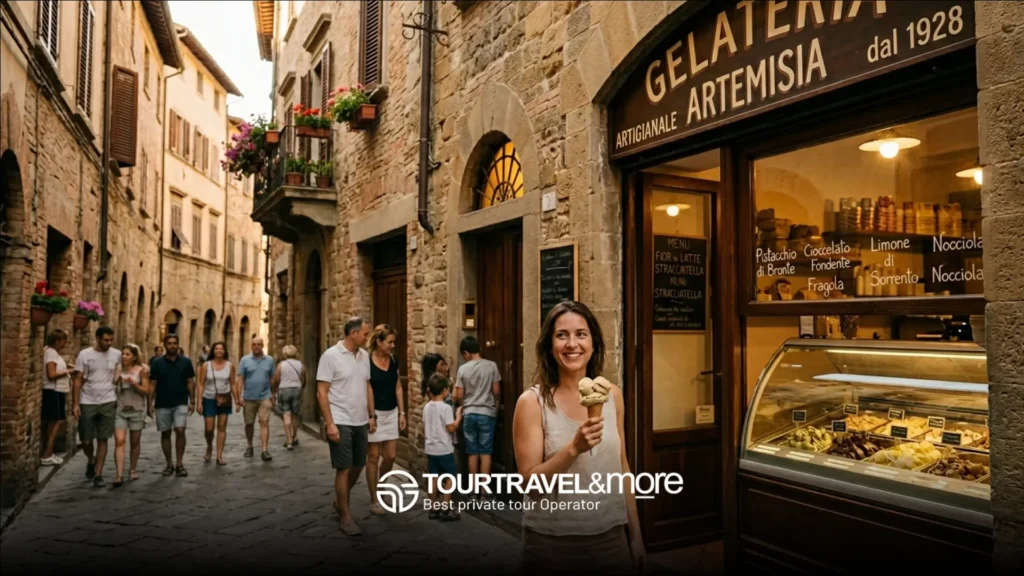
Desserts and sweets: from the gelato invented in Florence to zuccotto
If there is one city in the world that has the right to boast about its gelato, it is Florence. Because gelato was invented here.
| Sweet | Description | Where to find it |
|---|---|---|
| Gelato | Creamy, dense, with more milk and less fat than American ice cream | Gelatería dei Neri, Vivoli |
| Affogato | Scoop of vanilla gelato “drowned” in espresso | At any good gelateria |
| Zuccotto | Sponge cake bowl with ricotta, candied fruit and almonds | Traditional pastry shops |
| Cantucci con Vin Santo | Hard almond biscuits dipped in sweet wine | Restaurants, markets |
| Schiacciata alla fiorentina | Soft sponge cake with icing sugar and the Florentine lily decoration | Pastry shops during carnival |
| Cenci | Fried pasta ribbons with icing sugar | February–March (carnival) |
| Brigidini | Crispy anise wafers | Local festivals, markets |
Gelato has a Florentine surname
Bernardo Buontalenti, a Florentine architect and artist of the 16th century, is considered the inventor of gelato as we know it today. He created it for the Medici banquets and his basic recipe — cream, milk, sugar and egg — remains the reference.
Authentic gelato is distinguished from industrial ice cream by its dense and creamy texture, the natural color of the ingredients (no artificial colorings) and the intense flavor. Practical rule: if the colors in the display case are fluorescent, keep walking.
Gelateria dei Neri (Via dei Neri) has flavors you won’t find anywhere else: blackberry, limoncello, Sicilian pistachio cream. Vivoli (Via Isola delle Stinche) is the oldest in the city — since 1929 — and its affogato, a vanilla scoop “drowned” in espresso, is something you should try even if you are not one for mixing coffee with ice cream.
Cantucci: the sweet that gets dipped without shame
Cantucci are hard almond biscuits, baked twice to achieve that dry and crunchy texture. Alone and by themselves they are a little dry, but that is exactly the point: they are dipped in Vin Santo, the Tuscan sweet raisin wine, and they dissolve in a bite that combines crunchy with liquid, sweet with the almond’s bitterness.
It is the simplest and most Florentine dessert in existence. Don’t leave it for the last day.
Wines and drinks of Tuscany
Tuscany is one of the great wine regions of the world. Eating well in Florence also means drinking well, and here the options are notable.
Chianti Classico is the most well-known: Sangiovese, ruby color, marked acidity and firm tannins. Pairs perfectly with bistecca and meat pasta. But Chianti is just the beginning.
Brunello di Montalcino is one of the great wines of Italy — complex, aged several years in oak, with a price to match its reputation. If you want to take a bottle as a souvenir or gift, a Brunello is a hard choice to beat.
Vino Nobile di Montepulciano is the balanced alternative: Brunello elegance at a more accessible price.
For digestion, Tuscan grappa and amaro are the standard liqueurs. Coffee, always espresso — short, strong, in a small cup. Cappuccino is only drunk in the morning; ordering it after a meal is an unmistakable sign of a tourist.
Where to eat in Florence without falling into the tourist trap
Florence is a beautiful and expensive city for eating. But the difference between eating well for €15 and eating badly for €35 depends almost exclusively on where you sit down.
Zones that concentrate the traps: restaurants within 200 meters of the Ponte Vecchio and around the Uffizi are designed for tourists who will never return. High prices, average quality, cover charge and bread charge as standard.
Zones where locals eat:
- San Lorenzo Market and surroundings: Trattoria Mario, without tablecloths and without frills, is the reference
- Oltrarno (the neighborhood south of the Arno): fewer tourists, more Florentines, better value for money
- San Ambrogio: local market with food stalls, authentic atmosphere
- Via dei Neri: the street food corridor, from L’Antico Vinaio to Gelateria dei Neri
Practical tips for paying the right price
- Always ask for the price of the bistecca before ordering. It is charged by weight and the surprise can be unpleasant.
- The coperto (cover charge) is legal in Italy and common in Florence. It is usually between €1.50 and €3 per person. It’s not a scam; it’s the norm.
- TheFork offers discounts of up to 30% at participating restaurants — worth checking before booking.
- Still water is always cheaper than any soft drink or beer. In very touristy areas, a Coca-Cola can cost €8.
- Book in advance if you have specific places in mind, especially on weekends. Places like Zá Zá or Trattoria Mario fill up quickly.
- With antipasto + primo you already have enough. The four-course structure of the classic Italian menu is a reference, not an obligation.
Frequently asked questions about typical food in Florence
What is the most typical dish in Florence?
Bistecca alla fiorentina is the gastronomic symbol of the city. But if you are looking for the most everyday and representative dish of popular Florentine cuisine, lampredotto — the offal street food sandwich — has an equally solid argument.
Is it expensive to eat in Florence?
It depends on where you sit. In tourist areas, a meal can exceed €30–40 per person. In local trattorias in the Oltrarno neighborhood or the San Lorenzo Market, eating well comes to €12–18 including house wine.
What distinguishes Florentine cuisine from Italian cuisine in general?
Florentine cuisine is more austere and peasant-like than southern Italian cuisine: less tomato, more legumes, more game and offal. Tuscan bread contains no salt — something that surprises at first but has historical logic. And Tuscan olive oil is a protagonist, not merely an ingredient.
When is the best time to visit Florence to eat well?
Autumn and winter are the ideal seasons for comfort food: ribollita, peposo, carabaccia. In summer, panzanella (bread and tomato salad) and cold pappa al pomodoro are excellent options.
Was gelato really invented in Florence?
Yes. Bernardo Buontalenti, a Florentine artist and architect of the 16th century, developed the modern gelato recipe for the Medici banquets. Florence rightfully claims the title of birthplace of ice cream as we know it.
Where to try lampredotto for the first time?
The San Ambrogio Market has the best trippa and lampredotto carts in the city. L’Antico Trippaio is the most cited name. For the sandwich ask them to dip the bread in the broth (“bagnato”) and add green sauce. First time: no pressure. It’s milder than you imagine.
Can you eat vegetarian in Florence?
Tuscan cuisine is very meat-heavy, but there are options. Ribollita, pappa al pomodoro, ricotta and spinach crespelle, tomato crostini and seasonal salads are meatless dishes common on any menu. Outside traditional trattorias, there are vegetarian restaurants in the Oltrarno area.
Florence is a city best eaten slowly. Sit down, order the house wine, and start with the crostini. Everything else follows naturally.
